Types of Inclusive Education: 8 Models and Examples
Published: 8 Nov 2026
Introduction
Education should provide every learner with a fair opportunity to participate, develop knowledge, and achieve meaningful learning outcomes. However, students do not all learn in the same way or have identical educational requirements. Some learners need additional classroom support, while others may require accessible learning materials, assistive technology, specialist instruction, or adjustments to the school environment. Types of inclusive education describe different ways schools can organize teaching, learning, and support so that students with diverse abilities and backgrounds can access education.
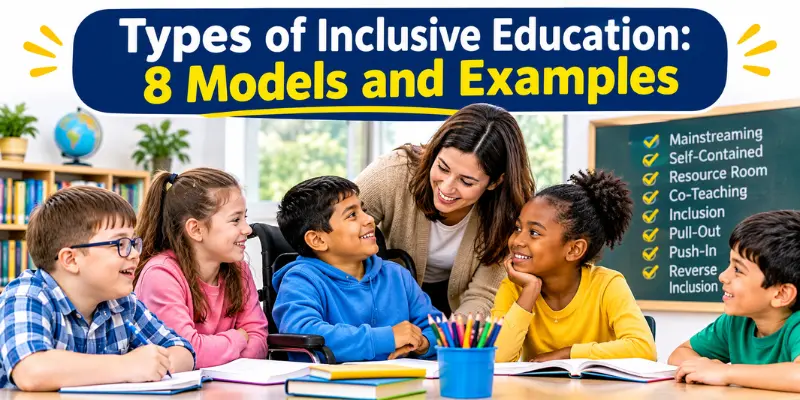
Inclusive education is not simply about admitting students with disabilities into mainstream schools. It involves creating an educational environment where students can participate in classroom activities, interact with classmates, and receive appropriate assistance according to their needs. UNESCO explains that inclusion requires identifying and removing barriers throughout the education system, including curriculum, pedagogy, and teaching practices. Its official guidance on inclusion in education provides a broader understanding of how education systems can make learning accessible to all.
In India, inclusive education is an important part of the wider effort to provide equitable educational opportunities. The National Education Policy (NEP) 2020 emphasizes the inclusion and participation of children with disabilities throughout the schooling system. You can also read the National Education Policy 2020 to understand its wider approach to equity and educational access.
Schools may use different models depending on students’ requirements, available resources, teaching arrangements, and educational policies. Some approaches provide students with full-time access to general classrooms, while others combine mainstream instruction with specialist support. Resource rooms, collaborative teaching, and inclusive early childhood education are also used to improve participation and learning.
This guide explains eight commonly discussed models and approaches to inclusive education, their characteristics, practical examples, advantages, and limitations. Understanding these approaches can help teachers, parents, and school administrators identify suitable ways to support different learners.
What Are the Types of Inclusive Education?
The types of inclusive education refer to different models, arrangements, and teaching approaches used to help students with diverse learning requirements participate in education. These approaches may involve learning together in a general classroom, receiving additional assistance from specialist teachers, or using flexible arrangements that combine classroom instruction with targeted support.
There is no single internationally accepted list of exactly eight types. Educational systems use different terminology, and some classifications describe where students receive instruction, while others explain how teachers provide support. For example, full inclusion and partial inclusion describe classroom participation arrangements, whereas co-teaching describes how educators work together.
The distinction is important because two schools may use different arrangements while following the same overall principle of inclusion: ensuring that learners receive appropriate opportunities and support without unnecessary exclusion. UNESCO’s teacher handbook for welcoming diversity in the learning environment also explains practical ways educators can develop inclusive teaching competencies.
The eight models and approaches discussed in this article are:
- Full Inclusion Model
- Partial Inclusion Model
- Mainstreaming in Education
- Integrated Education Model
- Resource Room Model
- Co-Teaching and Collaborative Inclusion
- Reverse Inclusion Model
- Inclusive Early Childhood Education
These approaches can overlap. A school may provide full classroom participation while also using co-teaching, assistive technology, and resource-room support.
1. Full Inclusion Model
The full inclusion model is an approach in which students with disabilities and other learning requirements participate in general education classrooms with their peers for the majority or all of the school day. They follow the school’s regular curriculum while receiving appropriate accommodations, instructional assistance, and specialist support when necessary.
The central idea is that students should not be separated from their classmates simply because they learn differently or require additional assistance. Instead, the school adapts its teaching practices, classroom environment, and learning resources to make participation possible.
How the Full Inclusion Model Works
Under this model, students attend general education classes and participate in shared learning activities. Teachers may adjust instructions, provide accessible materials, use assistive technology, and offer individualized support. A special educator or other qualified professional may collaborate with the classroom teacher to address specific requirements.
For example, a student with a visual impairment may participate in the same science lesson as classmates by using Braille materials, screen-reader-compatible resources, or tactile learning objects. A student with a hearing impairment may benefit from appropriate communication support, visual instructions, or captioned educational videos.
The learning objectives can remain meaningful and appropriately challenging. The difference is that students receive suitable ways to access information and demonstrate what they understand. The CAST Universal Design for Learning Guidelines provide useful principles for offering multiple ways for learners to engage with information, understand concepts, and demonstrate their knowledge.
Example of Full Inclusion
Imagine a primary school classroom with 30 students. One student has a physical disability and uses a wheelchair. The school provides accessible entrances, suitable classroom seating, and an accessible route to the laboratory and library. The student attends lessons, participates in group projects, and joins school activities with classmates.
If additional support is required, the classroom teacher works with a specialist educator to plan suitable adjustments. The student remains part of the regular classroom community rather than being routinely separated from peers.
Advantages of Full Inclusion
Full inclusion can promote belonging, social interaction, and equal participation. Students have opportunities to build friendships, cooperate on projects, and learn alongside classmates with different experiences and abilities.
It can also encourage teachers to use more flexible teaching methods. Visual explanations, practical demonstrations, accessible digital resources, and structured group activities may support many learners, not only students who require formal accommodations.
Limitations of Full Inclusion
Full inclusion requires planning, trained teachers, accessible facilities, and appropriate support services. If schools place students in general classrooms without providing the resources they need, meaningful participation may remain limited.
Therefore, full inclusion should not be interpreted as simply putting every student in the same room. The school must ensure that each learner can access instruction, receive appropriate support, and participate meaningfully.
2. Partial Inclusion Model
Partial inclusion is an educational arrangement in which students spend part of their school day in a general education classroom and receive additional instruction or support in another setting when necessary. The purpose is to combine shared classroom experiences with targeted assistance.
Unlike full inclusion, partial inclusion does not require students to remain in the general classroom for every lesson or activity. Their educational timetable may include mainstream classroom instruction, specialist sessions, small-group learning, or individual support.
How the Partial Inclusion Model Works
The school identifies the student’s educational requirements and determines which activities can be completed effectively in the general classroom and where additional assistance may be beneficial.
For example, a student may attend mathematics, science, art, and physical education with classmates but receive additional reading instruction in a small group. The student can return to the general classroom for shared activities and lessons.
The arrangement should be based on individual requirements rather than assumptions about a particular disability or learning difference. The UNESCO guidance on inclusive education emphasizes removing barriers to participation rather than relying only on where a student is placed.
Example of Partial Inclusion
A middle-school student experiences difficulty with reading comprehension but participates confidently in science and social studies. The school arranges for the student to attend regular classroom lessons while receiving additional literacy instruction from a specialist teacher for a limited period.
The student continues to participate in group projects, school events, and other lessons with classmates. The additional instruction is intended to strengthen learning rather than create unnecessary separation.
Advantages of Partial Inclusion
This approach can provide targeted assistance while preserving opportunities for social interaction and shared learning. Students can receive focused instruction in areas where they need additional help without losing access to the wider school community.
It may also help schools organize specialist support when students have different educational requirements.
Limitations of Partial Inclusion
One concern is that students may miss important classroom activities if support sessions are poorly scheduled. Repeated separation can also affect friendships, classroom belonging, and participation.
Schools should regularly review the arrangement and ensure that students receive meaningful opportunities to learn with their peers. Partial inclusion should not become a permanent reason for excluding learners from general education activities.
3. Mainstreaming in Education
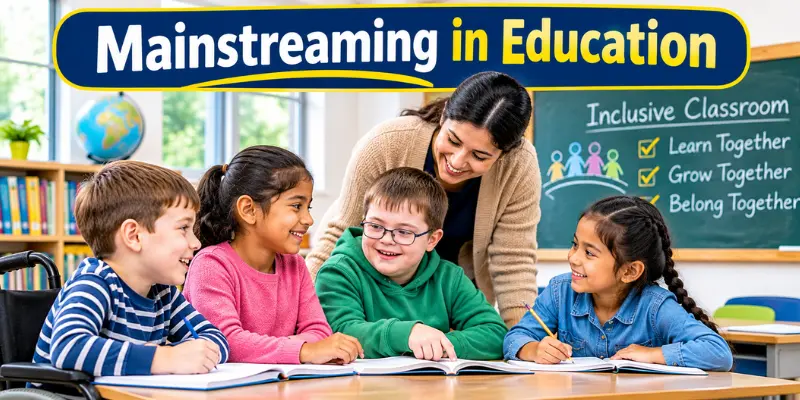
Mainstreaming is an educational approach in which students who receive specialized educational support participate in general education classes for selected subjects, activities, or periods. Their participation may depend on their individual learning progress, educational requirements, and ability to engage with particular classroom activities.
Mainstreaming is related to partial inclusion, but the terms are not always used in exactly the same way. Traditionally, mainstreaming has often emphasized placing students in general education settings when they are considered ready to participate successfully, sometimes while receiving separate specialist instruction for other parts of the school day.
Modern inclusive education places greater emphasis on adapting the school environment and teaching practices rather than expecting students to meet a fixed standard before they can participate.
How Mainstreaming Works
Under a mainstreaming arrangement, students may attend general education lessons in selected subjects while receiving specialist instruction or support elsewhere. The school considers the student’s strengths, educational goals, and support requirements when planning participation.
For instance, a student may join classmates for art, music, physical education, and social studies but receive additional assistance during reading or mathematics.
Example of Mainstreaming
A student with a learning disability attends a general education classroom for science and social studies. The student participates in discussions, experiments, and group activities with classmates. For certain lessons that require additional individualized instruction, the student receives support from a specialist educator.
Teachers coordinate lesson plans to ensure that the student does not miss essential learning opportunities.
Advantages of Mainstreaming
Mainstreaming can provide opportunities for social interaction and participation in general education activities. Students can learn alongside peers, develop communication skills, and become familiar with the wider school environment.
It may also allow schools to provide specialist instruction while maintaining connections with the general classroom.
Limitations of Mainstreaming
If participation depends too heavily on a student’s ability to adapt to existing classroom practices, the approach may not remove the barriers that create exclusion in the first place. Students may also miss lessons or activities when separate support is not coordinated properly.
For this reason, mainstreaming should be planned carefully, with attention to student participation, appropriate accommodations, and opportunities to increase access to general classroom learning.
4. Integrated Education Model
Integrated education is an approach in which students with disabilities or additional learning requirements attend regular schools alongside other students. However, the school may make fewer changes to its curriculum, teaching methods, and overall organization than would be expected in a fully inclusive system.
The distinction between integration and inclusion is important. Integration generally focuses on bringing students into an existing education system, while inclusion requires the system itself to respond to the diverse needs of learners.
How the Integrated Education Model Works
Under an integrated arrangement, students may attend mainstream schools and receive some additional assistance. However, classroom teaching and school structures may continue to follow conventional methods.
For example, a student with a physical disability may be admitted to a regular school and receive help moving between classrooms. However, if the school does not adapt its teaching materials, assessment methods, or facilities, the student may still experience barriers to full participation.
Example of Integrated Education
A school admits students with and without disabilities into the same institution. Students attend the same school assembly and use shared facilities. A specialist teacher provides additional assistance to learners who require it.
However, some classroom activities may remain difficult to access because the school has not fully adapted its instructional methods or learning resources.
This example shows why simply sharing a school building does not automatically create an inclusive learning environment.
Advantages of Integrated Education
Integration can improve access to mainstream educational institutions and increase opportunities for students to interact with peers from different backgrounds. It can also help schools begin developing support services and improve awareness of diverse learning requirements.
Limitations of Integrated Education
The main limitation is that students may be expected to adjust to an existing system that has not been designed to accommodate their needs. Inaccessible facilities, rigid teaching methods, and limited specialist assistance can reduce meaningful participation.
Inclusive education goes further by requiring schools to identify and remove these barriers rather than relying only on student placement.
5. Resource Room Model
The resource room model provides additional educational assistance to students who need specialized instruction or learning support while remaining connected to the general education system. A resource room is a designated area where students can receive individual or small-group assistance from a qualified teacher or specialist.
Students generally spend part of their school day in regular classrooms and use the resource room for specific learning activities. The support may focus on reading, mathematics, communication, academic skills, or other educational requirements.
How the Resource Room Model Works
A specialist teacher assesses the student’s learning needs and plans suitable activities. The student may visit the resource room according to an agreed timetable while continuing to attend general classroom lessons.
The resource room may contain accessible learning materials, educational tools, assistive devices, and resources that help students understand particular concepts.
For example, a student who needs additional practice in mathematics may work with a specialist teacher using practical objects, visual explanations, and structured exercises.
India’s Samagra Shiksha programme for Inclusive Education for Children with Special Needs describes support such as resource rooms, special educators, assistive devices, and appropriate teaching-learning materials. These provisions illustrate how additional learning support can be organized within a wider school education system.
Example of a Resource Room
A secondary school has a resource room staffed by a special educator. A student with a learning disability attends regular English and science lessons but receives additional reading and comprehension support in the resource room several times a week.
The specialist teacher coordinates with the classroom teacher so that the additional instruction supports the student’s regular curriculum.
Advantages of the Resource Room Model
Resource rooms can provide a quieter learning environment, individualized attention, and access to specialist materials. Students may find it easier to ask questions, practise difficult skills, and receive feedback in a smaller group.
The model can also help schools organize specialist support without requiring students to leave the mainstream education system entirely.
Limitations of the Resource Room Model
If students spend too much time outside the general classroom, they may miss lessons, discussions, group activities, or social experiences. Resource rooms may also become a source of unnecessary separation if schools use them without clear educational goals.
To maintain an inclusive approach, resource-room support should be purposeful, coordinated, and regularly reviewed.
6. Co-Teaching and Collaborative Inclusion
Co-teaching is a classroom approach in which two or more educators work together to plan, deliver, and assess instruction for a diverse group of students. It commonly involves a general education teacher and a special education teacher who share responsibility for supporting learning.
Rather than treating inclusion as the responsibility of one teacher, collaborative teaching encourages educators to combine their knowledge and skills. This can make it easier to provide appropriate instruction and assistance within the general classroom.
How Co-Teaching Works
Teachers jointly prepare lessons, identify potential learning barriers, and decide how to organize classroom activities. Depending on the lesson, they may teach together, divide students into smaller groups, or provide different forms of support.
Common co-teaching arrangements include:
- One Teach, One Assist: One teacher leads the lesson while the other supports students who need clarification or additional assistance.
- Station Teaching: Students rotate between learning stations, with each teacher responsible for a particular activity.
- Parallel Teaching: The class is divided into two groups, and both teachers teach the same material at the same time.
- Alternative Teaching: One teacher works with a smaller group for targeted instruction while the other teaches the remaining students.
- Team Teaching: Both educators share responsibility for delivering the lesson and interacting with the entire class.
These arrangements can be adjusted according to the lesson objectives, classroom size, and students’ learning requirements. Teachers can also explore UNESCO’s resource on preparing all teachers to teach all students for further guidance on inclusive teaching competencies.
Example of Collaborative Teaching
A primary school plans a science lesson about plants. The general education teacher explains the main concepts, while the special educator prepares visual instructions and accessible learning materials.
During a group activity, both teachers help students observe plant structures, record findings, and discuss their results. Students can participate using suitable materials and different ways of demonstrating understanding.

Advantages of Co-Teaching
Collaborative teaching can improve lesson planning, provide more opportunities for individual assistance, and help educators respond to different learning needs. Students may receive quicker feedback, while teachers can share professional knowledge and classroom responsibilities.
It can also support more flexible instruction without routinely removing students from the general classroom.
Limitations of Co-Teaching
Effective co-teaching requires planning time, clear responsibilities, communication, and cooperation. If teachers do not coordinate their roles, students may receive inconsistent instructions or experience confusion.
Schools also need suitable staffing arrangements and professional development to make collaborative teaching effective.
7. Reverse Inclusion Model
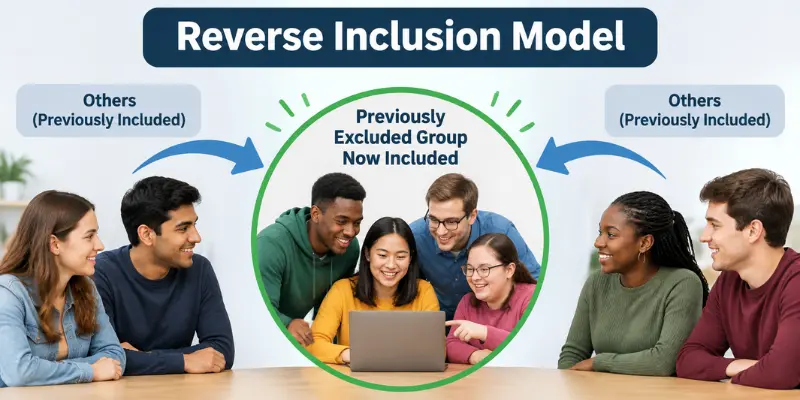
Reverse inclusion is an approach in which students without disabilities join students with disabilities in a specialized classroom or educational setting for selected lessons, activities, or shared experiences.
In traditional inclusion arrangements, students who need additional support participate in general education classrooms. Reverse inclusion changes the direction of participation by inviting students from general education settings into a specialized learning environment.
The approach can provide opportunities for interaction, friendship, cooperation, and shared activities. However, it should be used carefully and should not replace broader access to inclusive education.
How Reverse Inclusion Works
A school organizes activities in which students from general education classes participate alongside students in a specialized classroom. These activities may include art, music, sports, storytelling, games, or collaborative projects.
Teachers plan the activities to ensure that all students have meaningful roles and can participate comfortably.
Example of Reverse Inclusion
A school has a specialized classroom for students who require additional educational support. Once a week, a group of students from a general education class joins them for a shared art activity.
Students work together to create posters, exchange ideas, and complete a group project. Teachers encourage respectful communication and ensure that no student is treated as an observer rather than an active participant.
Advantages of Reverse Inclusion
Reverse inclusion can create opportunities for students to develop empathy, communication, cooperation, and understanding of individual differences. It may also help challenge stereotypes by allowing students to interact through shared activities.
For students in specialized settings, these interactions can provide additional opportunities to build relationships with peers.
Limitations of Reverse Inclusion
Reverse inclusion alone does not ensure that students with disabilities have access to the general education curriculum and wider school activities. It should not become a substitute for removing barriers in mainstream classrooms.
Schools should use it as one possible way to encourage interaction while maintaining a broader commitment to participation and educational opportunity for all learners.
8. Inclusive Early Childhood Education
Inclusive early childhood education provides young children with different abilities, backgrounds, and developmental requirements opportunities to learn and participate together in preschool and early learning environments.
The approach recognizes that early childhood is an important period for developing communication, social interaction, emotional understanding, motor skills, and foundational learning. Children benefit from supportive environments where they can explore, play, communicate, and learn with their peers.
How Inclusive Early Childhood Education Works
Preschools and early learning centres organize activities that allow children with different developmental needs to participate. Teachers may adapt toys, learning materials, classroom routines, communication methods, and play activities.
Some children may require additional assistance from specialist educators, therapists, or other professionals. Support should be coordinated so that children can participate in shared activities as much as appropriate.
The National Association for the Education of Young Children (NAEYC) provides professional resources and position statements on early childhood inclusion, equity, and developmentally appropriate practice.
Example of Inclusive Early Childhood Education
A preschool classroom includes children with different communication and developmental requirements. During a storytelling activity, the teacher uses picture cards, spoken instructions, gestures, and tactile materials.
Children can respond by speaking, pointing to pictures, using communication aids, or participating in related activities. This gives everyone an opportunity to engage with the same story through suitable methods.
Advantages of Inclusive Early Childhood Education
Early inclusion can create opportunities for children to develop communication skills, social relationships, confidence, and an understanding of differences. It can also help educators and families identify support requirements at an early stage.
Shared play and learning activities may help children develop cooperation and positive relationships before entering primary school.
Limitations of Inclusive Early Childhood Education
Preschools need trained staff, suitable facilities, accessible learning materials, and effective cooperation with families. Without these resources, teachers may struggle to respond to different developmental requirements.
Planning should therefore consider each child’s needs, the learning environment, and the availability of appropriate support.
Difference Between the Main Types of Inclusive Education
The eight models and approaches discussed above have different purposes. Some describe where students receive instruction, while others explain how educators organize teaching and support.
| Model or approach | Main focus | Typical arrangement |
|---|---|---|
| Full Inclusion | Participation in general education | Student learns with peers in the general classroom |
| Partial Inclusion | Shared and targeted instruction | Student combines general classes with additional support |
| Mainstreaming | Participation in selected general classes | Student joins specific lessons or activities |
| Integrated Education | Access to regular schools | Students attend the same institution, but adaptations may be limited |
| Resource Room | Specialist learning assistance | Student receives targeted support in a designated room |
| Co-Teaching | Shared teaching responsibility | General and specialist educators work together |
| Reverse Inclusion | Peer interaction in specialized settings | General education students join selected activities in a specialist setting |
| Inclusive Early Childhood Education | Inclusion during early development | Young children learn and play together with suitable support |
These approaches are not mutually exclusive. For example, a school may use full inclusion as its overall classroom arrangement and co-teaching as a way to provide support. Another school may combine mainstream classroom participation with resource-room instruction.
The most appropriate approach depends on the individual learner, educational objectives, available support, and the school’s ability to remove barriers. The CAST UDL Guidelines can also help educators consider different ways of presenting information and allowing students to participate and demonstrate learning.
Inclusive Education in India: NEP 2020 and Samagra Shiksha
India has taken several policy and programme-based steps to strengthen equitable and inclusive education. The National Education Policy 2020 emphasizes that children with disabilities should have opportunities to participate in the regular schooling process, from the foundational stage through higher education.
The policy also recognizes the importance of appropriate accommodations, accessible infrastructure, specialist educators, and resource centres where required. These provisions are relevant to the different models of inclusive education because they support both classroom participation and additional educational assistance.
For a detailed explanation of the policy, readers can explore EducationBeacon’s guide on How NEP 2020 Supports Inclusive Education.
Role of Samagra Shiksha
Samagra Shiksha is an important school education programme in India that includes support for children with special needs. Its inclusive education component addresses educational requirements through activities such as identification and assessment, assistive devices, accessible learning materials, teacher training, specialist support, and improvements to school accessibility.
The programme covers support across the school education continuum, from pre-primary to Class XII. Its provisions demonstrate how inclusive education can involve more than classroom placement: schools may also need resource teachers, accessible facilities, transportation support, and individualized assistance.
The official Samagra Shiksha inclusive education page provides information about these provisions. Its implementation framework also explains goals relating to access, participation, learning environments, and support services.
Connection with the Rights of Persons with Disabilities Act
The Rights of Persons with Disabilities Act, 2016, provides an important legal framework for the rights of persons with disabilities in India. It recognizes inclusive education and addresses the need for educational systems to accommodate different learning requirements.
Schools should consider applicable legal provisions, accessibility requirements, and individual support needs when planning educational arrangements. The Department of Empowerment of Persons with Disabilities provides government information and resources related to disability rights and inclusion.
Practical Application in Indian Schools
A school in India may combine several approaches to support its students. For example, it may provide general classroom participation, appoint or access specialist educators, establish a resource room, use accessible learning materials, and arrange suitable support for students who need additional assistance.
The right combination depends on local resources, student requirements, and applicable education policies. Schools in rural and urban areas may face different implementation challenges, so planning should reflect local circumstances.
How to Choose the Right Inclusive Education Model
Selecting an appropriate educational approach requires understanding the learner’s requirements and evaluating the school’s capacity to provide meaningful support. A model that works well for one student may not be suitable for another.
Assess Individual Learning Requirements
Schools should first understand the student’s strengths, learning goals, communication preferences, accessibility requirements, and areas where additional support may be needed. Assessment should help identify useful educational adjustments rather than simply determine where a student should be placed.
Consider Classroom Participation
Teachers and school administrators should examine which classroom activities the student can access and what adjustments may improve participation. The aim should be to provide meaningful opportunities to learn with peers wherever appropriate.
Evaluate Available Resources
Schools need to consider teacher training, specialist support, accessible buildings, learning materials, assistive technology, and available services. If essential resources are missing, administrators should identify how those gaps can be addressed.
Consult Students and Families
Students and parents can provide important information about barriers that affect learning and participation. Their views should be considered when developing support arrangements and reviewing progress.
Coordinate General and Specialist Teachers
When students receive support from multiple educators, teachers should communicate regularly. Shared planning can help ensure that specialist assistance supports the general curriculum rather than creating disconnected learning experiences. Teachers can strengthen their classroom practices through professional development and by improving essential teaching skills for new teachers.
Review Progress Regularly
Educational arrangements should be reviewed as students develop and their requirements change. Schools can examine participation, learning progress, attendance, student feedback, and the effectiveness of accommodations.
An effective inclusive education model is not simply the one with the most resources or the most complicated arrangement. It is the approach that enables a learner to access education, participate meaningfully, and make progress with appropriate support.
Benefits of Using Appropriate Inclusive Education Models
When schools select and implement suitable approaches, inclusive education can create positive opportunities for students, teachers, and the wider school community.
Improved Access to Education: Different models can help schools address barriers that prevent students from participating in learning. Accessible classrooms, specialist assistance, and flexible instruction can make educational opportunities more meaningful.
Greater Social Participation: Learning alongside peers can create opportunities to develop friendships, communication skills, cooperation, and a sense of belonging.
Flexible Teaching Practices: Teachers may use different explanations, materials, activities, and assessment methods to respond to learners’ requirements. These practices can benefit the wider classroom.
Better Coordination of Support: Models such as resource-room assistance and co-teaching can help schools organize specialist services and connect them with classroom learning.
Respect for Diversity: Students can develop a better understanding of different abilities, backgrounds, and experiences. This may contribute to a more respectful school environment.
Individual Learning Support: Appropriate arrangements can help students receive additional assistance without unnecessarily limiting their access to shared educational activities.
The UNESCO resource on inclusive teaching highlights why teachers need the knowledge, values, and professional preparation to teach diverse groups of learners.
However, these benefits are not automatic. They depend on effective implementation, trained educators, accessible facilities, appropriate resources, and regular evaluation.
Challenges Schools May Face When Implementing Inclusive Education Models
Although different models offer ways to improve educational participation, schools may encounter practical difficulties when implementing them. UNESCO identifies barriers such as inaccessible learning environments, rigid curricula, inadequate teacher preparation, and social or economic obstacles in its overview of inclusion in education.
Limited Financial Resources: Schools may not have sufficient funding for accessible infrastructure, assistive technology, specialist staff, or suitable learning materials.
Lack of Teacher Training: Educators may need additional preparation to adapt lessons, manage diverse classrooms, use assistive tools, and coordinate with specialist professionals.
Large Class Sizes: Teachers may find it difficult to provide individual attention when managing a large number of students with different learning requirements.
Inadequate Accessibility: Buildings, toilets, laboratories, libraries, playgrounds, and digital platforms may not be accessible to all students.
Poor Coordination: General educators, specialist teachers, families, and support professionals need clear communication to ensure that students receive consistent assistance.
Social Stigma: Misunderstandings about disability and learning differences can affect student relationships and classroom participation.
Schools can address these challenges through planning, professional development, family engagement, appropriate funding, and regular reviews of educational support. For a broader introduction to inclusive education principles and practical strategies, see EducationBeacon’s guide to Inclusive Education: Meaning, Benefits, Principles, and Strategies.
Frequently Asked Questions About Types of Inclusive Education
What are the eight types of inclusive education?
Eight commonly discussed models and approaches are full inclusion, partial inclusion, mainstreaming, integrated education, resource-room support, co-teaching, reverse inclusion, and inclusive early childhood education. These approaches describe different ways to organize student participation and educational support.
What is the difference between inclusion and integration?
Integration generally involves placing students with disabilities in regular educational settings, sometimes without making substantial changes to existing teaching practices. Inclusion goes further by adapting the education system, classroom environment, and learning resources to support diverse learners.
What is the full inclusion model?
The full inclusion model involves students with disabilities and other learning requirements participating in general education classrooms with their peers for most or all of the school day. They receive suitable accommodations and support to access the curriculum and classroom activities.
What is the partial inclusion model?
Partial inclusion combines participation in general education classrooms with additional instruction or specialist assistance in another setting. Students may attend regular lessons for some subjects and receive targeted support for particular learning requirements.
What is the resource room model in inclusive education?
The resource room model provides additional instruction in a designated learning space. Students receive specialist or small-group support for specific educational needs while remaining connected to the general education classroom.
What is co-teaching in inclusive education?
Co-teaching is a collaborative approach in which two or more educators share responsibility for planning, teaching, and assessing students. It often involves a general education teacher and a special education teacher working together in the same classroom.
What is reverse inclusion in education?
Reverse inclusion is an approach in which students from general education classrooms join students with disabilities in a specialized educational setting for selected activities. It encourages social interaction and shared learning experiences.
How does NEP 2020 promote inclusive education in India?
NEP 2020 emphasizes equitable educational opportunities and the participation of children with disabilities in the schooling system. It highlights suitable accommodations, accessible infrastructure, specialist educators, and resource support. The official NEP 2020 document explains the policy’s broader approach to equity and inclusion.
Which inclusive education model is best for students?
There is no single model that is best for every student. The appropriate approach depends on individual learning requirements, classroom accessibility, available specialist support, educational goals, and the student’s opportunities for meaningful participation.
Why are different types of inclusive education important?
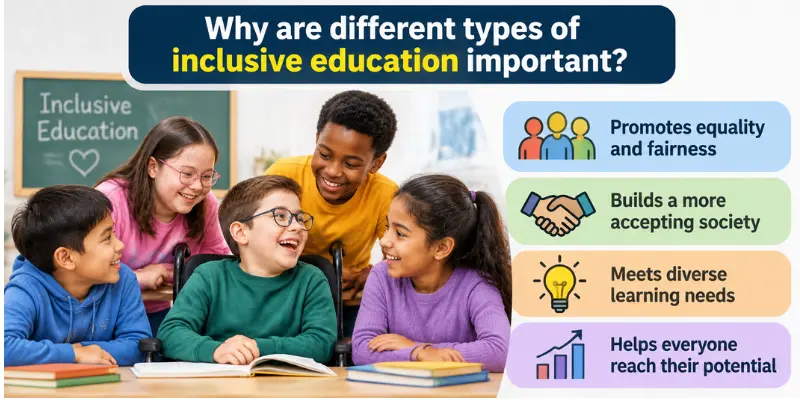
Different models allow schools to organize instruction and support according to students’ requirements. They can help improve access, participation, social interaction, and learning opportunities when implemented effectively.
Conclusion
Understanding the different types of inclusive education helps teachers, parents, and school administrators recognize that inclusion can be implemented through several educational arrangements and teaching approaches. Full inclusion, partial inclusion, mainstreaming, integrated education, resource-room support, co-teaching, reverse inclusion, and inclusive early childhood education each have different purposes and practical applications.
However, these approaches should not be treated as interchangeable or as a fixed classification used by every education system. Some describe classroom placement, while others explain how educators organize specialist assistance and shared instruction. Schools should select and combine approaches according to individual learning requirements, educational goals, available resources, and applicable policies.
In India, NEP 2020 and Samagra Shiksha provide an important framework for strengthening equitable educational opportunities and supporting children with special needs. Their effective implementation requires accessible facilities, trained teachers, suitable learning materials, and cooperation among schools, families, and education authorities.
Ultimately, successful inclusive education is not defined by the name of the model a school adopts. It is defined by whether students can access learning, participate with dignity, receive appropriate support, and make meaningful progress. Schools can move toward this goal by using the principles of inclusive education promoted by UNESCO and adapting them to the needs of their own learners.



- Be Respectful
- Stay Relevant
- Stay Positive
- True Feedback
- Encourage Discussion
- Avoid Spamming
- No Fake News
- Don't Copy-Paste
- No Personal Attacks
- Be Respectful
- Stay Relevant
- Stay Positive
- True Feedback
- Encourage Discussion
- Avoid Spamming
- No Fake News
- Don't Copy-Paste
- No Personal Attacks
