Inclusion Development Programme Education India: A Complete Guide
Published: 24 Oct 2026
The Inclusion Development Programme Education India topic is important for teachers, school administrators, teacher educators, and education students who want to understand how professional development can improve support for learners with diverse educational needs. Inclusive education is not simply about admitting children from different backgrounds into the same classroom. It also requires teachers to identify barriers to learning, adapt teaching methods, and create an environment in which every learner can participate meaningfully.
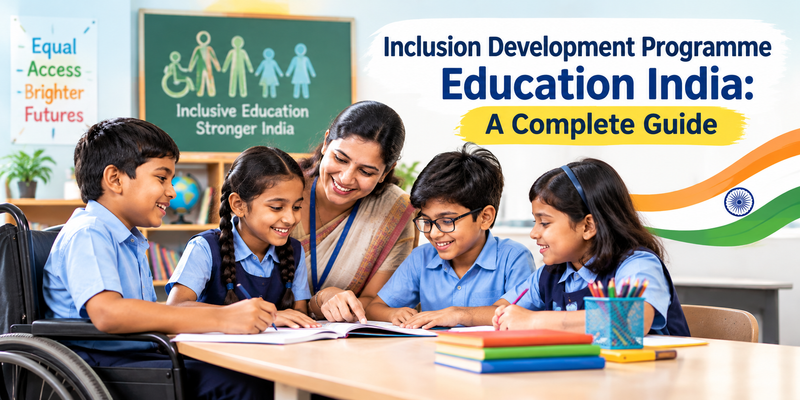
The Inclusion Development Programme (IDP) is associated with professional development for teachers working to include children with special educational needs and disabilities. However, the programme has a particular historical context in England, while India has its own policies, teacher-training initiatives, and inclusive education frameworks. Understanding this distinction is essential for anyone researching the programme in the Indian education system.
This guide explains what the Inclusion Development Programme is, how it relates to teacher development, what Indian schools can learn from its approach, and which official resources can help educators strengthen inclusive classroom practices.
What Is the Inclusion Development Programme?
The Inclusion Development Programme was a professional development initiative associated with England’s education system. It was designed to help teachers and other education professionals improve their understanding of special educational needs and disabilities and develop more effective approaches to supporting children in mainstream settings.
Rather than treating inclusion as the responsibility of specialist teachers alone, the programme emphasized developing the knowledge and confidence of ordinary classroom teachers. This is important because classroom teachers often identify learning difficulties first and make daily decisions about lesson delivery, classroom participation, assessment, and additional support.
The programme’s approach is relevant to discussions about inclusive education in India, but it should not be presented as an Indian government scheme. India has separate initiatives and legal provisions governing the education of children with disabilities.
For Indian educators, the useful question is how the principles associated with the Inclusion Development Programme can inform teacher preparation, classroom practice, and professional development within the Indian context.
Objectives of the Inclusion Development Programme
The programme’s central purpose was to strengthen educators’ capacity to support children with special educational needs and disabilities. Its broader professional-development approach can be understood through several objectives.
Improving teachers’ understanding of learner needs: Teachers need to recognize that students may experience different barriers to learning. These can involve communication, sensory access, language, attention, mobility, or difficulties understanding particular concepts. Appropriate support begins with understanding the learner rather than making assumptions.
Developing practical classroom skills: Teachers require strategies they can apply during ordinary lessons. These may include breaking instructions into manageable steps, providing visual resources, adapting learning activities, and offering different ways for students to demonstrate understanding.
Promoting early identification and appropriate support: Classroom observations can help teachers recognize when a learner may require additional assessment or assistance. Teachers should follow appropriate school procedures and collaborate with families and specialists rather than independently diagnosing a disability.
Strengthening professional confidence: Educators may feel uncertain about teaching children whose needs differ from their previous experience. Structured professional development, practical examples, mentoring, and collaboration can help teachers make more informed decisions.
Encouraging inclusive classroom environments: Effective inclusion requires respectful relationships, meaningful participation, accessible learning opportunities, and appropriate support for students.
These objectives also connect with the broader direction of teacher training under NEP 2020, which addresses professional development and the changing responsibilities of teachers in India.
Is the Inclusion Development Programme Available in India?
The Inclusion Development Programme should not be confused with a nationally administered Indian education scheme. Its historical association is with England’s teacher professional-development context.
In India, inclusive education is supported through different legal provisions, national policies, and education programmes. These include the Rights of Persons with Disabilities Act, 2016, the Right of Children to Free and Compulsory Education Act, 2009, and the inclusive education component of Samagra Shiksha.
The Government of India’s Samagra Shiksha inclusive education resource describes support for children with special needs, including educational materials, assistive devices, special educators, teacher training, and accessibility measures.
Therefore, a teacher or education student searching for Inclusion Development Programme Education India should distinguish between three things: the original programme, India’s own inclusive education policies, and professional-development practices that can be adapted from the programme’s general approach.
This distinction helps avoid confusion when researching eligibility, funding, training certificates, or government benefits. A person should not assume that a programme originating in England is automatically offered by Indian schools or government departments.
Inclusive Education in India: The National Framework
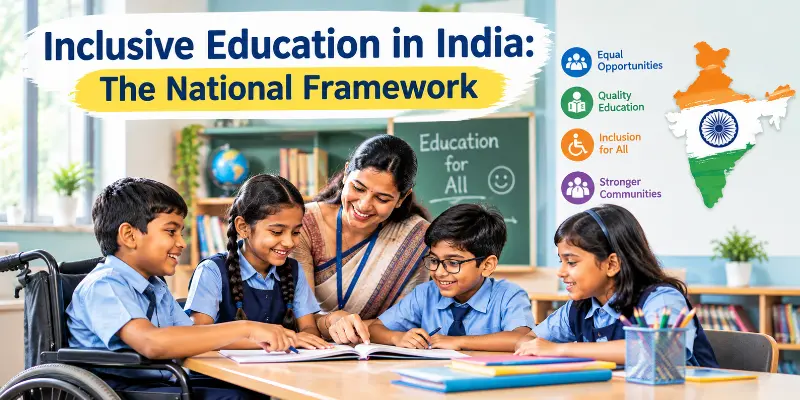
India’s approach to inclusive education aims to expand educational access and participation while addressing barriers that affect children with disabilities and other learners requiring additional support.
The Ministry of Education’s Samagra Shiksha resources explain how inclusive education interventions support children with special needs across school stages. The framework includes educational support, appropriate learning resources, teacher sensitization, and specialist assistance.
The Samagra Shiksha implementation framework also discusses inclusive education and the importance of creating an enabling learning environment for children with disabilities.
The National Education Policy 2020 places emphasis on equitable and inclusive education. Its wider vision includes improving access, supporting disadvantaged groups, and preparing teachers to address diverse learning needs.
For educators, these frameworks are more directly relevant to understanding India’s current education policy than treating the English Inclusion Development Programme as an Indian government initiative.
How NEP 2020 Supports Inclusive Education
The National Education Policy 2020 provides a broader policy direction for making education more equitable and responsive to learners’ needs. It recognizes that educational opportunity depends on more than school admission. Students also need appropriate teaching, accessible environments, and the support necessary to participate in learning.
Teacher preparation and professional development: Teachers need knowledge of different learning needs, inclusive pedagogy, and classroom adaptation. Professional learning can help them develop these competencies over time.
Accessible learning environments: Schools should consider physical access, communication barriers, classroom resources, and the needs of students who require reasonable accommodation.
Support for disadvantaged learners: Inclusive education involves reducing barriers that affect learners from disadvantaged backgrounds, including those facing disability-related, social, economic, or geographical challenges.
Flexible teaching practices: Different students may need different explanations, learning materials, activities, or forms of support to achieve relevant learning outcomes.
For a wider explanation of the policy’s objectives, readers can explore Objectives of NEP 2020. This article, however, focuses on professional development and practical inclusion rather than repeating the entire policy framework.
Role of Teachers in Inclusive Education
Teachers play a central role in turning inclusion policies into everyday classroom practice. Even when a school has a formal inclusion policy, students may continue to experience barriers if teaching methods do not account for their needs.
An inclusive teacher observes how students respond to lessons, identifies barriers to participation, adapts instruction when appropriate, and seeks additional support when necessary.
For example, a teacher explaining a science concept might combine spoken instructions with diagrams, demonstrations, written steps, and practical activities. This gives students more than one way to access the information without automatically separating learners into different groups.
Teachers can also encourage collaboration through structured group activities. Clear responsibilities, supportive peer interaction, and respectful classroom expectations help students participate without allowing one learner to dominate the activity.
Assessment requires similar consideration. Where appropriate, teachers should use permitted accommodations so that a student’s disability does not create an unnecessary barrier to demonstrating the intended knowledge or skill.
These practices are consistent with the broader principles of effective teaching methods, where instructional decisions respond to learning objectives and students’ needs.
Practical Strategies for Inclusive Classrooms
An inclusive classroom does not require every student to complete every activity in exactly the same way. The aim is to provide meaningful opportunities to work toward appropriate learning objectives while addressing barriers that might prevent participation.
1. Use clear and structured instructions. Explain tasks in manageable steps, demonstrate unfamiliar activities, and check that students understand what they need to do. Written instructions, visual schedules, and examples may help learners who struggle with lengthy verbal explanations.
2. Provide accessible learning materials. Depending on students’ requirements, teachers may use large-print resources, Braille, captions, audio materials, tactile resources, or screen-reader-compatible documents. The appropriate format should be based on individual needs rather than assumptions.
3. Adapt teaching methods. Teachers can combine explanations, discussion, visual examples, practical activities, and guided practice. Different approaches can make concepts more accessible while maintaining the intended learning goals.
4. Encourage meaningful participation. Group activities should give students clear roles and opportunities to contribute. Teachers should avoid practices that repeatedly exclude students from discussions, projects, sports, or other classroom activities.
5. Use appropriate assessment arrangements. Additional time, accessible formats, assistive technology, or alternative response methods may be appropriate where permitted and supported by the relevant assessment rules.
6. Collaborate with families and specialists. Parents and caregivers may provide useful information about a student’s strengths, communication preferences, and support requirements. Teachers should work with special educators and other qualified professionals when additional expertise is needed.
7. Review progress regularly. Observe whether teaching adaptations are helping students participate and learn. If a strategy is ineffective, consult the relevant school support team and consider a more suitable approach.
These strategies offer practical ways to apply inclusive teaching principles in Indian schools without claiming that each one is a specific component of the historical Inclusion Development Programme.
Teacher Training and Professional Development for Inclusion
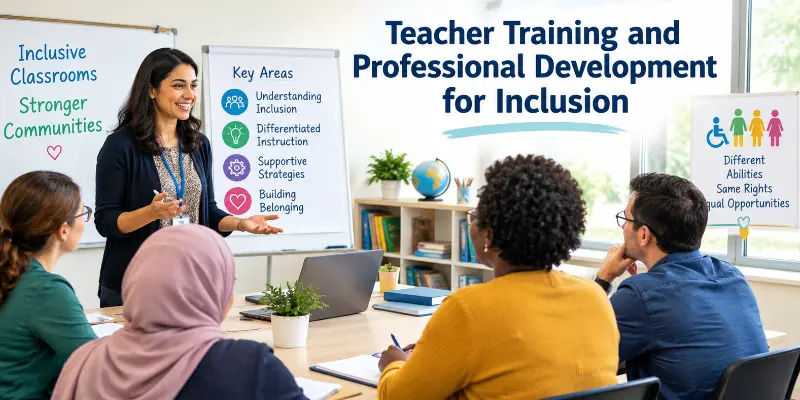
Teacher training should prepare educators to respond to classroom situations, not simply memorize definitions of disability or inclusion.
Professional development may include workshops, guided classroom practice, mentoring, case studies, collaborative planning, and reflection on teaching experiences. A useful programme combines theoretical knowledge with opportunities to apply and evaluate strategies.
For example, a training session might present a classroom scenario in which a student has difficulty following spoken instructions. Teachers could identify possible barriers, consider alternative ways of presenting the task, and discuss how they would evaluate whether the adaptations were effective.
Training should also explain when a teacher needs help from a special educator or other qualified professional. Inclusive practice does not mean that every classroom teacher must independently provide every specialist service. It means understanding the teacher’s responsibilities and knowing how to access suitable support.
India has its own professional-development resources. The NCERT Indian Educational Review published research on Nai Dishayan, a self-instructional training module intended to strengthen the capacity of education personnel working with children with special needs.
This kind of Indian educational research provides a useful starting point for understanding how teacher training can be designed and evaluated in the local context.
Legal Rights and Support for Children with Disabilities in India
Inclusive education is not only a teaching preference. It is also connected with legal rights and institutional responsibilities.
The Rights of Persons with Disabilities Act, 2016, establishes provisions concerning the rights of persons with disabilities, including education. The precise duties and entitlements applicable to an institution depend on the relevant legal provisions and circumstances.
The Right to Education framework also addresses children’s access to elementary education, including children with disabilities, subject to the applicable law and provisions.
Schools should consult the official legislation and relevant government guidance before making decisions about admissions, reasonable accommodation, accessibility, educational support, or assessment arrangements.
The Department of School Education and Literacy and Samagra Shiksha are useful starting points for official information about India’s school education framework.
Parents should also communicate with school administrators and the relevant education authorities if they need clarification about support arrangements. General online information should not be treated as a substitute for checking current rules applicable to a particular school or student.
Benefits of an Inclusion-Focused Teacher Development Approach
A structured professional-development approach can benefit students, teachers, and educational institutions when it is implemented with suitable resources and ongoing support.
Improved teacher confidence: Educators who understand inclusive teaching strategies may be better prepared to respond to classroom challenges and identify when further assistance is needed.
Greater student participation: Accessible materials and flexible teaching methods can help more learners take part in classroom activities.
Better collaboration: Teachers, families, school leaders, and specialists can work together to understand students’ needs and plan appropriate support.
More responsive instruction: Regular reflection and professional learning can help teachers adjust lessons when students encounter barriers.
A more respectful school environment: Staff training can strengthen awareness of disability, reduce harmful assumptions, and encourage respectful interactions among students.
These benefits are not automatic. Their success depends on the quality of training, school leadership, available resources, and the extent to which teachers can apply what they learn.
Challenges in Implementing Inclusive Education in India
Despite progress in policy development, inclusive education can be difficult to implement consistently across schools.
Limited teacher preparation: Some teachers may have little experience adapting instruction for students with disabilities. Training needs to address actual classroom requirements and provide continuing support.
Inaccessible infrastructure: Buildings, toilets, playgrounds, libraries, laboratories, and transport arrangements may create barriers for some students. Improvements should reflect applicable accessibility standards and individual requirements.
Insufficient learning resources: Some schools may lack appropriate assistive devices, accessible textbooks, specialist staff, or suitable teaching materials.
Large and diverse classrooms: Teachers may need to support students with widely differing learning needs while working with limited time and resources.
Attitudinal barriers: Stereotypes, stigma, low expectations, and exclusionary practices can prevent students from participating fully, even when formal policies support inclusion.
Uneven access to specialist support: The availability of trained professionals and support services may vary between locations and institutions.
Addressing these challenges requires coordinated action. Teacher training is important, but it must be accompanied by appropriate funding, accessible infrastructure, effective school leadership, family engagement, and monitoring of student participation.
How Schools Can Apply Inclusion Development Principles
Schools in India do not need to adopt the original English programme as though it were a domestic government scheme in order to learn from its professional-development approach.
Instead, school leaders can develop a locally appropriate plan that reflects Indian law, curriculum requirements, students’ needs, and available resources.
First, assess existing barriers. Review classroom accessibility, teaching materials, assessment arrangements, staff confidence, and the support available to students who need additional assistance.
Second, identify professional-development priorities. Training might focus on accessible communication, differentiated instruction, assistive technology, disability awareness, or collaboration with special educators.
Third, provide opportunities for practical application. Teachers should be able to discuss classroom situations, practise new strategies, and receive feedback from colleagues or qualified professionals.
Fourth, involve families and students appropriately. Their experiences can help schools identify barriers that may not be obvious during routine classroom observations.
Finally, review outcomes. Schools can examine participation, attendance, progress toward learning goals, use of accommodations, and feedback from students and families. These indicators can help determine whether changes are improving access and learning.
Professional development is most effective when it is treated as an ongoing process rather than a one-time event.
Frequently Asked Questions
What is the Inclusion Development Programme in education?
The Inclusion Development Programme was a professional-development initiative associated with England’s education system. It aimed to help teachers develop their understanding and skills for supporting children with special educational needs and disabilities.
Is the Inclusion Development Programme an Indian government scheme?
It should not be described as a national Indian government scheme. India has its own inclusive education policies and initiatives, including the inclusive education component of Samagra Shiksha.
What is the purpose of the Inclusion Development Programme?
Its broad purpose was to strengthen teachers’ knowledge and confidence in supporting children with special educational needs and disabilities in educational settings.
How does NEP 2020 support inclusive education in India?
NEP 2020 emphasizes equitable educational opportunities, attention to disadvantaged learners, appropriate teacher preparation, and support for students with disabilities. Implementation involves schools, education authorities, teachers, and other stakeholders.
What is Samagra Shiksha’s role in inclusive education?
Samagra Shiksha includes support for children with special needs through measures such as educational resources, assistive devices, teacher training, specialist support, and efforts to improve accessibility.
How can teachers make classrooms more inclusive?
Teachers can provide clear instructions, accessible materials, flexible teaching methods, suitable assessment accommodations, and opportunities for all students to participate. They should also work with families and specialists when additional support is required.
Does inclusive education only benefit students with disabilities?
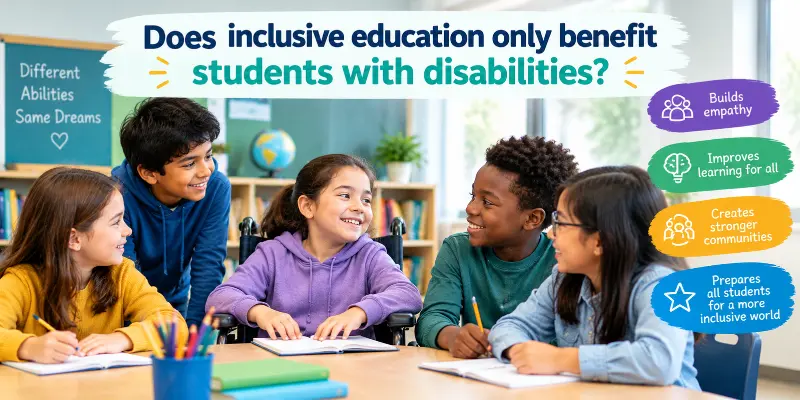
No. Inclusive teaching can help a broad range of learners by improving access to information, supporting participation, and reducing unnecessary barriers. Specific accommodations should still be based on individual requirements.
Conclusion
The Inclusion Development Programme offers a useful historical example of professional development aimed at helping teachers support children with special educational needs and disabilities. However, its original context should be distinguished from India’s own education policies and government initiatives.
For Indian educators, the practical priority is to strengthen inclusive teaching through appropriate training, accessible learning materials, collaboration with specialists, and regular evaluation of student participation and progress. India’s Samagra Shiksha framework, the Rights of Persons with Disabilities Act, 2016, and NEP 2020 provide relevant starting points for understanding this work.
By combining accurate policy knowledge with practical classroom strategies, schools can move beyond formal commitments and create learning environments in which students receive appropriate support and opportunities to participate.





- Be Respectful
- Stay Relevant
- Stay Positive
- True Feedback
- Encourage Discussion
- Avoid Spamming
- No Fake News
- Don't Copy-Paste
- No Personal Attacks
- Be Respectful
- Stay Relevant
- Stay Positive
- True Feedback
- Encourage Discussion
- Avoid Spamming
- No Fake News
- Don't Copy-Paste
- No Personal Attacks
