15 Benefits of NEP 2020 for Teachers: Professional Growth, Career Opportunities & Better Teaching
Published: 16 Jul 2026
Introduction
The Benefits of NEP 2020 for Teachers have become one of the most discussed topics in India’s education sector. The National Education Policy(NEP) 2020 for teachers is the first major education reform introduced after more than three decades. While much attention has focused on students, the policy also brings significant improvements for teachers, recognizing them as the foundation of a quality education system. For transforming of education read the article How NEP 2020 Is Transforming School Education in India.
Teachers are expected to play a central role in transforming classrooms, improving learning outcomes, and preparing students for future careers. To support this responsibility, NEP 2020 introduces better teacher training, continuous professional development, technology integration, transparent recruitment, and greater professional autonomy. The article Teaching Faculty furnishes more information regarding teachers.
The policy encourages teachers to become facilitators of learning rather than traditional lecturers. It emphasizes creativity, practical learning, critical thinking, and student-centered education. As schools gradually implement the policy, teachers across India are gaining access to new opportunities that can strengthen both their careers and teaching effectiveness.
Whether you are a government school teacher, private school educator, B.Ed. student, lecturer, or aspiring educator, understanding the Benefits of NEP 2020 for Teachers can help you prepare for the evolving education landscape.
What Is NEP 2020?
The National Education Policy 2020 is a comprehensive framework introduced by the Government of India to modernize the country’s education system. It covers every stage of education, from early childhood learning to higher education and teacher development.
The policy aims to create an education system that develops knowledge, practical skills, innovation, ethical values, communication abilities, and lifelong learning habits.
For teachers, NEP 2020 focuses on several important objectives, including:
- Improving teaching quality
- Enhancing professional development
- Encouraging digital education
- Strengthening teacher recruitment
- Promoting research-based teaching
- Increasing classroom flexibility
- Supporting competency-based education
These reforms are designed to improve the overall teaching profession while benefiting students at every educational level.
Why Teachers Are Central to NEP 2020
One of the biggest strengths of NEP 2020 is that it recognizes teachers as the backbone of educational reform. Educational infrastructure, modern classrooms, and digital tools cannot achieve meaningful results without skilled, motivated, and well-trained teachers.
The policy shifts the focus from rigid teaching methods to flexible learning environments where teachers guide students through inquiry, discussion, collaboration, and problem-solving activities.
Teachers are encouraged to:
- Develop innovative lesson plans
- Promote experiential learning
- Use technology effectively
- Assess students beyond examinations
- Encourage creativity
- Support inclusive education
This transformation increases the professional value of teachers while improving classroom outcomes.
Benefit 1: Continuous Professional Development (CPD)
One of the most significant Benefits of NEP 2020 for Teachers is mandatory Continuous Professional Development (CPD).
Under the policy, teachers are expected to participate in approximately 50 hours of professional development every year. These learning opportunities include:
- Teaching workshops
- Online certification programs
- Classroom management training
- Digital learning courses
- Assessment techniques
- Leadership development
- Subject-specific training
Instead of relying only on pre-service qualifications, teachers continue improving their skills throughout their careers.
Continuous learning helps educators stay updated with changing educational practices, curriculum reforms, emerging technologies, and modern pedagogical approaches.
Teachers who consistently upgrade their knowledge become more confident, effective, and capable of meeting diverse classroom needs.
Benefit 2: Better Career Growth Opportunities
Career advancement is another major advantage introduced through NEP 2020.
Earlier, promotions often depended mainly on years of service. The new approach encourages merit-based career progression that rewards professional excellence, innovation, and continuous learning.
Teachers can improve their career prospects by demonstrating:
- Strong classroom performance
- Professional development achievements
- Leadership abilities
- Student engagement
- Innovative teaching methods
- Subject expertise
This creates a more motivating work environment where dedicated educators have greater opportunities for advancement.
The emphasis on performance also encourages teachers to invest in lifelong learning rather than relying solely on seniority.
Benefit 3: Improved Teacher Training Programs
Teacher education has undergone major reforms under NEP 2020.
The policy recommends strengthening teacher preparation through comprehensive academic programs that combine theoretical knowledge with extensive classroom practice.
Future teachers receive greater exposure to:
- Child psychology
- Inclusive education
- Classroom technology
- Practical teaching experience
- Assessment methods
- Educational research
- Communication skills
Existing teachers also benefit from refresher courses and advanced training modules designed to improve instructional quality.
Better training ultimately results in stronger classroom management, improved student engagement, and higher academic achievement.
Benefit 4: Greater Professional Respect
The Benefits of NEP 2020 for Teachers extend beyond salary or promotions. One of the policy’s important goals is restoring the professional status of teaching.
Teachers are recognized as nation builders who contribute directly to economic development, social progress, and innovation.
The policy encourages schools and educational institutions to:
- Respect teachers’ professional expertise
- Reduce unnecessary administrative workload
- Support academic freedom
- Encourage collaborative teaching
- Promote teacher leadership
When educators are trusted and valued, they are more motivated to innovate and improve student learning experiences.
Professional recognition also enhances job satisfaction and encourages talented individuals to choose teaching as a long-term career.
Benefit 5: Integration of Technology in Teaching
Digital education has become an essential part of modern classrooms.
NEP 2020 encourages teachers to integrate technology into daily teaching rather than using it only during emergencies.
Teachers are encouraged to use:
- Smart classrooms
- Digital whiteboards
- Educational apps
- Learning Management Systems (LMS)
- Virtual laboratories
- Interactive quizzes
- Online assessments
- Multimedia presentations
Technology allows teachers to personalize instruction, monitor student progress, and make lessons more engaging.
Digital tools also help educators manage classroom records, assignments, attendance, and communication more efficiently.
Instead of replacing teachers, technology serves as a powerful support system that enhances teaching quality.
Benefit 6: Freedom to Use Innovative Teaching Methods
Traditional rote learning has long dominated many classrooms. NEP 2020 encourages teachers to move beyond memorization and adopt creative teaching strategies.
Educators have greater flexibility to introduce:
- Project-based learning
- Activity-based instruction
- Inquiry-based learning
- Case studies
- Group discussions
- Collaborative projects
- Real-world problem solving
- Practical demonstrations
This flexibility enables teachers to adapt lessons according to students’ abilities, interests, and learning styles.
Students become more active participants in learning rather than passive listeners.
For teachers, this creates a more engaging classroom environment while improving overall teaching effectiveness.
Benefit 7: Competency-Based Teaching Improves Classroom Outcomes
Another major Benefits of NEP 2020 for Teachers is the shift from syllabus completion to competency-based education. Instead of encouraging students to memorize facts only for examinations, NEP 2020 focuses on helping learners develop practical knowledge, analytical thinking, creativity, communication skills, and real-life problem-solving abilities.
For teachers, this approach changes the classroom experience significantly. Lessons become more meaningful because educators can concentrate on whether students truly understand concepts rather than simply recalling textbook information.
Competency-based teaching also encourages teachers to design learning activities that include observation, experimentation, discussion, presentations, collaborative assignments, and practical applications. These methods help students retain knowledge for longer periods while making classrooms more interactive.
Teachers benefit because they can measure actual learning outcomes and adjust their teaching strategies according to students’ strengths and weaknesses. This creates a supportive learning environment where every child has an opportunity to succeed.
Benefit 8: Better Assessment Methods Reduce Academic Pressure
Traditional examinations often measured only memorization skills. NEP 2020 introduces assessment methods that evaluate students more comprehensively, allowing teachers to focus on continuous learning instead of one-time test performance.
The policy encourages teachers to assess students through:
- Classroom participation
- Practical activities
- Project work
- Group assignments
- Oral presentations
- Portfolio assessments
- Skill demonstrations
- Concept-based quizzes
These assessment techniques provide teachers with a better understanding of student progress throughout the academic year.
Instead of preparing students only for final examinations, educators can identify learning gaps early and provide timely support. This reduces classroom stress while improving academic performance.
Teachers also gain valuable insights into each student’s learning style, enabling them to personalize instruction more effectively.
Benefit 9: Greater Academic Flexibility for Teachers
One of the most appreciated Benefits of NEP 2020 for Teachers is increased flexibility in classroom instruction.
Earlier, many teachers followed rigid lesson plans with limited scope for innovation. NEP 2020 allows educators to modify instructional methods according to classroom needs while still meeting curriculum objectives.
Teachers can now:
- Select suitable learning activities.
- Use local examples to explain concepts.
- Incorporate current events into lessons.
- Encourage classroom discussions.
- Integrate multiple subjects.
- Design creative assignments.
- Introduce experiential learning opportunities.
This flexibility makes teaching more enjoyable and effective. It also allows teachers to address the diverse learning abilities found in modern classrooms.
Students become more engaged because lessons feel relevant to everyday life rather than being limited to textbook content.
Benefit 10: Encouragement for Multidisciplinary Learning
NEP 2020 promotes multidisciplinary education across schools and higher education institutions. Teachers are encouraged to connect concepts from different subjects to create a broader learning experience.
For example:
- Mathematics can be connected with economics.
- Science can be linked with environmental studies.
- History can support literature lessons.
- Geography can complement social science.
- Art can be integrated into language learning.
This interdisciplinary approach helps teachers make lessons more interesting while encouraging students to understand relationships between different fields of knowledge.
Teachers also expand their own subject expertise by collaborating with colleagues from other disciplines.
The result is a richer classroom environment that promotes creativity, innovation, and critical thinking.

Benefit 11: Strong Focus on Inclusive Education
Inclusive education is another important area where teachers benefit under NEP 2020.
The policy aims to ensure that every child receives quality education regardless of social background, economic condition, language, disability, gender, or geographical location.
Teachers receive guidance on creating classrooms that welcome diverse learners by using appropriate teaching methods and instructional materials.
Educators are encouraged to:
- Adapt lessons for different learning abilities.
- Support children with special educational needs.
- Promote equal classroom participation.
- Respect linguistic diversity.
- Encourage collaborative learning.
- Foster empathy and mutual respect among students.
As teachers develop these inclusive practices, they become more confident in managing diverse classrooms and supporting every learner effectively.
Benefit 12: Increased Opportunities for Digital Skill Development
Technology continues to reshape education worldwide, and NEP 2020 ensures that teachers remain prepared for this transformation.
Digital literacy has become an essential professional skill for educators. The policy encourages teachers to develop expertise in educational technologies that improve both teaching quality and administrative efficiency.
Teachers are expected to become familiar with:
- Online teaching platforms.
- Virtual classrooms.
- Digital assessment tools.
- Interactive learning software.
- Artificial intelligence-assisted learning resources.
- Educational videos.
- Digital content creation.
- Online collaboration platforms.
Developing these digital skills improves classroom engagement while increasing teachers’ employability in both traditional and online education sectors.
Teachers who master educational technology are better prepared to adapt to future changes in the education system.
How NEP 2020 Enhances Teacher Satisfaction
Beyond professional development and classroom improvements, one of the long-term Benefits of NEP 2020 for Teachers is improved job satisfaction.
When educators receive quality training, professional recognition, career advancement opportunities, and greater classroom flexibility, they are naturally more motivated.
Several factors contribute to higher teacher satisfaction under NEP 2020:
- Better professional identity.
- Continuous learning opportunities.
- Reduced dependence on rote teaching.
- Increased creativity in lesson planning.
- Greater collaboration among educators.
- Recognition of teaching excellence.
- Enhanced confidence through regular skill development.
Satisfied teachers are more enthusiastic, committed, and productive, which directly benefits students and educational institutions.
The Role of Teachers in Achieving NEP 2020 Goals
The success of NEP 2020 depends largely on teachers. Educational reforms can only become meaningful when teachers successfully implement them in classrooms.
Teachers are expected to:
- Encourage critical thinking.
- Build communication skills.
- Develop ethical values.
- Promote creativity.
- Foster scientific temper.
- Support lifelong learning.
- Prepare students for future careers.
- Inspire innovation.
Rather than simply delivering lessons, teachers become mentors who guide students toward becoming responsible, skilled, and confident citizens.
This expanded role increases the importance of teachers within India’s education system while creating new opportunities for professional growth.
Benefit 13: Better Leadership Opportunities for Teachers
Among the most valuable Benefits of NEP 2020 for Teachers is the increased focus on educational leadership. The policy recognizes that experienced teachers should have opportunities to contribute beyond classroom teaching.
Schools and educational institutions are encouraged to identify teachers with strong instructional, mentoring, and organizational skills. These educators can take on leadership responsibilities such as mentoring new teachers, coordinating academic programs, leading curriculum planning, and participating in school improvement initiatives.
Leadership opportunities may include:
- Mentoring newly appointed teachers.
- Coordinating subject departments.
- Leading professional development workshops.
- Participating in curriculum design.
- Managing academic innovation projects.
- Supporting school quality improvement programs.
These responsibilities allow teachers to grow professionally while contributing to institutional excellence. Leadership experience also strengthens career prospects for positions such as academic coordinator, vice principal, principal, instructional coach, or education consultant.
Benefit 14: Stronger Collaboration Among Teachers
NEP 2020 encourages schools to create collaborative learning environments where teachers regularly share knowledge, teaching strategies, and classroom experiences.
Instead of working independently, educators are encouraged to exchange ideas, discuss student progress, solve classroom challenges together, and develop innovative lesson plans.
Collaborative teaching offers several advantages:
- Sharing successful classroom practices.
- Developing interdisciplinary projects.
- Improving lesson planning.
- Learning new teaching methodologies.
- Supporting newly recruited teachers.
- Building professional learning communities.
- Increasing consistency in student learning outcomes.
This collaborative culture reduces professional isolation and creates opportunities for continuous learning within schools.
Teachers benefit from peer support while students receive a more consistent and engaging educational experience.
Benefit 15: Greater Job Security and Long-Term Career Stability
The final and perhaps most reassuring Benefits of NEP 2020 for Teachers is the policy’s commitment to strengthening the teaching profession as a respected and sustainable career.
By emphasizing transparent recruitment, merit-based career progression, high-quality teacher education, and continuous professional development, NEP 2020 aims to create a more stable educational workforce.
Teachers who continuously upgrade their knowledge and demonstrate professional competence are likely to enjoy better long-term career prospects.
The policy also encourages governments, educational institutions, and school management bodies to improve working conditions, ensuring that teachers can focus more on teaching rather than excessive administrative responsibilities.
As education continues to evolve, qualified teachers with modern teaching skills will remain highly valuable across public schools, private institutions, higher education, online learning platforms, and international education organizations.
How NEP 2020 Supports Different Categories of Teachers
One of the strengths of NEP 2020 is that its reforms are designed to benefit teachers working across different educational settings.
Government school teachers benefit from improved professional development programs, competency-based teaching methods, digital education initiatives, and structured career progression.
Private school teachers gain access to modern teaching practices, technology integration, innovative assessment methods, and opportunities to enhance instructional quality.
Higher education faculty benefit from multidisciplinary education, research-oriented teaching, academic flexibility, and stronger collaboration across departments.
New teachers entering the profession receive improved teacher education programs, better practical training, and clearer career pathways.
Special education teachers receive greater institutional support for inclusive education, helping them address the diverse needs of learners more effectively.
Regardless of the educational setting, the Benefits of NEP 2020 for Teachers contribute to professional growth and improved classroom performance.
Challenges Teachers May Face During NEP 2020 Implementation
Although the policy offers numerous advantages, successful implementation requires time, resources, and continuous support.
Some common challenges include:
- Adapting to new teaching methodologies.
- Learning digital education tools.
- Managing competency-based assessments.
- Updating lesson plans regularly.
- Participating in continuous professional development programs.
- Balancing administrative responsibilities with classroom teaching.
- Addressing diverse student learning needs.
These challenges are expected during any major educational reform. With proper training, institutional support, and professional collaboration, teachers can gradually overcome these difficulties and fully benefit from the policy.
Tips for Teachers to Maximize the Benefits of NEP 2020
Teachers can take proactive steps to make the most of the opportunities provided under NEP 2020.
Stay updated with the latest educational guidelines and policy developments by participating in professional learning opportunities.
Enroll in certified online courses that strengthen digital teaching skills, classroom management techniques, and subject expertise.
Adopt student-centered teaching methods that encourage critical thinking, creativity, communication, and problem-solving.
Integrate educational technology into daily classroom activities to improve engagement and personalize learning.
Collaborate regularly with colleagues to exchange ideas, develop innovative lesson plans, and solve classroom challenges collectively.
Maintain a habit of reflective teaching by evaluating classroom practices and identifying areas for continuous improvement.
Support inclusive education by adapting instructional strategies to meet the needs of learners with different abilities and backgrounds.
Develop leadership skills by mentoring junior teachers, participating in academic committees, and contributing to curriculum planning.
These practices help teachers align their professional growth with the vision of NEP 2020.
Why the Benefits of NEP 2020 for Teachers Matter in the Future
India’s education system is preparing students for a rapidly changing world shaped by technology, innovation, entrepreneurship, and global competition. Teachers are the driving force behind this transformation.
The Benefits of NEP 2020 for Teachers extend beyond salary improvements or promotions. They create an education system where teachers are lifelong learners, skilled professionals, mentors, innovators, and leaders.
As classrooms become increasingly technology-enabled and competency-focused, teachers who embrace continuous learning will remain highly valued. Their ability to inspire students, encourage creativity, and build future-ready skills will play a crucial role in India’s social and economic development.
The policy ultimately strengthens both the teaching profession and the quality of education delivered to millions of students across the country.
Conclusion
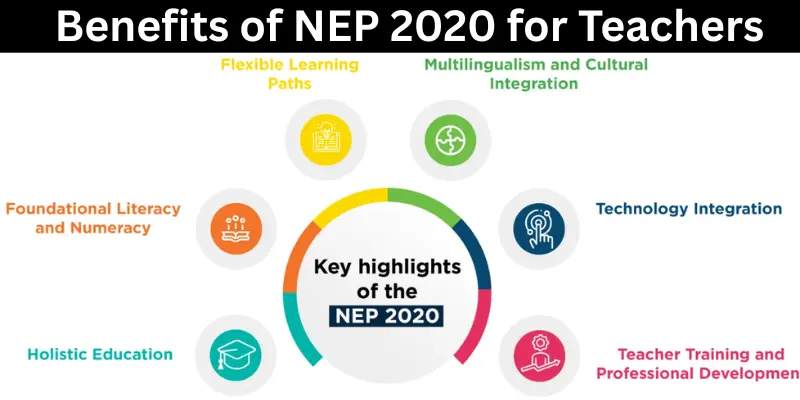
The Benefits of NEP 2020 for Teachers represent a significant shift toward empowering educators with better training, professional recognition, career advancement, digital skills, academic flexibility, and leadership opportunities. By focusing on continuous professional development, competency-based teaching, inclusive education, multidisciplinary learning, and innovative classroom practices, the policy enables teachers to become more effective and confident professionals.
While implementation may present certain challenges, the long-term advantages outweigh the initial adjustments. Teachers who actively embrace lifelong learning, technology integration, collaboration, and modern pedagogical approaches will be better equipped to meet the evolving needs of students and society.
NEP 2020 not only transforms classrooms but also elevates the teaching profession, ensuring that educators remain at the heart of India’s educational progress for years to come.
Frequently Asked Questions (FAQs)
Q1. What are the main benefits of NEP 2020 for teachers?
The main Benefits of NEP 2020 for Teachers include continuous professional development, improved teacher training, career advancement opportunities, digital skill development, competency-based teaching, greater academic flexibility, leadership opportunities, and stronger professional recognition.
Q2. How does NEP 2020 improve teacher training?
NEP 2020 promotes comprehensive teacher education, regular professional development programs, practical classroom experience, technology training, and ongoing skill enhancement to improve teaching quality.
Q3. Does NEP 2020 encourage digital teaching?
Yes. The policy encourages teachers to use smart classrooms, digital learning platforms, online assessments, educational applications, multimedia resources, and other digital tools to improve student engagement and learning outcomes.
Q4. How does NEP 2020 support teachers’ career growth?
The policy emphasizes merit-based career progression, leadership development, continuous learning, professional excellence, and opportunities to take on academic and administrative leadership roles.
Q5. Will NEP 2020 reduce rote learning in classrooms?
Yes. NEP 2020 promotes competency-based education, experiential learning, critical thinking, creativity, and practical application of knowledge instead of relying mainly on memorization.
Q6. Why is NEP 2020 important for the future of teachers in India?
NEP 2020 prepares teachers for modern education by strengthening professional skills, encouraging innovation, integrating technology, promoting lifelong learning, and ensuring that educators remain central to building a future-ready education system.

NEP 2020 for Teachers: Complete Guide to New Education Policy, Roles, Changes, Benefits & Implementation (2026)





- Be Respectful
- Stay Relevant
- Stay Positive
- True Feedback
- Encourage Discussion
- Avoid Spamming
- No Fake News
- Don't Copy-Paste
- No Personal Attacks
- Be Respectful
- Stay Relevant
- Stay Positive
- True Feedback
- Encourage Discussion
- Avoid Spamming
- No Fake News
- Don't Copy-Paste
- No Personal Attacks
