Teaching Skills for New Teachers: Essential Skills for Effective Classroom Teaching
Published: 24 Aug 2026
Starting a teaching career is exciting, but new teachers often face a major challenge: knowing what to do inside a real classroom. Academic qualifications provide subject knowledge, but effective teaching requires much more. Teachers need to communicate clearly, manage classrooms, plan lessons, assess learning, motivate students, use technology, support different learners, and continuously improve their teaching practices.
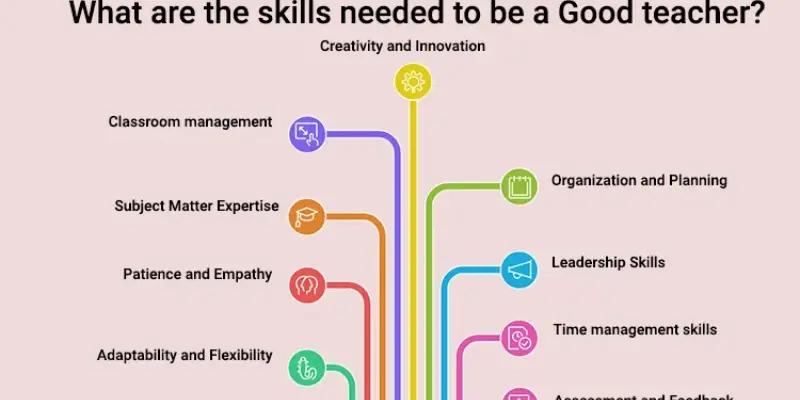
Teaching Skills for New Teachers are the practical abilities that help educators turn subject knowledge into meaningful learning experiences. A new teacher may understand mathematics, science, English, social science, or another subject very well, but students may still struggle if explanations are unclear, classroom routines are weak, or lessons do not provide opportunities for participation.
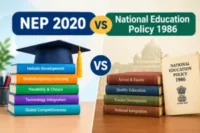
The changing education environment in India makes these skills even more important. The National Education Policy 2020 emphasizes competency-based education, experiential learning, critical thinking, creativity, technology integration, inclusion, formative assessment, and holistic student development. Teachers therefore need a broader set of professional skills than simply delivering textbook content.
What Are Teaching Skills for New Teachers?
Teaching Skills for New Teachers are the professional, interpersonal, instructional, and organizational abilities required to plan and deliver effective lessons and create a positive learning environment.
These skills include lesson planning, communication, classroom management, questioning, student engagement, assessment, feedback, technology integration, differentiated instruction, collaboration, time management, adaptability, and reflective practice.
A new teacher does not need to master every skill immediately. Teaching develops through classroom experience, observation, feedback, professional development, and reflection.
The most important goal is to create lessons in which students understand what they are learning, participate actively, receive useful feedback, and have opportunities to apply their knowledge.
Why Teaching Skills Matter for New Teachers
New teachers are often expected to handle several responsibilities at the same time. They may need to prepare lessons, teach multiple classes, manage student behavior, check assignments, communicate with parents, complete administrative work, and participate in professional development.
Strong Teaching Skills for New Teachers make these responsibilities easier to manage.
A teacher with good communication skills can explain difficult concepts more clearly. A teacher with classroom management skills can establish routines that reduce disruptions. A teacher with assessment skills can identify learning gaps before they become larger problems.
Teaching skills also affect student confidence. Students are more likely to participate when teachers create an environment where questions are welcomed and mistakes are treated as opportunities for learning.
The broader role of educators is discussed in Teaching Faculty: Roles, Responsibilities, Skills, and Importance in Modern Education, which is useful for understanding how teaching responsibilities are changing.
1. Lesson Planning Skills
Lesson planning is one of the most important Teaching Skills for New Teachers.
A lesson plan provides a structure for what students should learn, what the teacher will explain, what activities students will complete, and how learning will be assessed.
A practical lesson plan can include:
- Learning objectives
- Required resources
- Introduction or engagement activity
- Teacher explanation
- Student activity
- Practice
- Assessment
- Feedback
- Lesson reflection
New teachers sometimes make the mistake of planning too much content for one lesson. A better approach is to identify the most important learning outcome and design activities around it.
For example, instead of planning to “teach percentages,” a teacher might establish the objective: “Students will calculate percentages and apply them to everyday situations.”
This makes the lesson more focused.
2. Clear Communication Skills
Communication is fundamental to effective teaching.
Teachers communicate through spoken explanations, written instructions, questions, demonstrations, facial expressions, gestures, classroom discussions, digital platforms, and feedback.
A new teacher should learn to explain concepts in simple and precise language without unnecessarily reducing academic depth.
Clear communication includes:
Simple explanations: Break complex concepts into manageable parts.
Clear instructions: Tell students exactly what they need to do.
Appropriate language: Use terminology suitable for the students’ age and level.
Active listening: Pay attention to students’ questions and responses.
Non-verbal communication: Use eye contact, gestures, tone, and facial expressions appropriately.
Teachers should also avoid assuming that silence means understanding. Students may remain quiet because they are confused, shy, distracted, or unsure about the answer.
3. Classroom Management Skills
Classroom management is one of the most important Teaching Skills for New Teachers because even a well-designed lesson can fail when classroom routines are unclear.
New teachers should establish expectations early.
Students should understand:
- How to enter the classroom
- How to submit assignments
- How to ask questions
- How to participate in discussions
- How to work in groups
- How to use devices
- How to move between activities
Rules should be clear, reasonable, and consistently applied.
Effective classroom management does not mean controlling every movement of students. It means creating conditions where students can learn safely and productively.
Positive reinforcement, respectful communication, consistent routines, and meaningful activities can reduce many classroom management problems.
4. Student Engagement Skills
Student engagement means involving learners actively in the learning process.
New teachers should avoid relying entirely on long lectures. Students can participate through discussions, demonstrations, problem-solving, group activities, projects, presentations, experiments, debates, and short written responses.
For example, after explaining a science concept, a teacher can ask students to predict what would happen under a different condition.
In mathematics, students can solve a real-world problem in pairs.
In English, students can discuss a short passage before writing their own response.
Engagement should serve the learning objective. An activity is useful when it helps students understand, practice, apply, or evaluate knowledge.
This approach aligns with CBSE’s emphasis on child-centered, experiential, cooperative, and collaborative pedagogy.
5. Questioning Skills
Good questioning can transform a classroom from teacher-led instruction into active learning.
New teachers often ask questions that have one-word answers. These questions can be useful for checking basic knowledge, but students also need questions that require explanation and reasoning.
Examples include:
- Why do you think this happened?
- What evidence supports your answer?
- Can you explain this in your own words?
- What would happen if the situation changed?
- How are these two concepts different?
- Can you apply this idea to everyday life?
Teachers should provide students with sufficient thinking time.
A useful technique is to ask a question, pause, allow students to think, and then invite responses.
This can increase participation from students who need more time to formulate their answers.
6. Assessment Skills
Assessment is not simply something that happens at the end of a term.
New teachers should learn how to assess student understanding throughout a lesson and unit.
Useful formative assessment methods include:
- Short quizzes
- Exit tickets
- Oral questions
- Student explanations
- Practical demonstrations
- Peer review
- Short written tasks
- Concept maps
- Presentations
A teacher can use a simple exit ticket:
What did you understand today?
What remains unclear?
What would you like to learn next?
The answers can guide future instruction.
Competency-focused assessment is becoming increasingly important in Indian education. For a deeper understanding, see Competency-Based Assessment Under NEP 2020.
7. Feedback Skills
Students need to know how they are progressing and what they should improve.
Effective feedback is specific.
“Good job” provides encouragement but little information.
“Your explanation identifies the correct cause. Add evidence from the example to strengthen your conclusion” gives the student a clear next step.
Feedback can be:
- Verbal
- Written
- Individual
- Group-based
- Peer-based
- Self-reflective
New teachers should avoid giving excessive criticism. Feedback should identify strengths while explaining how students can improve.
8. Differentiated Instruction Skills
Students in the same classroom can have very different learning levels.
Some may understand a concept immediately, while others need additional explanation and practice.
Differentiated instruction helps teachers respond to these differences.
A new teacher can differentiate by changing:
- Question difficulty
- Amount of support
- Learning materials
- Group arrangements
- Practice opportunities
- Extension activities
- Presentation formats
For example, students who need additional support may receive guided examples, while advanced students can solve an extension problem.
Differentiation does not mean preparing a completely separate lesson for every student. It means creating reasonable opportunities for different learners to achieve the intended learning outcome.
9. Technology Skills for New Teachers
Digital literacy is increasingly important among Teaching Skills for New Teachers.
Teachers may use:
- Presentation software
- Digital quizzes
- Educational videos
- Learning management systems
- Online assignments
- Interactive simulations
- Digital whiteboards
- Educational applications
- AI-supported teaching tools

Technology should have a clear instructional purpose.
A teacher should not use a digital tool simply because it looks impressive. The important question is whether it improves understanding, participation, assessment, accessibility, or learning efficiency.
The Ministry of Education identifies technology-related initiatives under NEP 2020, including digital education architecture and the National Education Technology Forum.
New teachers can also read How NEP 2020 Is Transforming School Education in India to understand the broader changes affecting classroom teaching.
10. Experiential Learning Skills
Experiential learning allows students to learn through doing, observing, investigating, and reflecting.
Examples include:
- Science experiments
- Field observations
- Projects
- Role-play
- Case studies
- Simulations
- Surveys
- Demonstrations
- Community-based activities
CBSE describes experiential learning as including activity-based, inquiry-based, collaborative, art-integrated, sport-integrated, and learning-by-doing approaches.
A new teacher can begin with simple activities.
A mathematics teacher can ask students to measure objects in the classroom.
A science teacher can organize an observation activity.
A social science teacher can ask students to document a local community issue.
An English teacher can conduct an interview or storytelling activity.
Experiential learning does not require expensive equipment.
11. Competency-Based Teaching Skills
Competency-based teaching focuses on what students can understand and demonstrate rather than simply how much content they can memorize.
Teachers need to identify learning outcomes and create opportunities for students to apply knowledge.
A mathematics lesson may require students to solve a practical financial problem.
A science lesson may require students to interpret experimental results.
A language lesson may require students to construct and defend an argument.
The goal is to develop knowledge together with skills such as communication, reasoning, collaboration, creativity, and problem-solving.
EducationBeacon’s Competency-Based Education Under NEP 2020 provides a more detailed explanation of this approach.
12. Time Management Skills
New teachers can easily spend too much time explaining one concept or managing one classroom activity.
Time management begins with realistic lesson planning.
Teachers can estimate how long each activity should take and keep a small amount of flexibility for questions or unexpected issues.
A 40-minute lesson might include:
- 5 minutes for introduction
- 10 minutes for explanation
- 15 minutes for student activity
- 7 minutes for assessment
- 3 minutes for closure
These timings are flexible rather than fixed.
Teachers should also avoid spending the majority of the lesson on administrative tasks.
13. Inclusive Teaching Skills
Inclusive teaching ensures that students with different abilities, backgrounds, languages, and learning needs receive meaningful opportunities to participate.
Teachers can support inclusion through:
- Accessible learning materials
- Clear instructions
- Flexible activities
- Peer collaboration
- Appropriate technology
- Varied assessment methods
- Respectful communication
NEP 2020 places strong emphasis on equity and inclusion, while CBSE expects teachers to address learner diversity and provide a safe learning environment.
New teachers should avoid assuming that all students learn at the same speed or in exactly the same way.
14. Critical Thinking and Problem-Solving Skills
Modern teaching should help students think rather than only remember.
New teachers can develop critical thinking through:
- Open-ended questions
- Case studies
- Debates
- Problem-solving activities
- Comparisons
- Evidence-based discussions
- Research tasks
Instead of asking only “What is the answer?” teachers can ask:
How did you reach that answer?
What evidence supports it?
Can you find another solution?
What would change your conclusion?
These questions encourage reasoning and help students become more independent learners.
15. Collaboration and Teamwork Skills
Teachers also need collaboration skills.
New teachers rarely work completely alone. They may collaborate with senior teachers, school administrators, special educators, parents, counselors, and other professionals.
Peer collaboration can help new teachers improve lesson planning, classroom management, assessment, and subject teaching.
Teachers can observe colleagues, exchange lesson ideas, discuss classroom challenges, and review student work together.
CBSE also emphasizes professional collaboration and expects teachers to support junior colleagues and engage in continuous improvement.
16. Emotional Intelligence and Empathy
Teaching is a people-centered profession.
Students may experience academic pressure, family difficulties, social challenges, or a lack of confidence. New teachers do not need to become counselors, but they should develop empathy and emotional awareness.
A teacher can:
- Listen carefully
- Avoid humiliating students
- Encourage effort
- Respond calmly to mistakes
- Recognize student concerns
- Create a respectful environment
Students learn more effectively when they feel safe enough to ask questions and make mistakes.
17. Reflective Teaching Skills
One of the most valuable Teaching Skills for New Teachers is the ability to reflect on their own teaching.
After a lesson, a new teacher can ask:
What worked well?
Which students participated?
Which students struggled?
Which explanation caused confusion?
Did the activity support the learning objective?
Was the lesson too fast?
What should I change next time?
Reflection converts classroom experience into professional learning.
Teachers can maintain a simple teaching journal and record one success and one improvement point after important lessons.
Teaching Skills for New Teachers Under NEP 2020
NEP 2020 has strengthened the importance of several skills that new teachers need in modern Indian classrooms.
The policy promotes learner-centered education, competency-based learning, experiential learning, critical thinking, creativity, inclusion, technology integration, and continuous professional development.
A new teacher therefore needs more than subject expertise.
The teacher should know how to:
- Design meaningful learning activities
- Assess competencies
- Use technology appropriately
- Support different learners
- Encourage questioning
- Connect lessons with real life
- Provide constructive feedback
- Reflect on classroom practice
For a broader policy-focused guide, see NEP 2020 for Teachers: Complete Guide.
How New Teachers Can Develop Teaching Skills
Teaching skills develop gradually through practice.
Observe Experienced Teachers
New teachers can learn a great deal by observing how experienced educators introduce lessons, ask questions, handle disruptions, explain difficult concepts, and assess students.
Observation should be purposeful. Instead of simply watching a class, new teachers can focus on one skill at a time.
Request Constructive Feedback
A senior teacher or mentor can observe a lesson and provide feedback.
Useful questions include:
- Was my explanation clear?
- Did students participate?
- Was my lesson appropriately paced?
- Did my assessment measure the objective?
- How could I improve classroom management?
Practice One New Strategy at a Time
New teachers should not attempt to transform every aspect of their teaching immediately.
They can start with one strategy such as think-pair-share, exit tickets, formative questioning, group work, or real-life examples.
After evaluating the result, they can introduce another strategy.
Participate in Professional Development
Professional development can include workshops, webinars, certification programs, peer-learning groups, conferences, and subject-specific training.
CBSE maintains teacher-training and capacity-building resources that cover innovative pedagogy, assessment, subject-specific training, leadership, and other professional areas.
Common Mistakes New Teachers Should Avoid
New teachers often make mistakes because they are trying to manage many responsibilities at once.
Trying to Cover Too Much Content
A lesson with too much content can reduce student understanding.
Talking for the Entire Lesson
Teacher explanation is useful, but students also need opportunities to participate.
Using Activities Without a Learning Purpose
An activity should support the intended learning outcome.
Ignoring Quiet Students
Students who do not volunteer answers may still have valuable ideas.
Being Inconsistent With Classroom Rules
Students need predictable expectations.
Depending Only on Final Examinations
Frequent formative assessment provides earlier information about learning gaps.
Trying to Be Perfect
New teachers will make mistakes. Reflection and improvement are more important than perfection.

A Practical Daily Framework for New Teachers
A simple daily framework can help new educators organize their teaching.
Before the lesson: Identify the learning objective and prepare the required resources.
At the beginning: Introduce the topic through a question, example, problem, or short activity.
During instruction: Explain the concept clearly and ask questions.
During practice: Give students an opportunity to apply the concept.
During assessment: Check understanding through questions, short tasks, or an exit ticket.
At the end: Summarize the key learning point.
After the lesson: Reflect on what worked and what should be improved.
This structure is flexible enough for different subjects and age groups.
Teaching Skills for New Teachers: A Simple Checklist
Before entering the classroom, new teachers can check whether they have prepared:
- A clear learning objective
- A realistic lesson plan
- Appropriate learning resources
- An engaging introduction
- Questions for checking understanding
- A student activity
- A formative assessment
- A feedback method
- A classroom management plan
- A short lesson summary
This checklist reduces uncertainty and helps new teachers develop confidence.
How Teaching Skills Improve Student Learning
Strong Teaching Skills for New Teachers directly influence the quality of student learning.
Clear explanations improve understanding.
Effective questions develop reasoning.
Active learning increases participation.
Experiential learning connects knowledge with practice.
Formative assessment identifies misconceptions.
Constructive feedback supports improvement.
Classroom management protects learning time.
Differentiated instruction helps students with different needs.
Technology can expand learning resources.
Reflective teaching helps teachers continuously improve.
The result is a classroom in which students are not merely completing assignments but developing knowledge, skills, confidence, and independence.
Future Teaching Skills New Teachers Should Develop
The teaching profession will continue to evolve as technology, curriculum, assessment, and student expectations change.
New teachers should therefore develop skills that remain useful even when specific tools change.
These include:
- Digital literacy
- AI awareness
- Critical thinking
- Communication
- Adaptability
- Assessment literacy
- Inclusive teaching
- Collaboration
- Problem-solving
- Continuous professional learning
The future of teaching in India is closely connected with these capabilities. EducationBeacon’s Future of Teaching Careers in India After NEP 2020 discusses how competency-based education, digital learning, assessment, AI, and professional development are changing the teaching profession.
Challenges New Teachers May Face
New teachers may face large classes, limited resources, different learning levels, administrative responsibilities, technology challenges, and pressure to complete the curriculum.
NEP 2020 implementation also presents practical challenges involving teacher preparation, infrastructure, digital access, assessment reform, and regional differences. EducationBeacon’s Challenges of NEP 2020 and Practical Solutions provides a broader discussion of these implementation issues.
New teachers should not expect to solve every challenge individually. Mentoring, school leadership, peer collaboration, training, and appropriate institutional support can make a significant difference.
The Role of Continuous Professional Development
Professional development should not stop after obtaining a teaching qualification.
Teachers need to keep learning because curriculum requirements, educational technologies, assessment practices, and student needs continue to change.
Continuous professional development can include:
- Teacher training
- Online courses
- Workshops
- Peer learning
- Classroom research
- Educational conferences
- Professional reading
- Mentoring
- Self-reflection
The National Education Policy 2020 emphasizes teacher professional development and recognizes the importance of well-prepared educators.
The National Curriculum Framework for School Education 2023 from NCERT is another authoritative resource for teachers who want to understand the broader curriculum and pedagogical direction of school education in India.
You May Also Read
Effective Teaching Strategies in Classroom — practical classroom strategies for improving student engagement, active learning, assessment, and teaching effectiveness.
Key Features of the National Education Policy 2020 Explained — a broader overview of NEP 2020 reforms affecting teachers, students, curriculum, assessment, and technology.
How NEP 2020 Is Transforming School Education in India — explains how learner-centered teaching, competency-based learning, technology, and teacher development are changing school education.
Frequently Asked Questions
What are the most important teaching skills for new teachers?
The most important skills include lesson planning, communication, classroom management, questioning, student engagement, assessment, feedback, differentiated instruction, technology use, time management, collaboration, empathy, and reflective teaching.
How can new teachers improve their teaching skills?
New teachers can improve through classroom practice, observing experienced teachers, requesting feedback, participating in professional development, experimenting with one strategy at a time, and reflecting on lesson outcomes.
What teaching skill should a new teacher learn first?
Lesson planning and classroom management are strong starting points because they provide structure for the teaching process. Communication and questioning skills should then be developed alongside them.
Why is classroom management important for new teachers?
Effective classroom management protects learning time, establishes clear expectations, reduces unnecessary disruptions, and creates a respectful environment where students can participate.
How does NEP 2020 affect teaching skills?
NEP 2020 increases the importance of competency-based teaching, experiential learning, formative assessment, technology integration, inclusion, critical thinking, and continuous professional development.
Should new teachers use technology in every lesson?
No. Technology should be used when it improves learning, accessibility, engagement, assessment, or understanding. It is not necessary for every lesson.
How can new teachers handle students with different learning levels?
Teachers can use differentiated instruction, flexible grouping, additional practice, extension tasks, peer learning, varied resources, and different ways of demonstrating learning.
What is reflective teaching?
Reflective teaching is the process of reviewing a lesson to identify what worked, what did not work, how students responded, and what the teacher should change in future lessons.
Conclusion
Teaching Skills for New Teachers provide the foundation for successful classroom practice. Subject knowledge is important, but effective teaching also requires communication, lesson planning, classroom management, questioning, assessment, feedback, student engagement, differentiated instruction, technology literacy, collaboration, empathy, and reflective practice.
New teachers in India are entering the profession at a time when classroom education is becoming more competency-focused, experiential, inclusive, and technology-supported. NEP 2020 and the National Curriculum Framework for School Education 2023 reinforce the importance of active learning, critical thinking, practical application, assessment for learning, and continuous teacher development.
A new teacher does not need to master every Teaching Skills for New Teachers immediately. Professional growth happens gradually through classroom experience, mentoring, observation, feedback, professional development, and reflection.
The strongest beginning is to focus on a few essential skills: plan a clear lesson, communicate effectively, establish positive classroom routines, ask meaningful questions, check student understanding, provide constructive feedback, and reflect after teaching.
As these skills develop, new teachers can gradually introduce experiential learning, competency-based instruction, digital tools, differentiated teaching, collaborative activities, and more advanced assessment practices.
The goal is not to become a perfect teacher on the first day. The goal is to become a better teacher with every lesson.
Authoritative External Resources
National Education Policy 2020 — Ministry of Education, Government of India
National Curriculum Framework for School Education 2023 — NCERT
CBSE Expectations From Teachers
Effective Teaching Strategies in Classroom: Practical Methods for Better Student Learning in India



- Be Respectful
- Stay Relevant
- Stay Positive
- True Feedback
- Encourage Discussion
- Avoid Spamming
- No Fake News
- Don't Copy-Paste
- No Personal Attacks
- Be Respectful
- Stay Relevant
- Stay Positive
- True Feedback
- Encourage Discussion
- Avoid Spamming
- No Fake News
- Don't Copy-Paste
- No Personal Attacks
