Objectives of NEP 2020: Key Goals, Priorities & Impact on Indian Education
Published: 2 Sep 2026
The Objectives of NEP 2020 are designed to reshape India’s education system around quality, equity, flexibility, skills, research, technology, and holistic development. The National Education Policy 2020 provides a broad framework for reforming school education and higher education while reducing excessive dependence on rote memorization.
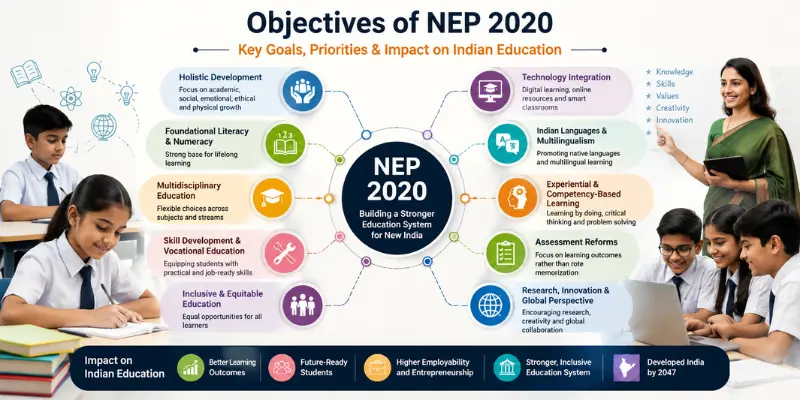
The policy aims to develop learners who can think critically, solve problems, communicate effectively, use knowledge in practical situations, and participate responsibly in society. It also gives greater importance to foundational literacy and numeracy, multidisciplinary learning, vocational exposure, Indian languages, teacher development, research, and technology-enabled education.
The Government of India describes NEP 2020 as a framework for building an equitable and vibrant knowledge society through high-quality education.
What Are the Objectives of NEP 2020?
The objectives of NEP 2020 refer to the major educational goals that guide the policy’s proposed reforms. These objectives cover more than curriculum changes. They address how students learn, how teachers teach, how institutions operate, how assessment is conducted, and how education connects with future careers and national development.
The policy seeks to create an education system that is:
- Learner-centered
- Skill-oriented
- Inclusive
- Flexible
- Multidisciplinary
- Technology-enabled
- Research-oriented
- Practical and experiential
- Focused on foundational learning
- Connected with Indian languages and culture
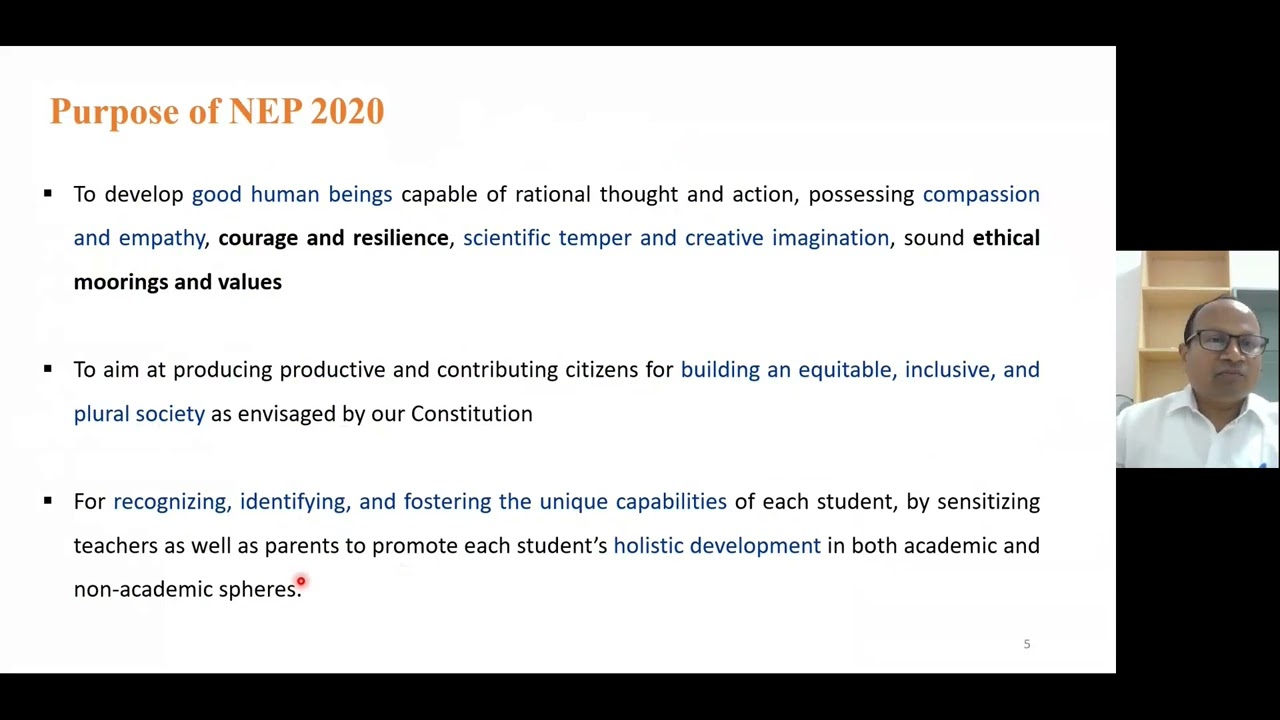
The policy’s vision includes developing students with rational thinking, compassion, empathy, resilience, scientific temper, creative imagination, and strong ethical values.
Major Objectives of NEP 2020
1. Improve the Quality of Education
Improving educational quality is one of the central objectives of NEP 2020. The policy seeks to move beyond education that primarily measures how much information students can memorize.
Quality education under the policy emphasizes conceptual understanding, critical thinking, creativity, communication, problem-solving, practical knowledge, and meaningful learning experiences.
Schools and higher education institutions are expected to focus more closely on learning outcomes rather than simply completing a prescribed syllabus.
2. Promote Holistic Development of Students
NEP 2020 promotes the development of the whole learner rather than focusing exclusively on academic performance.
Holistic development can include:
- Intellectual development
- Physical well-being
- Emotional development
- Social skills
- Creativity
- Ethical values
- Communication skills
- Life skills
- Critical thinking
- Problem-solving abilities
The policy also seeks to reduce rigid divisions between academic, vocational, artistic, and extracurricular areas. Students are expected to receive broader opportunities to explore different interests and abilities.
3. Strengthen Foundational Literacy and Numeracy
Foundational literacy and numeracy are major priorities under NEP 2020.
Students need basic reading, writing, comprehension, and mathematical abilities before they can successfully progress through more advanced areas of education.
The policy therefore gives significant importance to early learning and foundational skills. Government initiatives related to NEP 2020 include resources and programmes supporting foundational literacy and numeracy.
Strong foundational learning can help reduce learning gaps and provide students with a stronger academic base.
4. Reduce Dependence on Rote Memorization
One of the important objectives of NEP 2020 is to encourage students to understand and apply knowledge rather than depend primarily on memorization.
Learners should be able to:
- Explain concepts
- Analyze information
- Solve unfamiliar problems
- Apply knowledge
- Develop arguments
- Create solutions
- Connect ideas across subjects
This objective is closely related to competency-based education, where the focus is placed on what students can actually understand and demonstrate.
For a detailed explanation of this approach, see Competency-Based Education Under NEP 2020.
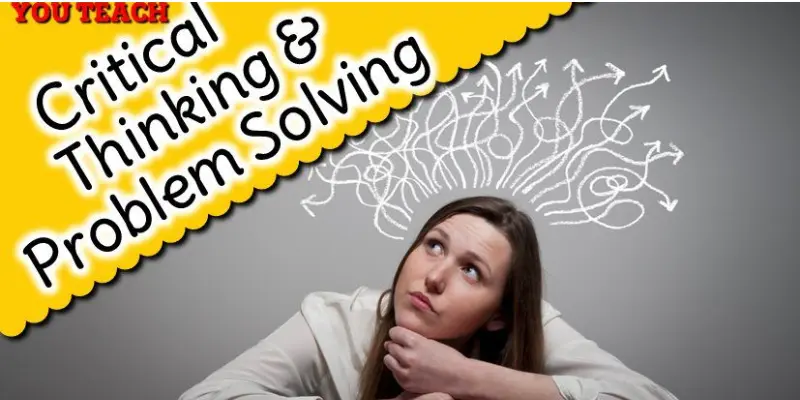
5. Encourage Critical Thinking and Problem-Solving
NEP 2020 gives greater importance to higher-order thinking skills.
Students need opportunities to question information, evaluate evidence, compare ideas, identify problems, and develop solutions.
Critical thinking can support academic success as well as practical decision-making. Problem-solving skills are relevant across science, mathematics, technology, business, social sciences, and everyday life.
Teachers can support this objective through questions that require explanation, analysis, application, and reasoning instead of questions based only on recall.
6. Provide Flexible Learning Opportunities
Flexibility is another important objective of NEP 2020.
The policy seeks to give students greater choice in what they study and how they build their academic pathways. The policy envisions fewer rigid boundaries between disciplines and greater freedom to combine different areas of learning.
This can allow students to explore combinations involving science, humanities, arts, sports, vocational subjects, and other areas according to their interests and future goals.
7. Promote Multidisciplinary Education
NEP 2020 encourages multidisciplinary learning rather than treating academic subjects as completely isolated areas.
A multidisciplinary approach can help students understand relationships between different fields.
For example, a project involving environmental problems could include:
- Science
- Mathematics
- Geography
- Economics
- Communication
- Technology
This approach can help learners understand how knowledge is applied to complex real-world problems.
8. Improve Access, Equity, and Inclusion
Another major objective is to make quality education accessible to learners from different social, economic, geographic, and educational backgrounds.
Inclusive education aims to reduce barriers that prevent students from participating fully in education.
Schools and institutions need to consider differences in:
- Learning abilities
- Economic circumstances
- Language
- Geography
- Gender
- Disability
- Access to technology
- Educational support
NEP 2020 places equity and inclusion among its major educational priorities.
9. Strengthen Teacher Preparation and Professional Development
Teachers are essential to implementing educational reforms.
NEP 2020 seeks to strengthen teacher preparation, professional development, classroom skills, and continuing learning. The policy recognizes that curriculum and assessment reforms cannot achieve their intended outcomes without appropriately prepared educators.
Teachers need knowledge of modern pedagogy, assessment practices, technology, inclusive education, and competency-focused learning.
For readers specifically interested in teachers, see NEP 2020 for Teachers: Complete Guide.
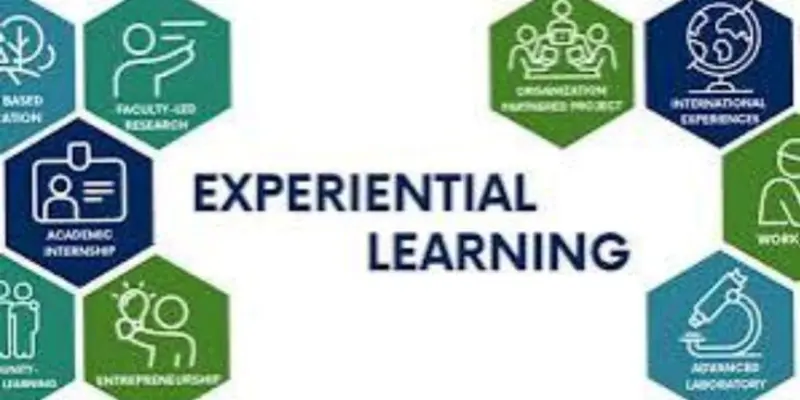
10. Encourage Experiential and Practical Learning
NEP 2020 supports learning that connects academic concepts with practical experiences.
Students can develop deeper understanding when they have opportunities to apply knowledge, investigate problems, work on meaningful tasks, and reflect on what they have learned.
Experiential learning can also support creativity, collaboration, communication, and problem-solving.
The goal is not simply to add more activities to classrooms. Practical learning should contribute directly to conceptual understanding and measurable learning outcomes.
11. Reform Student Assessment
Assessment reform is another major objective of NEP 2020.
Traditional examination systems can place excessive emphasis on memorization. The policy supports assessment practices that provide a broader picture of student learning.
Assessment can focus on:
- Conceptual understanding
- Competencies
- Application of knowledge
- Critical thinking
- Problem-solving
- Communication
- Continuous learning progress
Teachers can use assignments, classroom activities, projects, presentations, practical tasks, quizzes, and other assessment methods to understand student progress.
For a deeper explanation, see Competency-Based Assessment Under NEP 2020.
12. Promote Vocational Education and Skill Development
NEP 2020 aims to increase exposure to vocational education and practical skills.
Students should have opportunities to understand different occupations, develop practical abilities, and connect education with real-world work.
Skill development can include areas such as:
- Technical skills
- Digital skills
- Communication
- Entrepreneurship
- Financial awareness
- Practical problem-solving
- Work-related competencies
This objective can help reduce the separation between academic education and employability.
13. Integrate Technology Into Education
Technology is an important part of NEP 2020’s vision for modern education.
Digital tools can support:
- Online learning
- Digital educational resources
- Teacher training
- Remote learning
- Educational content delivery
- Assessment
- Collaboration
- Personalized learning
The Ministry of Education lists initiatives such as the National Digital Education Architecture and the National Education Technology Forum among NEP 2020-related initiatives.
Technology is not intended to replace teachers. Its educational value depends on how effectively it supports learning objectives and student needs.
14. Promote Indian Languages and Multilingual Learning
NEP 2020 places significant importance on Indian languages and multilingual education.
Language can influence comprehension, participation, cultural connection, and access to learning.
The policy promotes the use and development of Indian languages while recognizing the importance of multilingual education.
This objective also supports cultural awareness and helps students develop communication abilities across different linguistic contexts.
15. Improve Early Childhood Care and Education
NEP 2020 gives greater importance to early childhood education.
The policy recognizes the early years as an important period for cognitive, social, emotional, and physical development.
The school education structure proposed under NEP 2020 includes the 5+3+3+4 curricular and pedagogical structure, covering different developmental stages from early childhood through secondary education.
This approach seeks to align teaching and learning with children’s developmental needs rather than applying the same educational model to every age group.
16. Increase Research and Innovation
Research and innovation are important objectives within higher education.
NEP 2020 seeks to strengthen research culture, encourage innovation, and improve India’s contribution to knowledge creation.
Research can contribute to:
- Scientific development
- Technology
- Social innovation
- Economic growth
- Evidence-based policy
- Academic advancement
The policy also proposes stronger institutional support for research and innovation.
17. Expand Access to Higher Education
NEP 2020 seeks to increase participation in higher education while improving quality and flexibility.
Students should have greater opportunities to enter, continue, pause, and resume educational pathways where appropriate.
Flexible academic structures can help learners make decisions according to their circumstances and career goals.
The policy also promotes multidisciplinary higher education and greater institutional autonomy.
18. Connect Education With Employability and Future Careers
Education should prepare learners for changing employment environments.
NEP 2020 therefore emphasizes skills, practical learning, vocational exposure, digital literacy, communication, creativity, and problem-solving.
Employability is not limited to technical knowledge. Students also need transferable skills that can help them adapt to changing workplaces.
For teachers and educators interested in career implications, see Future of Teaching Careers in India After NEP 2020.
19. Encourage Responsible Citizenship and Ethical Development
Education under NEP 2020 is connected with values, constitutional principles, responsible citizenship, empathy, and social responsibility.
Students are expected to develop more than academic knowledge. Education should help them understand their responsibilities toward society and develop ethical decision-making abilities.
The policy’s vision includes respect for constitutional values, awareness of responsibilities, scientific temper, compassion, and ethical development.
20. Build India as a Knowledge-Based Society
A broader objective of NEP 2020 is to contribute to India’s development as an equitable and knowledge-based society.
Education can support national development through:
- Skilled human resources
- Research
- Innovation
- Entrepreneurship
- Scientific thinking
- Social development
- Cultural awareness
- Responsible citizenship
The policy’s vision is connected with improving educational quality while making education more equitable and relevant to India’s long-term development.
Objectives of NEP 2020 for School Education
School education receives particular attention under NEP 2020.
Major school-level objectives include:
- Strong foundational literacy and numeracy
- Holistic child development
- Competency-based learning
- Experiential learning
- Flexible curriculum
- Reduced rote learning
- Improved assessment
- Vocational exposure
- Technology integration
- Inclusive education
- Multilingual learning
- Better teacher preparation
These objectives are connected rather than isolated. A change in curriculum can affect teaching methods, assessment, teacher training, and student learning outcomes.
For a broader school-level discussion, read How NEP 2020 Is Transforming School Education in India.
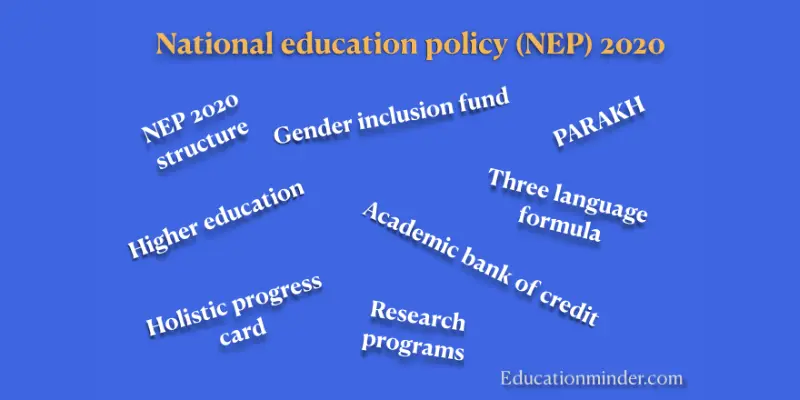
Objectives of NEP 2020 for Higher Education
Higher education reforms under NEP 2020 focus on quality, flexibility, multidisciplinary learning, research, innovation, and broader participation.
Students are expected to receive greater academic choice and opportunities to develop knowledge across disciplinary boundaries.
Higher education institutions are also expected to strengthen research, innovation, academic quality, and global engagement.
Academic pathways are intended to become more flexible, allowing students to make educational choices according to their interests and circumstances.
How the Objectives of NEP 2020 Affect Students
Students are among the main beneficiaries of the policy’s proposed reforms.
The objectives can influence student experiences through:
- More practical learning
- Greater subject choice
- Improved foundational skills
- Competency-focused assessment
- More technology-supported learning
- Greater vocational exposure
- Multidisciplinary education
- Increased emphasis on critical thinking
- Greater attention to holistic development
The exact impact can differ between institutions because implementation depends on infrastructure, teacher preparation, resources, technology access, and local educational conditions.
How the Objectives of NEP 2020 Affect Teachers
Teachers are responsible for translating many policy objectives into classroom practice.
The changing expectations can require educators to:
- Focus on learning outcomes
- Use varied teaching methods
- Support diverse learners
- Integrate appropriate technology
- Develop competency-based assessments
- Encourage critical thinking
- Connect lessons with practical situations
- Participate in professional development
The objective is not simply to increase teachers’ responsibilities. Effective implementation also requires training, resources, institutional support, and reasonable working conditions.
For broader teaching strategies, see Effective Teaching Strategies in Classroom and Digital Teaching Methods for Teachers.
Challenges in Achieving the Objectives of NEP 2020
Policy objectives can be ambitious, while implementation takes place across schools and institutions with different levels of infrastructure and resources.
Potential challenges include:
Teacher Training Requirements
Teachers may need continuous professional development to adopt competency-based teaching, digital tools, experiential learning, and new assessment practices.
Infrastructure Differences
Schools and institutions may have different levels of access to classrooms, laboratories, internet connectivity, digital devices, libraries, and other learning resources.
Regional and Language Differences
India’s linguistic and regional diversity requires flexible implementation approaches that respect local circumstances.
Assessment Implementation
Changing assessment practices requires teachers, schools, students, and parents to understand how learning outcomes and competencies are evaluated.
Digital Divide
Technology can support education, but unequal access to devices and reliable internet can limit its benefits.
For a detailed discussion of implementation difficulties and practical responses, see Challenges of NEP 2020 and Practical Solutions.
How Schools Can Support the Objectives of NEP 2020
Schools can support policy objectives through practical institutional measures.
Strengthen Teacher Development
Schools can provide regular professional learning, mentoring, peer collaboration, and classroom-focused training.
Focus on Learning Outcomes
Teachers and school leaders can identify clear learning outcomes and use assessment evidence to understand student progress.
Encourage Practical Learning
Classroom activities should connect concepts with real-world situations where appropriate.
Use Technology Purposefully
Digital tools should be selected according to learning needs rather than used simply because they are available.
Support Inclusive Classrooms
Schools can provide appropriate learning support for students with different abilities, backgrounds, and learning requirements.
Involve Parents
Parents can support students by understanding changes in curriculum, assessment, learning methods, and educational pathways.
Frequently Asked Questions About the Objectives of NEP 2020
What is the main objective of NEP 2020?
The main objective of NEP 2020 is to transform Indian education into a more holistic, flexible, inclusive, multidisciplinary, skill-oriented, and learner-centered system.
What are the major objectives of NEP 2020 for students?
Major objectives include improving foundational learning, reducing rote memorization, developing critical thinking, encouraging practical learning, providing greater flexibility, supporting holistic development, and improving access to quality education.
Why does NEP 2020 focus on foundational literacy and numeracy?
Foundational literacy and numeracy provide the basic skills students need to progress successfully through later stages of education.
Does NEP 2020 focus only on school education?
No. NEP 2020 covers both school education and higher education. Its objectives include curriculum, teaching, assessment, teacher education, vocational learning, research, technology, higher education access, and institutional development.
How does NEP 2020 promote skill development?
The policy promotes vocational exposure, practical learning, competency-based education, digital skills, problem-solving, communication, creativity, and other capabilities relevant to future study and employment.
How does NEP 2020 affect teachers?
Teachers are expected to support learner-centered education, competency development, practical learning, continuous assessment, technology integration, inclusive education, and professional development.
What role does technology play in NEP 2020?
Technology can support digital learning, educational resources, teacher development, assessment, collaboration, and access to education. The policy-related initiatives include NDEAR and the National Education Technology Forum.
Does NEP 2020 promote multilingual education?
Yes. The policy gives significant importance to Indian languages and multilingual learning as part of its broader educational and cultural objectives.
How can NEP 2020 improve employability?
The policy connects education with competencies, vocational exposure, practical skills, digital literacy, communication, creativity, and problem-solving, all of which can contribute to future employability.
Conclusion
The Objectives of NEP 2020 extend beyond changing textbooks or restructuring school stages. The policy seeks a broader transformation in how students learn, how teachers teach, how institutions assess progress, and how education connects with skills, research, technology, careers, and national development.
Foundational literacy, holistic development, critical thinking, multidisciplinary education, inclusion, vocational learning, teacher development, technology, research, and flexible learning pathways are important parts of this vision.
The success of these objectives depends on effective implementation. Teacher preparation, institutional resources, digital access, assessment reform, infrastructure, and local educational conditions can influence how effectively policy goals become classroom realities.
NEP 2020 therefore represents a long-term framework rather than a single classroom reform. Its objectives provide direction for building an education system focused on knowledge, skills, values, flexibility, innovation, and lifelong learning.


- Be Respectful
- Stay Relevant
- Stay Positive
- True Feedback
- Encourage Discussion
- Avoid Spamming
- No Fake News
- Don't Copy-Paste
- No Personal Attacks
- Be Respectful
- Stay Relevant
- Stay Positive
- True Feedback
- Encourage Discussion
- Avoid Spamming
- No Fake News
- Don't Copy-Paste
- No Personal Attacks
