How NEP 2020 Supports Inclusive Education: Key Provisions and Challenges
Published: 23 Oct 2026
Education should give every child a fair opportunity to learn, participate, and develop their abilities. However, children do not always experience the same educational opportunities. Disability, poverty, gender discrimination, geographical barriers, language differences, and limited school resources can prevent students from receiving a quality education. India’s National Education Policy 2020 (NEP 2020) addresses these concerns by placing equity and inclusion among its important educational priorities.
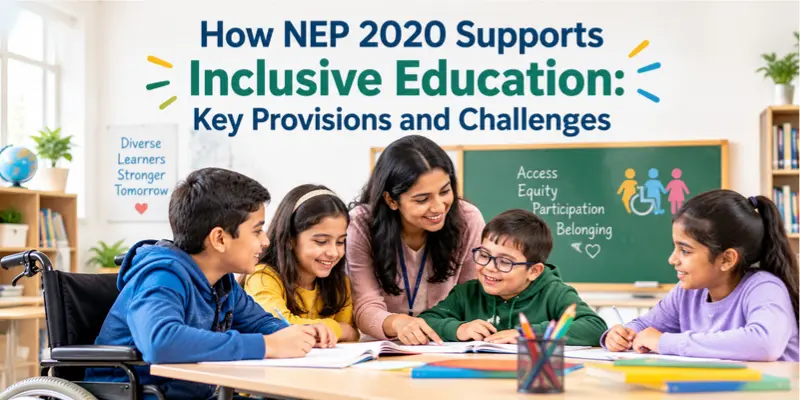
How NEP 2020 Supports Inclusive Education is an important topic for teachers, school administrators, parents, policymakers, and education students. The policy aims to reduce barriers that prevent disadvantaged learners from accessing and participating in education. It also emphasizes suitable learning support, trained educators, accessible educational resources, and a school culture that respects diversity.
The policy’s approach is broader than simply enrolling more children in schools. Students must also have meaningful opportunities to participate in classroom activities, understand lessons, demonstrate their abilities, and progress academically. Therefore, successful inclusion requires cooperation between teachers, families, school leaders, communities, and government agencies.
What Is Inclusive Education Under NEP 2020?
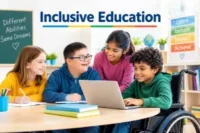
Inclusive education is an approach in which students with different abilities, backgrounds, learning needs, and circumstances learn and participate together. Instead of expecting every child to learn in exactly the same way, inclusive schools adapt teaching methods, educational materials, assessments, and support systems to meet diverse needs.
For example, a student with a visual impairment may require accessible digital text or Braille materials, while a student with a hearing impairment may benefit from visual instructions and appropriate communication support. Similarly, children who have difficulty understanding a lesson may need additional explanations, flexible activities, or more time to complete their work.
The National Education Policy 2020 recognizes the importance of equitable and inclusive education. Chapter 6 addresses equity and inclusion, particularly for Socio-Economically Disadvantaged Groups (SEDGs). These groups include learners affected by social, cultural, geographical, economic, and disability-related barriers.
Inclusive education does not mean lowering academic expectations for particular students. Instead, it means providing appropriate opportunities and support so that students can work toward meaningful learning outcomes. This approach also promotes empathy, respect, cooperation, and an understanding of individual differences.
How NEP 2020 Supports Inclusive Education Through Equal Opportunities
One of the central aims of NEP 2020 is to ensure that children are not deprived of educational opportunities because of their background or circumstances. The policy recognizes that equal access requires attention to the different barriers faced by learners.
A child living in a remote village may have difficulty reaching a school, while a student from a low-income family may struggle to afford learning materials, transport, or digital devices. Girls in disadvantaged communities may face additional barriers related to safety, sanitation, household responsibilities, or social expectations. Children with disabilities may encounter inaccessible buildings, unsuitable teaching resources, or a shortage of trained support staff.
NEP 2020 encourages targeted measures to address these challenges. Depending on local needs, support can include improved school infrastructure, financial assistance, accessible learning materials, additional educators, and community-based interventions.
The policy also emphasizes that inclusion must become part of school culture. Teachers, principals, administrators, counsellors, and students all have a role in creating an environment where learners are treated with dignity and respect.
To understand the wider context, read How NEP 2020 Is Transforming School Education in India. This article focuses more specifically on how equitable access and classroom participation can support disadvantaged learners.
Support for Children With Disabilities
A major aspect of NEP 2020 is the inclusion of children with disabilities in the regular education system. The policy supports their participation from early childhood education and foundational learning through school and higher education, with appropriate accommodations and assistance.
The Rights of Persons with Disabilities (RPwD) Act, 2016, provides an important legal framework for inclusive education in India. NEP 2020 aligns its approach with the Act and recognizes that teaching and learning arrangements should respond to the needs of students with disabilities.
In practice, a school may need ramps, accessible toilets, suitable classroom seating, adapted learning materials, assistive devices, or additional specialist support. The precise arrangements depend on the learner’s requirements and the school’s resources.
For example, a student with a physical disability should be able to access classrooms and participate in school activities as fully as possible. A student with a learning disability may benefit from clear instructions, structured tasks, additional practice, and appropriate assessment accommodations. Students with visual or hearing impairments may require specialized materials or communication support.
The policy also recognizes the importance of special educators with cross-disability training and resource centres where needed, particularly for children with severe or multiple disabilities. These resources can help classroom teachers plan appropriate activities and coordinate support for individual learners.
However, the existence of a policy provision does not automatically guarantee that every school has all the necessary facilities. Effective implementation depends on funding, staff availability, accessible infrastructure, professional training, and regular monitoring.
Gender Inclusion Fund and Educational Equity
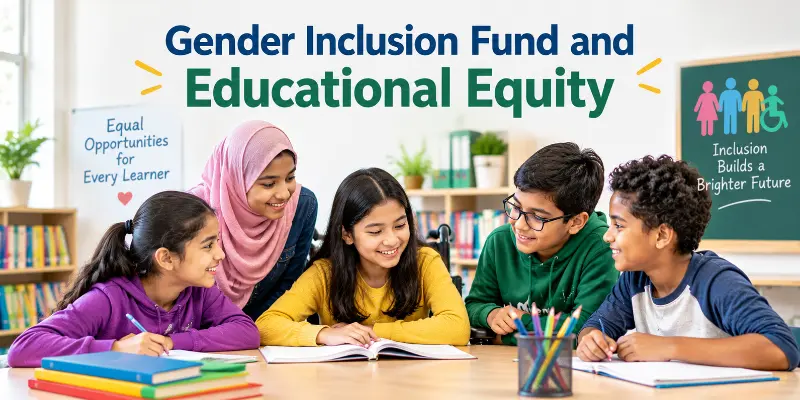
Gender-related barriers can affect whether students enrol in school, attend regularly, participate confidently, and continue their education. NEP 2020 therefore identifies gender equity as an important part of its inclusion agenda.
The policy provides for a Gender Inclusion Fund (GIF), particularly to support equitable quality education for girls and transgender students. It envisages assistance for addressing barriers that affect access and participation, including context-specific interventions and facilities.
Depending on local requirements and applicable schemes, relevant measures may include safe sanitation facilities, support for transportation, financial assistance, and community programmes that encourage continued participation in education.
The Government of India’s Press Information Bureau explanation of the Gender Inclusion Fund describes the policy’s emphasis on gender equity and support for disadvantaged groups. It also discusses interventions under Samagra Shiksha aimed at improving girls’ access to education.
Importantly, the fund is a policy provision rather than a guarantee that every student will automatically receive financial assistance. Actual support depends on the relevant programmes, eligibility requirements, funding arrangements, and implementation decisions.
Schools can complement these measures by challenging gender stereotypes, ensuring respectful classroom participation, using inclusive learning materials, and providing appropriate channels for students to report discrimination or safety concerns.
Special Education Zones for Disadvantaged Communities
Educational inequality is often connected to where children live. Rural communities, remote regions, tribal areas, and other disadvantaged locations may face shortages of teachers, limited school facilities, long travel distances, or reduced access to specialist services.
NEP 2020 proposes Special Education Zones (SEZs) in areas with significant concentrations of educational disadvantage. The intention is to direct greater attention and appropriate resources toward communities where educational barriers are particularly serious.
A coordinated approach may help schools identify local needs, improve access, strengthen educational facilities, and support students who are at risk of being excluded from learning opportunities.
For instance, a remote community may need better transport arrangements, additional teachers, learning materials in familiar languages, or community engagement to encourage regular attendance. A region with a high proportion of students from disadvantaged backgrounds may require targeted support to improve retention and learning outcomes.
Nevertheless, Special Education Zones should not be understood as a complete solution on their own. Their effectiveness depends on appropriate planning, available funding, cooperation among authorities, and evidence that the interventions are improving students’ educational experiences.
Teacher Training for Inclusive Classrooms
Teachers play a central role in turning educational policy into everyday classroom practice. Even when schools have suitable infrastructure, students may continue to face barriers if teachers lack the knowledge or resources needed to support different learning needs.
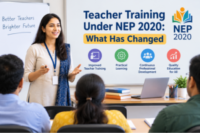
NEP 2020 emphasizes teacher preparation and professional development, including greater awareness of inclusion and equity. It also supports the integration of relevant knowledge and skills into teacher education and training for school leadership and administrative roles.
Inclusive teaching does not require every classroom teacher to become a specialist in every disability. However, teachers should be able to identify potential learning barriers, adapt their instruction where appropriate, communicate respectfully, and seek assistance from qualified specialists when necessary.
Practical approaches may include explaining concepts through multiple methods, giving clear instructions, using visual and verbal resources, allowing suitable response formats, and checking whether students understand the lesson. Group activities can also be planned so that every learner has a meaningful role.
For more information about educators’ responsibilities and professional development, see NEP 2020 for Teachers: Complete Guide.
Teacher training should also address unconscious bias and stereotypes. Educators need to recognize that a student’s disability, language, family income, gender, or community background should not determine their expectations of that student’s potential.
Flexible Teaching Methods and Classroom Participation
Students learn at different rates and may demonstrate understanding in different ways. A rigid teaching approach can create unnecessary barriers, particularly for learners who need additional explanation, accessible materials, or alternative ways to participate.
NEP 2020 encourages learner-centred, experiential, and flexible approaches to education. These principles can support inclusion when teachers plan lessons that allow students to engage with concepts through appropriate activities and learning resources.
For example, a science teacher might explain a concept using a short demonstration, diagrams, spoken instructions, and a practical activity. Students can then demonstrate their understanding through an appropriate combination of written answers, oral explanations, diagrams, or practical work, where the learning objective and assessment rules permit these options.
Similarly, collaborative learning can help students exchange ideas and develop communication skills. Teachers should ensure, however, that group activities do not leave quieter learners or students with disabilities on the sidelines.
Inclusive teaching is not about giving every student identical tasks regardless of their needs. It is about maintaining meaningful learning goals while providing suitable routes to participation and achievement.
The approach connects with Competency-Based Education Under NEP 2020, which explains the importance of applying knowledge and demonstrating learning rather than relying only on memorization.
Accessible Learning Materials and Assistive Technology
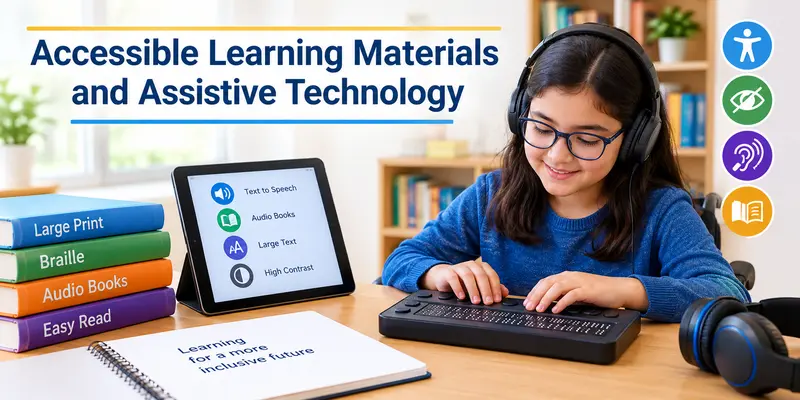
Educational materials are essential to participation. If a textbook, classroom presentation, digital platform, or assessment cannot be accessed by a learner, that student may be disadvantaged even when enrolled in a well-equipped school.
NEP 2020 recognizes the importance of assistive devices, appropriate technology-based tools, and learning support for children with disabilities. Accessible resources can help students engage with lessons more independently and participate more fully in educational activities.
Examples include screen readers, magnification software, captions, accessible electronic documents, suitable audio resources, communication aids, and Indian Sign Language learning materials where appropriate. The choice should be guided by the student’s needs, preferences, and learning context.
Technology can also help teachers provide supplementary explanations and varied learning activities. However, digital solutions are effective only when students can access the required devices, connectivity, software, and support.
Schools should therefore consider accessibility when selecting digital platforms and preparing teaching materials. A resource that works well for one learner may not work equally well for another.
Technology should complement good teaching and human support rather than replace them. Teachers, families, special educators, and students can work together to identify resources that are practical and effective.
Support for Socio-Economically Disadvantaged Groups
Economic disadvantage can affect educational access in many ways. Students may lack suitable study space, transport, books, digital devices, or the time needed for schoolwork. Some children may also face pressure to work, care for family members, or leave school before completing their education.
NEP 2020 gives particular attention to Socio-Economically Disadvantaged Groups. Its framework recognizes that social and economic circumstances can interact with other barriers, including disability, gender, language, and geographical isolation.
Relevant support measures may include scholarships or other financial assistance, improved access to schools, appropriate learning materials, residential facilities in eligible contexts, and targeted educational programmes. The availability and eligibility criteria differ across schemes and regions.
Schools can also help by identifying attendance problems early, communicating with families, connecting eligible learners with support programmes, and maintaining a welcoming environment for children from different backgrounds.
Equity does not necessarily mean giving every learner exactly the same resources. Rather, it involves identifying what prevents students from participating and providing appropriate support to reduce those barriers.
Inclusive Curriculum and Respect for Diversity
An inclusive curriculum helps students feel that their experiences, identities, languages, and communities are respected. It also teaches all learners to recognize discrimination and understand the value of diversity.
NEP 2020 calls for a school culture that promotes empathy, tolerance, human rights, gender equality, inclusion, and equity. It also emphasizes removing biases and stereotypes from educational materials and developing greater understanding of different communities and cultures.
Teachers can apply these principles by selecting examples that reflect diverse experiences, encouraging respectful discussion, and avoiding assumptions about students’ abilities or family circumstances.
For example, classroom reading materials can include people from different backgrounds in varied roles rather than repeatedly presenting stereotypical images. Group discussions can help students examine fairness and cooperation, while classroom rules can make respectful behaviour an explicit expectation.
Language also matters. Teachers should use respectful terminology and avoid labelling students in ways that reduce them to a disability or disadvantage. Where possible, instruction should help learners understand concepts while supporting appropriate language development.
An inclusive curriculum benefits the whole class. Students can develop stronger communication skills, empathy, cooperation, and the ability to work with people whose experiences differ from their own.
The Role of Parents and Communities
Schools cannot achieve lasting inclusion without working with families and local communities. Parents and caregivers often understand a child’s learning preferences, communication needs, daily challenges, and strengths. Their knowledge can help teachers make more suitable educational decisions.
Regular communication between families and schools can identify problems before they become serious. For example, repeated absences may indicate transport difficulties, safety concerns, inaccessible facilities, financial pressure, or another barrier that needs attention.
Community organizations can also support awareness campaigns, educational outreach, family engagement, and locally appropriate interventions. Cooperation with relevant specialists may help schools understand how to respond to particular learning requirements.
At the same time, families should be treated as partners rather than blamed when a child struggles. Schools need to communicate respectfully, protect student privacy, and make clear how families can raise concerns.
A supportive community can strengthen inclusion by challenging stigma, encouraging attendance, and helping children and families understand available educational opportunities.
Challenges in Implementing Inclusive Education Under NEP 2020
Although NEP 2020 provides a broad framework for equity and inclusion, implementation presents practical challenges. Policy commitments need to be translated into suitable facilities, trained staff, accessible materials, and consistent classroom practices.
Infrastructure and accessibility gaps: Some schools may lack ramps, accessible toilets, suitable classroom layouts, or other facilities required by students with disabilities. Improving these facilities requires planning, investment, and regular maintenance.
Shortage of trained educators: Inclusive classrooms need teachers who understand diverse learning needs. A shortage of special educators and limited professional development can make it difficult to provide appropriate support, particularly in remote areas.
Limited financial resources: Schools may need additional funding for assistive technology, accessible learning materials, specialist support, staff training, and building improvements. Resource constraints can delay implementation.
Social stigma and discrimination: Negative attitudes toward disability, gender differences, poverty, or particular communities may affect student participation. Awareness programmes and consistent school policies are necessary to challenge such attitudes.
Digital inequality: Technology can improve access, but students without reliable devices, connectivity, accessible software, or technical assistance may be left behind. Digital initiatives should be planned with these limitations in mind.
Differences in local implementation: Education systems operate across diverse states, districts, and communities. Their needs and available resources differ, so the pace and nature of implementation may vary.
Addressing these challenges requires coordination between governments, school leaders, teachers, families, and communities. It also requires evaluating whether initiatives actually improve access, attendance, participation, and learning rather than measuring success only by the number of programmes launched.
How Schools Can Put Inclusive Education Into Practice
Schools can translate the principles of NEP 2020 into practical improvements by regularly reviewing how students access and experience education.
First, school leaders can assess physical accessibility, classroom arrangements, learning materials, and the availability of support services. This review should consider the needs of current students as well as potential barriers faced by children who are not yet enrolled.
Second, teachers can plan lessons with different ways to engage with content and demonstrate learning. Clear instructions, suitable visual resources, structured activities, and regular checks for understanding can benefit many students.
Third, schools can establish procedures for identifying learning difficulties and responding to concerns. Teachers should collaborate with families and qualified professionals when a learner may require additional assessment or specialized assistance.
Fourth, administrators can provide ongoing professional development and opportunities for teachers to share effective practices. Training is more useful when educators can apply what they learn and receive continued support.
Finally, schools can monitor meaningful indicators, such as attendance, participation, retention, student feedback, and progress toward learning goals. Results can guide improvements while protecting students’ privacy and dignity.
These measures should be adapted to local circumstances and applicable education requirements. Inclusion is an ongoing process rather than a single project or one-time infrastructure change.
Benefits of Inclusive Education for Students and Schools
When inclusive practices are implemented effectively, they can improve educational experiences for students with a wide range of needs. Accessible resources and appropriate support can help learners participate more confidently and develop their academic abilities.
Students may also benefit from learning in environments that encourage cooperation, mutual respect, and an understanding of different perspectives. These experiences can help reduce stigma and create stronger relationships among classmates.
Teachers benefit from developing a wider range of instructional approaches and a better understanding of how students learn. Schools can also become more responsive when they regularly review barriers and work with families and specialists.
At the community level, more inclusive education can contribute to fairer opportunities for further study, skills development, and employment. However, these benefits depend on the quality of implementation and the support available to learners; they should not be assumed to occur automatically because a policy has been introduced.
How NEP 2020 Supports Inclusive Education: Key Takeaways
The central idea behind NEP 2020 is that educational opportunity should not depend solely on a child’s background, abilities, gender, economic circumstances, or location. Its approach brings together several important measures, including support for children with disabilities, gender equity, attention to disadvantaged communities, teacher development, accessible learning resources, and a school culture based on respect.
These provisions are interconnected. Accessible infrastructure has limited value if teachers are unprepared to support students, while teacher training alone cannot remove barriers caused by poverty or inaccessible buildings. Successful inclusion requires these measures to work together.
For school leaders and teachers, the most useful starting point is to identify the barriers students face in their particular setting. They can then work with families, specialists, and relevant authorities to develop realistic improvements and monitor their results.
Ultimately, the success of inclusive education depends on whether learners can participate meaningfully, receive suitable support, and make progress toward their educational goals.
Frequently Asked Questions
What is the main aim of inclusive education under NEP 2020?
The main aim is to improve equitable access, participation, and learning opportunities for all students, particularly those facing social, economic, geographical, gender-related, or disability-related barriers.
How does NEP 2020 support children with disabilities?
The policy supports participation in regular education from the foundational stage through higher education, alongside appropriate accommodations, assistive devices, accessible resources, special educators, and resource centres where needed.
What is the Gender Inclusion Fund under NEP 2020?
The Gender Inclusion Fund is a policy provision intended to support equitable educational opportunities, particularly for girls and transgender students, by helping address barriers to access and participation.
What are Special Education Zones?
Special Education Zones are proposed areas of focused attention for communities experiencing significant educational disadvantage. The policy envisages targeted efforts to improve educational opportunities in these areas.
What role do teachers play in inclusive education?
Teachers help identify barriers, adapt teaching approaches, use appropriate learning resources, promote respectful participation, and collaborate with families and specialists when additional support is needed.
Does NEP 2020 guarantee that every school will have special educators and assistive technology?
No. The policy establishes goals and provisions for support, but actual availability depends on implementation, funding, staffing, and local arrangements. Schools may need to work through relevant authorities to obtain appropriate resources.
How can parents support inclusive education?
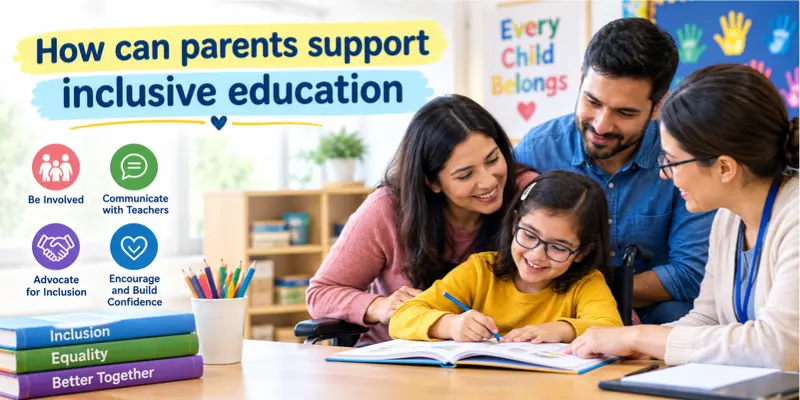
Parents can communicate with teachers, share relevant information about a child’s learning needs, encourage participation, report barriers, and work with schools to identify suitable educational support.
Conclusion
How NEP 2020 Supports Inclusive Education can be understood through its emphasis on equal opportunity, disability inclusion, gender equity, support for disadvantaged communities, teacher development, and accessible learning environments. The policy provides a framework for making education more responsive to the needs of diverse learners.
However, meaningful inclusion requires more than policy statements. Schools need suitable infrastructure, trained educators, appropriate learning resources, adequate funding, and cooperation with families and communities. They must also monitor whether students are genuinely participating and progressing.
By turning these priorities into consistent classroom and school-level practices, India can move closer to an education system in which every learner is respected, supported, and given a fair opportunity to succeed.

- Be Respectful
- Stay Relevant
- Stay Positive
- True Feedback
- Encourage Discussion
- Avoid Spamming
- No Fake News
- Don't Copy-Paste
- No Personal Attacks
- Be Respectful
- Stay Relevant
- Stay Positive
- True Feedback
- Encourage Discussion
- Avoid Spamming
- No Fake News
- Don't Copy-Paste
- No Personal Attacks
