Inclusive Education: Meaning, Benefits, Principles, and Strategies
Published: 24 Oct 2026
Inclusive education is an approach to learning that ensures every student has a fair opportunity to access quality education, participate in classroom activities, develop essential skills, and achieve meaningful learning outcomes. It recognizes that children have different abilities, backgrounds, languages, interests, experiences, and learning requirements. Instead of expecting every learner to adapt to one rigid teaching method, inclusive education encourages schools to remove barriers and create supportive environments where all students can learn together.
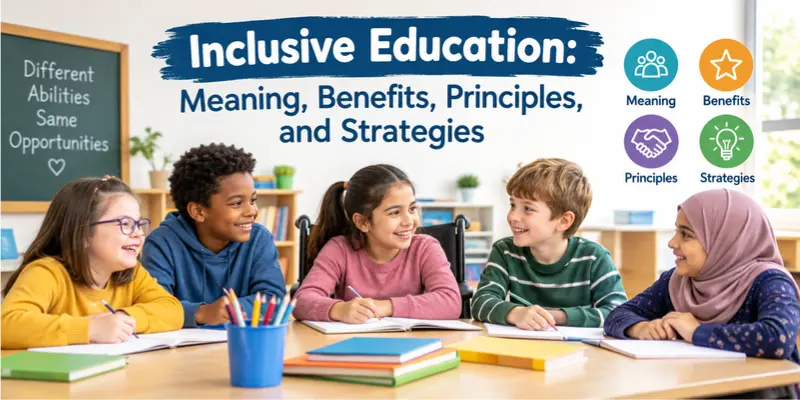
Today, inclusive education is an important priority for schools, teachers, parents, policymakers, and education systems worldwide. Students may experience barriers because of disability, poverty, gender, language differences, geographical isolation, migration, or limited access to learning resources. These barriers can affect attendance, participation, confidence, and academic progress. An inclusive approach seeks to identify and address such obstacles rather than treating differences between learners as reasons for exclusion.
According to UNICEF’s explanation of inclusive education, children should have opportunities to learn alongside their peers in supportive school environments. Similarly, UNESCO’s work on inclusion in education emphasizes identifying and removing barriers throughout education systems, including curriculum, teaching practices, and learning environments. These principles demonstrate why inclusive education involves more than admitting students into a school: it also requires meaningful participation and appropriate support.
What Is Inclusive Education?
Inclusive education means designing educational systems, classrooms, teaching methods, and learning resources so that students with different needs can participate and make progress together. It recognizes that every learner deserves respect, equal consideration, and access to appropriate educational opportunities.
For example, a classroom may include students who learn quickly, students who require additional practice, children with physical or sensory disabilities, learners who speak different home languages, and students who face economic or social disadvantages. An inclusive teacher plans lessons that allow these students to participate in shared learning activities while providing additional support where necessary.
The concept does not mean giving every student exactly the same materials, time, or assistance. Instead, it means providing the resources and reasonable adjustments students need to access learning fairly. A student with a visual impairment may need accessible digital text or Braille materials, while another learner may benefit from visual instructions, additional practice, or language support.
The World Bank’s overview of inclusive education highlights the need to strengthen education systems so that marginalized learners can access education, participate, and achieve. This broader perspective is important because a student’s learning experience is influenced not only by individual ability but also by school facilities, teaching practices, social attitudes, and available resources.
Why Is Inclusive Education Important?
Inclusive education is important because access to school alone does not guarantee that every child can participate or learn effectively. Students need supportive teachers, accessible facilities, suitable learning materials, fair assessment methods, and a school culture that respects differences.
When schools address barriers early, students can participate more confidently in lessons and school activities. They also have greater opportunities to develop communication, problem-solving, cooperation, and independent learning skills. Moreover, classmates can learn to appreciate different perspectives and recognize that people may need different forms of support to achieve shared goals.
Inclusive education also helps schools identify students who might otherwise be overlooked. A child who struggles to follow written instructions, for instance, may need clearer explanations or alternative formats rather than punishment for incomplete work. Similarly, a student who speaks a different home language may benefit from vocabulary support and familiar examples before working with complex academic terminology.
These practices can strengthen the overall learning environment. However, inclusion does not automatically guarantee improved results. Its success depends on teacher preparation, appropriate resources, effective leadership, collaboration with families, and regular evaluation of students’ participation and progress.
Key Principles of Inclusive Education
Equal access and educational opportunity: Every learner should have a fair opportunity to enter school, participate in lessons, use educational resources, and progress through the education system. Schools should identify admission rules, costs, inaccessible facilities, and other barriers that prevent students from receiving an education.
Respect for diversity: Students differ in ability, language, culture, family circumstances, interests, and previous learning experiences. Inclusive education recognizes these differences as a normal part of classroom life. Teachers should avoid stereotypes and ensure that classroom examples, activities, and discussions treat students respectfully.
Participation and belonging: Students should feel that they are accepted members of the school community. Simply placing a learner in a mainstream classroom is not enough if that student is regularly isolated, ignored, or excluded from group activities. Meaningful participation requires opportunities to contribute, interact, ask questions, and demonstrate understanding.
Flexible teaching and assessment: A single teaching approach may not work equally well for every learner. Teachers can use explanations, demonstrations, discussion, written materials, visual resources, practical activities, and different assessment formats to help students access the same learning objectives.
Individualized support where needed: Some students require additional assistance, assistive technology, accessible formats, specialized teaching, or reasonable accommodations. Inclusive education aims to provide this support without unnecessarily separating learners from their peers.
Collaboration and accountability: Teachers, school leaders, parents, support professionals, communities, and policymakers share responsibility for building inclusive schools. Progress should be monitored through attendance, participation, student feedback, learning outcomes, and the removal of barriers.
These principles align with UNESCO’s guidance on inclusion in education, which emphasizes that educational systems should respond to learners’ diverse characteristics and needs.
Benefits of Inclusive Education
Inclusive education can benefit students, teachers, families, and the wider community when schools implement it effectively.
Improved access to learning: Removing physical, communication, financial, and institutional barriers helps more students participate in education. Accessible classrooms, suitable teaching materials, and flexible support can make learning opportunities available to students who might otherwise be excluded.
Greater social interaction: Learning together gives students opportunities to communicate, cooperate, solve problems, and build friendships with classmates from different backgrounds. These experiences can support social development and reduce isolation.
Development of empathy and respect: Inclusive classrooms can help students understand that people have different strengths and may need different forms of assistance. Teachers can use this understanding to encourage respectful relationships and discourage bullying, discrimination, and harmful stereotypes.
More flexible teaching practices: Teachers who respond to different learning needs often develop a wider range of instructional strategies. Clear explanations, structured group work, accessible resources, and regular feedback can help many students, not only those who require formal accommodations.
Improved participation and confidence: When students feel respected and receive appropriate support, they may become more willing to ask questions, contribute to discussions, and attempt challenging tasks. Schools should still monitor individual experiences because inclusion alone cannot guarantee confidence or academic improvement.
Fairer educational opportunities: Inclusive education can help reduce inequalities associated with disability, poverty, gender, language, and location. However, lasting progress requires investment in schools and policies that address the particular barriers faced by disadvantaged communities.
Preparation for diverse communities: Schools are places where students learn to work with people whose experiences and perspectives may differ from their own. Inclusive learning can support cooperation, communication, and respect—skills that are valuable in higher education, employment, and community life.
Types of Learners Supported by Inclusive Education
Inclusive education is broader than disability inclusion, although disability-related barriers are an important area of concern.
Students with disabilities: Learners with physical, visual, hearing, intellectual, or other disabilities may require accessible buildings, communication support, assistive technology, adapted materials, or reasonable adjustments to assessments. The appropriate support depends on the individual learner and the learning environment.
Students with learning differences: Some students need additional time, structured instructions, repeated practice, or alternative ways to engage with information. Teachers should identify barriers to learning and coordinate appropriate support rather than assuming that every student learns in the same way.
Students from disadvantaged backgrounds: Poverty may limit access to books, transport, nutritious meals, internet connectivity, private study space, or other learning essentials. Schools and education authorities can respond through financial assistance, accessible school resources, counselling, and community support.
Students from linguistic and cultural minorities: Learners may find lessons difficult when the language of instruction differs from the language they understand best. Clear explanations, visual examples, vocabulary support, and appropriate use of familiar languages can help them participate more effectively.
Girls and other learners facing social barriers: Discrimination, safety concerns, household responsibilities, and unequal expectations can interrupt education. Schools need fair policies, safe facilities, respectful teaching practices, and procedures for responding to harassment or exclusion.
Learners in rural and remote areas: Distance, limited transport, teacher shortages, weak connectivity, and insufficient facilities can restrict educational access. Inclusive planning must consider these practical barriers instead of focusing only on what happens inside the classroom.
The needs of these groups are not identical. Effective inclusion begins by understanding the actual barriers students experience and providing suitable responses.
Inclusive Education Strategies for Teachers
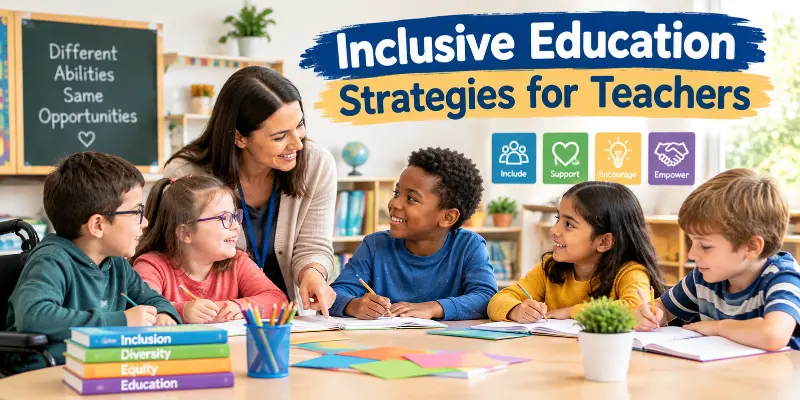
Teachers play a central role in making inclusive education practical. Although education policy and school infrastructure matter, students experience inclusion directly through daily classroom interactions, teaching activities, assessment, and feedback.
Use differentiated instruction: Teachers can adjust the level of support, examples, practice activities, and learning resources while keeping appropriate learning objectives. For instance, a student who needs extra practice can receive guided questions, while a student ready for greater challenge can work on an extension task.
Provide instructions in accessible formats: Important instructions should be clear and easy to follow. Teachers can combine spoken explanations with written steps, diagrams, demonstrations, captions, or other appropriate formats. For students with specific accessibility needs, materials should be adapted accordingly.
Encourage cooperative learning: Pair work and small-group activities can help students exchange ideas and learn from one another. Assigning meaningful roles and monitoring participation can prevent a situation in which one student completes the task while others remain excluded.
Offer different ways to demonstrate learning: Depending on the learning objective, students may be able to show understanding through a written response, oral explanation, practical demonstration, presentation, or accessible digital submission. Alternative formats should preserve the intended learning standard rather than automatically lowering expectations.
Use regular formative assessment: Short quizzes, observation, questioning, exit tickets, and individual feedback help teachers identify difficulties before they become more serious. Assessment results can guide lesson adjustments and additional support.
Maintain respectful classroom expectations: Teachers should establish clear rules against bullying, humiliation, discriminatory language, and exclusion. Students should understand that different support requirements are normal and that classmates must be treated with dignity.
Build student choice into activities: When suitable, students can choose between topics, reading formats, project roles, or ways of presenting their work. Meaningful choice may improve engagement while allowing teachers to maintain clear academic objectives.
For more practical classroom techniques, read EducationBeacon’s guide to Effective Teaching Strategies in the Classroom. Teachers working with changing education expectations can also explore NEP 2020 for Teachers.

How Schools Can Create an Inclusive Learning Environment
An inclusive school needs more than supportive teachers. Its policies, facilities, communication systems, learning materials, and leadership practices must also help students participate.
Improve physical accessibility: School entrances, corridors, classrooms, toilets, playgrounds, and other facilities should be assessed for accessibility. Ramps, handrails, accessible toilets, suitable classroom layouts, and clear routes may be necessary, depending on the needs of students and applicable standards.
Make learning resources accessible: Schools should review textbooks, worksheets, digital platforms, classroom displays, and assessment materials. Large print, screen-reader-compatible files, captions, transcripts, audio resources, and alternative formats can help learners who cannot use standard materials effectively.
Train teachers and school staff: Professional development should cover inclusive teaching, disability awareness, differentiated instruction, classroom behaviour, accessible assessment, and collaboration with families and support professionals. Training is more effective when teachers can apply the ideas in real classrooms and receive follow-up guidance.
Establish fair policies: School policies should address discrimination, bullying, admission, attendance, assessment adjustments, student privacy, and complaints. Students and parents need clear information about how to request support and whom to contact when a barrier remains unresolved.
Consult students and families: Teachers and school leaders should ask learners and their families about barriers that affect participation. Students themselves can often explain which classroom arrangements, resources, or communication methods help them learn.
Monitor participation and outcomes: Schools can review attendance, classroom engagement, assessment progress, disciplinary actions, student feedback, and access to extracurricular activities. The purpose is to identify patterns and improve support—not to label students as problems.
Coordinate additional services: Some learners may need input from counsellors, therapists, specialist educators, interpreters, or other qualified professionals. With appropriate consent and privacy safeguards, coordinated support can help schools respond to a student’s educational requirements more effectively.
An inclusive learning environment is built through continuous improvement. Schools should assess whether their changes are actually helping students participate, learn, and feel that they belong.
Role of Parents in Inclusive Education
Parents and caregivers can support inclusive education by communicating with teachers, sharing relevant information about a child’s learning needs, and encouraging the child to participate in educational activities. Their role is especially important when a student experiences difficulties that may not be obvious during a short classroom observation.
First, parents can maintain regular communication with teachers about progress, attendance, confidence, friendships, and challenges with schoolwork. Sharing practical observations can help educators understand which forms of support may be useful. Discussions should focus on the child’s needs and strengths rather than comparisons with siblings or classmates.
Second, families can encourage independence at home. Depending on the child’s age and abilities, this may involve establishing manageable study routines, organizing learning materials, practising communication skills, or helping the child prepare questions for the teacher. Support should encourage confidence instead of creating unnecessary dependence.
Parents can also teach respect for differences through everyday conversations. Children should learn that disabilities, languages, cultural backgrounds, and learning requirements are not valid reasons for teasing or exclusion. Families can reinforce the same respectful behaviour expected at school.
When a child needs additional educational support, parents can ask the school about available accommodations, specialist services, referral procedures, and progress reviews. It is useful to agree on practical steps and check whether they are working over time.
Finally, parent groups and community organizations can help schools identify accessibility problems and promote inclusive policies. Constructive cooperation between families and educators can make support more consistent across home and school environments.
Challenges of Inclusive Education
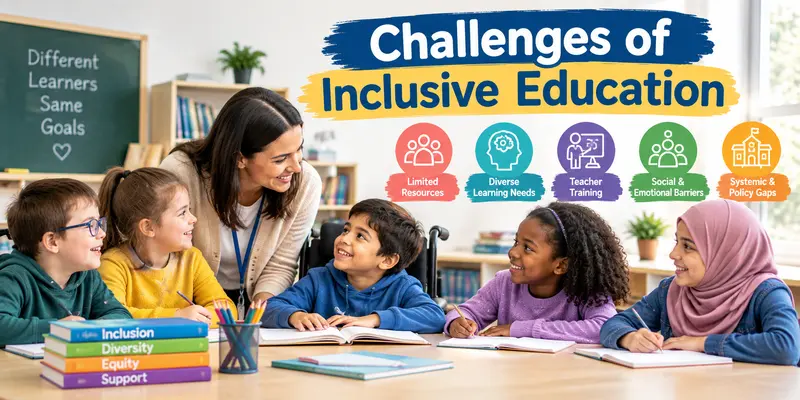
Although inclusive education offers important opportunities, implementing it can be difficult when schools lack resources, training, accessible facilities, or effective support systems.
Limited funding and resources: Some schools lack accessible buildings, suitable learning materials, assistive technology, or specialist support. Education authorities need to assess actual requirements, prioritize essential improvements, and plan sustainable funding rather than relying only on temporary projects.
Insufficient teacher preparation: Teachers may be expected to support diverse learners without receiving adequate training. Regular professional development, mentoring, practical teaching resources, and access to qualified specialists can help address this problem.
Large class sizes: When teachers manage many students, providing individual feedback and monitoring participation can become difficult. Schools can use structured group activities, clear routines, peer learning, and targeted support, while education planners consider staffing and class-size requirements.
Stigma and misconceptions: Some families, staff members, or community members may believe that students with disabilities or additional learning needs should not learn alongside their peers. Awareness activities, respectful communication, family engagement, and visible leadership support can help challenge these attitudes.
Inaccessible curriculum and assessment: Standardized materials and rigid assessment methods may prevent some students from demonstrating their knowledge. Accessible formats, reasonable accommodations, and flexible instructional approaches can improve participation without abandoning appropriate learning standards.
Weak coordination between services: Schools may struggle to coordinate with families, healthcare providers, specialist educators, or community organizations. Clear responsibilities, appropriate information-sharing procedures, and agreed support plans can improve coordination while protecting privacy.
Unequal digital access: Online learning platforms can create additional barriers when students lack devices, reliable internet, accessible software, or digital skills. Schools should consider low-technology alternatives and ensure that digital resources work with relevant accessibility tools.
These challenges require practical solutions and long-term commitment. Inclusion should not be treated as a one-time policy announcement; schools need to review their progress and improve their approaches as learners’ needs and circumstances change.
Inclusive Education in India and NEP 2020
India’s National Education Policy 2020 provides an important policy context for discussing equity and inclusion. It recognizes the need to address barriers faced by socio-economically disadvantaged groups and improve educational opportunities for learners with different needs. However, the practical impact of policy depends on implementation, funding, teacher preparation, accessibility, and coordination between education authorities and schools.
Schools and teachers can connect inclusive education with several broader educational priorities: flexible teaching practices, competency-based learning, appropriate assessment, multilingual support, accessible learning resources, and the participation of disadvantaged learners. These priorities should be translated into specific classroom and school-level actions rather than treated only as policy language.
For example, a school can review whether students with disabilities can access its buildings and learning materials, whether teachers know how to request specialist support, and whether students from disadvantaged backgrounds can participate in classroom activities and school events. Teachers can also use familiar examples and appropriate language support to help learners understand difficult concepts.
EducationBeacon’s article on How NEP 2020 Supports Inclusive Education provides a more focused discussion of the policy provisions and their relevance to inclusion in India. For the broader policy background, readers can consult the Ministry of Education’s official website.
India’s implementation needs to reflect differences between states, districts, rural and urban schools, and individual learners. A strategy that works in a well-resourced school may require adaptation in a school with limited staff or infrastructure. Local assessment and consultation are therefore essential.
Inclusive Education Around the World
Inclusive education is a global concern, but countries differ in their laws, resources, school systems, and approaches to implementation. Comparing international guidance can help educators understand common principles while recognizing that practical solutions must respond to local conditions.
UNICEF emphasizes access to learning for children who face disability-related and other barriers. Its work highlights the importance of trained teachers, accessible learning materials, appropriate school environments, and efforts to address stigma and discrimination.
UNESCO approaches inclusion as a system-wide responsibility. Its guidance encourages education systems to identify barriers in curricula, pedagogy, policies, and learning environments rather than expecting individual learners to overcome exclusion without institutional support.
The World Bank highlights the importance of strengthening education systems and combining broad improvements with targeted support for learners who need additional assistance. This approach recognizes that a school system can become more accessible overall while still providing individualized accommodations where required.
These international perspectives share a central message: inclusion requires coordinated action at the classroom, school, community, and policy levels. Countries can learn from one another, but implementation should be guided by evidence, local needs, student experiences, and available resources.
How to Measure the Success of Inclusive Education
Schools need practical ways to determine whether their inclusion efforts are working. Counting enrolled students is useful, but enrolment alone does not show whether learners participate meaningfully or receive the support they need.
Access and attendance: Schools can examine whether students from different backgrounds can enrol, attend regularly, reach classrooms, and use facilities. Repeated absences may indicate barriers involving transport, accessibility, safety, finances, or inadequate support.
Classroom participation: Teachers can observe who contributes to discussions, joins group activities, uses learning resources, and receives opportunities to demonstrate understanding. Students who are consistently silent or excluded may need different forms of support.
Learning progress: Assessment records, work samples, practical demonstrations, and individual learning goals can help teachers understand progress. Results should be interpreted in context, taking account of appropriate accommodations and the student’s starting point.
Student and parent feedback: Students and families can provide valuable information about belonging, safety, accessibility, and the usefulness of support. Schools should offer suitable ways for different students to share their experiences.
School environment and behaviour: Reports of bullying, discriminatory treatment, inaccessible facilities, or exclusion from extracurricular activities can reveal problems that academic scores do not capture. Schools should monitor these issues and respond through clear procedures.
Review and improvement: Once schools identify a barrier, they should assign responsibility, set a realistic action, and review whether it has helped. This process makes inclusion a continuing part of school improvement rather than a checklist completed once.
No single indicator can capture every aspect of inclusion. A balanced assessment combines access, participation, learning progress, student well-being, family feedback, and the effectiveness of support.
Frequently Asked Questions About Inclusive Education
What is inclusive education in simple words?
Inclusive education means ensuring that students with different abilities, backgrounds, and learning requirements have fair opportunities to learn and participate together. Schools provide suitable support and remove barriers that prevent students from accessing education.
What is the main goal of inclusive education?
The main goal is to make quality education accessible and meaningful for all learners. This includes improving access, participation, belonging, and learning outcomes while addressing discrimination and unnecessary exclusion.
What are the four principles of inclusive education?
Four useful guiding principles are equal access, respect for diversity, meaningful participation, and appropriate support. Schools also need flexible teaching, collaboration, and accountability to put these principles into practice.
What are examples of inclusive education?
Examples include accessible classrooms, captioned learning videos, screen-reader-compatible materials, flexible assessment formats, multilingual explanations, structured group activities, and additional learning support based on individual requirements.
What is the role of teachers in inclusive education?
Teachers plan accessible lessons, recognize different learning needs, encourage respectful participation, adapt teaching methods, assess progress, and coordinate with families and support professionals when necessary.
How can parents support inclusive education?
Parents can communicate with teachers, share relevant information about their child’s needs, encourage independent learning, promote respect for differences, and work with schools to address barriers that affect participation.
What are the main challenges of inclusive education?
Common challenges include insufficient funding, inaccessible infrastructure, limited teacher training, large class sizes, social stigma, unsuitable learning materials, and unequal access to technology or specialist support.
How does NEP 2020 support inclusive education in India?
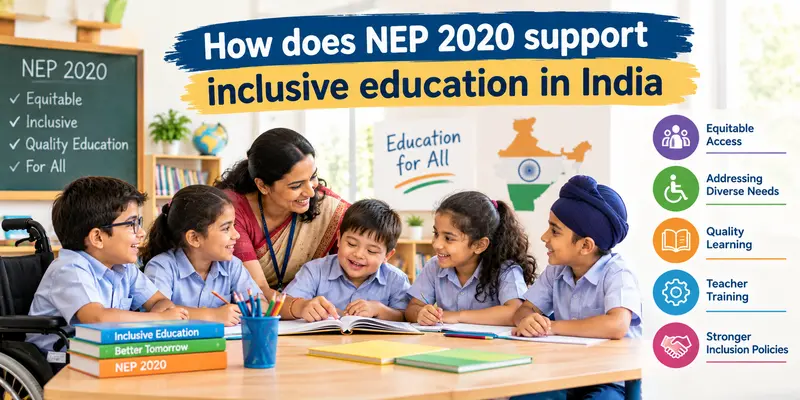
NEP 2020 provides a policy framework that emphasizes educational equity and the needs of socio-economically disadvantaged groups. Its practical impact depends on how schools and education authorities implement relevant measures, provide resources, and address barriers to learning.
Conclusion
Inclusive education is about ensuring that every learner has a meaningful opportunity to access education, participate in classroom activities, and make progress. It recognizes that students have different abilities, experiences, languages, and circumstances, and that schools must respond to these differences through accessible environments, flexible teaching, respectful relationships, and appropriate support.
Its benefits can extend beyond academic learning. When inclusion is implemented effectively, students have more opportunities to develop social skills, confidence, cooperation, and respect for diversity. Nevertheless, these outcomes require sustained action to address challenges such as limited funding, inadequate teacher preparation, inaccessible facilities, and discrimination.
Teachers, parents, school leaders, communities, and policymakers all have a role in making inclusive education work. Schools should review their practices, listen to students and families, monitor participation and learning progress, and improve support wherever barriers remain.
Ultimately, successful inclusive education is not simply about placing different students in the same classroom. It is about building an education system in which every learner is welcomed, supported, respected, and given a fair opportunity to learn.




- Be Respectful
- Stay Relevant
- Stay Positive
- True Feedback
- Encourage Discussion
- Avoid Spamming
- No Fake News
- Don't Copy-Paste
- No Personal Attacks
- Be Respectful
- Stay Relevant
- Stay Positive
- True Feedback
- Encourage Discussion
- Avoid Spamming
- No Fake News
- Don't Copy-Paste
- No Personal Attacks
