Step-by-Step Guide to Finding Scholarships Online for Students
Published: 12 Mar 2026
Higher education has become increasingly expensive in many parts of the world. Tuition fees, accommodation, books, and other academic expenses can create financial pressure for students and their families. Fortunately, scholarships Aid provide an excellent opportunity for students to pursue their academic dreams without the burden of large debts. Scholarships are financial awards given to students based on academic merit, financial need, talents, leadership qualities, or other achievements.

With the growth of digital platforms, finding scholarships online has become easier than ever. Thousands of universities, governments, and organizations offer scholarships through websites and online portals. However, many students struggle to locate legitimate opportunities, complete applications properly, and meet scholarship deadlines.
This comprehensive guide provides a step-by-step process to help students find scholarships online effectively. It covers research strategies, trusted scholarship platforms, application preparation, and tips to increase the chances of success. Whether you are a high school student, undergraduate, graduate applicant, or international student, this guide will help you discover scholarships that match your academic goals.
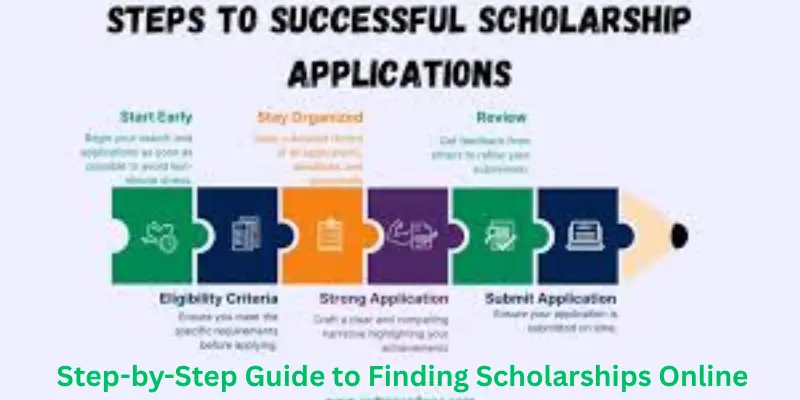
Step-by-Step Guide to Finding Scholarships Online
Finding scholarships online requires research, organization, and patience. The following steps will help students identify the best opportunities and apply successfully.
Step 1: Define Your Academic Goals
Before searching for scholarships, it is important to clearly define your academic objectives. Knowing what you want to study and where you want to study will help you narrow down scholarship options.
Key factors to consider include:
- Field of study (engineering, medicine, business, arts, etc.)
- Level of education (undergraduate, master’s, PhD)
- Preferred country or university
- Short-term or long-term academic goals
When students clearly understand their goals, they can focus on scholarships that align with their academic plans instead of wasting time applying for irrelevant opportunities.
Step 2: Start Your Search Early
Timing plays a crucial role in scholarship success. Many scholarships open applications months before the academic year begins. Some major international scholarships even open applications one year in advance.
Starting early allows students to:
- Research multiple scholarship options
- Prepare documents carefully
- Improve academic records if necessary
- Meet deadlines without stress
Students who begin their search early have a much higher chance of receiving scholarships compared to those who wait until the last minute.
Step 3: Use Reliable Scholarship Search Websites
The internet provides thousands of scholarship listings, but not all sources are trustworthy. Students should use reputable scholarship websites to find legitimate opportunities.
Popular scholarship search platforms include:
- Government scholarship portals
- University scholarship pages
- International scholarship databases
- Educational organization websites
These platforms allow students to filter scholarships based on location, academic level, and field of study.
Reliable scholarship websites often include:
- Detailed eligibility criteria
- Application deadlines
- Required documents
- Application procedures
Always verify information from official university or government websites to avoid scams.
Step 4: Search University Websites
Many universities offer their own scholarships for international and domestic students. Visiting the official scholarship or financial aid section of university websites is one of the best ways to find reliable funding opportunities.
University scholarships may include:
- Merit-based scholarships
- Need-based scholarships
- Research scholarships
- Departmental scholarships
- Athletic scholarships
Students applying to universities should always check if the institution offers automatic scholarships for admitted students.
Step 5: Explore Government Scholarship Programs
Governments around the world provide scholarships to attract talented international students. These scholarships often cover tuition fees, living expenses, travel costs, and health insurance.
Government scholarships are usually highly competitive but offer significant financial support.
Examples of government-funded scholarships include:
- National merit scholarships
- International exchange scholarships
- Cultural exchange programs
- Research grants for graduate students
Government scholarship websites provide detailed guidelines and official application procedures.
Step 6: Look for Scholarships by Private Organizations
Many companies, foundations, and nonprofit organizations offer scholarships to support education and community development. These scholarships may be available to students with specific interests, talents, or backgrounds.
Private scholarships may be based on:
- Leadership skills
- Community service
- Sports achievements
- Academic excellence
- Special talents such as arts or music
Students should regularly check scholarship opportunities offered by foundations, corporations, and charitable organizations.
Step 7: Check Eligibility Requirements Carefully
Each scholarship has specific eligibility criteria. Before applying, students should carefully review the requirements to ensure they qualify.
Common eligibility factors include:
- Minimum GPA requirements
- Language test scores
- Nationality restrictions
- Field of study
- Age limits
- Academic achievements
Applying only for scholarships that match your qualifications increases the chances of success and saves time.
Step 8: Prepare Required Documents
Most scholarship applications require several important documents. Preparing these documents early helps students submit strong and complete applications.
Common scholarship documents include:
- Academic transcripts
- Personal statement or motivation letter
- Letters of recommendation
- Curriculum vitae (CV)
- Language proficiency test results
- Passport copy
- Portfolio (for creative fields)
Organizing these documents in advance ensures that students can apply quickly when new scholarship opportunities open.
Step 9: Write a Strong Scholarship Essay
The scholarship essay or personal statement is one of the most important parts of the application. It allows students to demonstrate their personality, achievements, and future goals.
A strong scholarship essay should include:
- Personal background and academic journey
- Career goals and aspirations
- Reasons for choosing the field of study
- Leadership experiences
- Community involvement
- How the scholarship will help achieve future goals
Students should write clear, honest, and compelling essays that highlight their unique strengths.
Step 10: Request Recommendation Letters
Recommendation letters play a significant role in scholarship selection. These letters provide insights into a student’s academic abilities, character, and potential.
Recommended referees include:
- Teachers or professors
- School principals
- Academic advisors
- Employers or supervisors
Students should request recommendation letters early and provide referees with sufficient information about the scholarship and their achievements.

Step 11: Track Scholarship Deadlines
Missing deadlines is one of the most common mistakes students make during scholarship applications. Keeping track of important dates ensures that applications are submitted on time.
Students can create a scholarship tracking system using:
- Spreadsheets
- Calendar reminders
- Scholarship management apps
Important information to track includes:
- Application opening date
- Deadline
- Required documents
- Interview dates
- Final decision announcements
Staying organized greatly improves the chances of successful applications.
Step 12: Apply to Multiple Scholarships
One of the best strategies for securing financial aid is applying to multiple scholarships. Since scholarships are competitive, relying on a single opportunity can be risky.
Applying to several scholarships increases the likelihood of receiving at least one award. Students should diversify their applications by including:
- Government scholarships
- University scholarships
- Private scholarships
- Local scholarships
Even smaller scholarships can significantly reduce education expenses when combined.
Step 13: Beware of Scholarship Scams
While many scholarships are legitimate, some websites promote fake opportunities to collect personal information or application fees.
Warning signs of scholarship scams include:
- Requests for large application fees
- Guaranteed scholarship offers
- Unverified organizations
- Poorly designed websites
- Requests for sensitive financial information
Students should only apply through trusted scholarship platforms and official websites.
Step 14: Prepare for Scholarship Interviews
Some competitive scholarships require interviews as part of the selection process. Preparing for interviews can improve a student’s chances of receiving the award.
Students should prepare by:
- Reviewing their application materials
- Practicing common interview questions
- Demonstrating confidence and communication skills
- Showing passion for their field of study
Interview panels often evaluate leadership potential, motivation, and academic commitment.
Step 15: Follow Up After Applications
After submitting applications, students should monitor email notifications and scholarship portals for updates.
Follow-up actions may include:
- Responding to additional document requests
- Scheduling interviews
- Accepting scholarship offers
- Completing enrollment requirements
Remaining proactive ensures that students do not miss important opportunities.
Tips to Increase Scholarship Success
Students can improve their chances of receiving scholarships by following these strategies:
- Maintain strong academic performance
- Participate in extracurricular activities
- Volunteer for community service
- Develop leadership skills
- Improve communication and writing abilities
- Build a strong academic profile
Scholarship committees often look for well-rounded students who demonstrate academic excellence and social impact.
Benefits of Finding Scholarships Online
Searching for scholarships online offers several advantages for students.
Key benefits include:
- Access to thousands of global opportunities
- Easy comparison of scholarship programs
- Quick application submission
- Instant updates and notifications
- Ability to apply to multiple scholarships simultaneously
Online scholarship platforms have made education funding more accessible for students worldwide.
Common Challenges Students Face
Despite the availability of scholarships, many students face difficulties during the search and application process.
Common challenges include:
- Lack of reliable information
- Intense competition
- Complex application procedures
- Limited awareness of opportunities
- Time management issues
Proper planning and consistent research can help overcome these challenges.
Future of Online Scholarship Search
The future of scholarship searching is becoming more digital and efficient. Artificial intelligence and data-driven platforms are helping students discover scholarships that match their profiles automatically.
Emerging trends include:
- AI-powered scholarship matching platforms
- Automated application systems
- Global scholarship databases
- Mobile scholarship search apps
These technologies are expected to make scholarship discovery faster and more accessible for students around the world.
FAQs on Step-by-Step Guide to Finding Scholarships Online
1. What is the best way to start searching for scholarships online?
The best way to start is by identifying your academic goals, preferred country, and field of study. Then use reliable scholarship websites, university financial aid pages, and government scholarship portals. Starting early and using multiple sources increases your chances of finding suitable scholarships.
2. Are online scholarships legitimate and safe to apply for?
Yes, many scholarships listed online are legitimate, especially those offered by universities, governments, and well-known organizations. However, students should avoid websites that ask for large application fees or promise guaranteed scholarships, as these may be scams.
3. When should students begin searching for scholarships?
Students should begin searching at least 8–12 months before the academic program starts. Many international scholarships open applications one year in advance, so early preparation helps students gather documents and meet deadlines.
4. What documents are usually required for scholarship applications?
Most scholarship applications require academic transcripts, a personal statement or motivation letter, recommendation letters, a CV or resume, language test scores (such as IELTS or TOEFL), and a copy of a passport or identification.
5. Can students apply for multiple scholarships at the same time?
Yes, students can apply for multiple scholarships simultaneously. In fact, applying to several scholarships increases the chances of receiving financial support because scholarship programs are often highly competitive.
6. How can students improve their chances of winning a scholarship?
Students can improve their chances by maintaining strong academic performance, participating in extracurricular activities, gaining leadership experience, writing a strong scholarship essay, and submitting complete applications before the deadline.
Summary
Finding scholarships online can significantly reduce the financial burden of higher education. However, success requires proper research, organization, and preparation.
Students should begin their scholarship search early, use reliable scholarship platforms, and carefully review eligibility requirements before applying. Preparing strong documents such as personal statements, recommendation letters, and academic records is essential for successful applications.
Applying to multiple scholarships, staying organized, and avoiding scams are also important strategies. With dedication and careful planning, students can discover numerous scholarship opportunities that help them achieve their academic goals.
Conclusion
Scholarships play a vital role in making higher education accessible to students from diverse financial backgrounds. With the internet providing access to thousands of scholarship opportunities worldwide, students now have more resources than ever before to support their education.
By following a step-by-step approach—defining academic goals, researching scholarships, preparing application materials, and meeting deadlines—students can significantly increase their chances of receiving financial support.
The process may require effort and patience, but the rewards are worth it. A well-researched scholarship strategy can open doors to world-class education, career advancement, and personal growth.
Students who remain persistent, organized, and proactive in their scholarship search will have the best chance of turning their academic dreams into reality.






- Be Respectful
- Stay Relevant
- Stay Positive
- True Feedback
- Encourage Discussion
- Avoid Spamming
- No Fake News
- Don't Copy-Paste
- No Personal Attacks
- Be Respectful
- Stay Relevant
- Stay Positive
- True Feedback
- Encourage Discussion
- Avoid Spamming
- No Fake News
- Don't Copy-Paste
- No Personal Attacks
