How NEP 2020 Is Transforming School Education in India: Key Changes, Benefits & Challenges (2026 Guide)
Published: 20 Jul 2026
India’s education system is experiencing one of its biggest reforms in decades. The National Education Policy (NEP) 2020 has introduced a modern vision that focuses on holistic learning, practical knowledge, digital education, skill development, and equal opportunities for every student. Instead of relying heavily on memorization, the policy encourages creativity, critical thinking, communication skills, and lifelong learning. To know regarding teachers read article Teaching Faculty
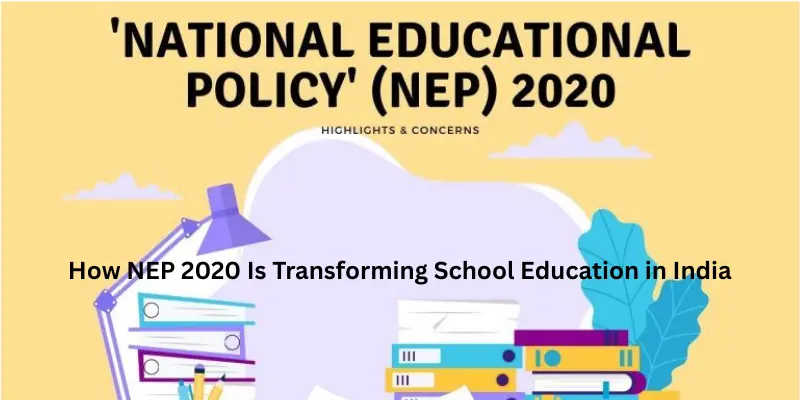
Today, educators, parents, policymakers, and students are asking how NEP 2020 is transforming school education in India and what these reforms mean for the future. The answer lies in the comprehensive changes introduced across curriculum design, teaching methods, assessments, teacher training, technology integration, and vocational education.
The 2026 implementation phase has already shown significant progress in many states. Schools are gradually adopting competency-based learning, digital classrooms, multilingual education, and flexible academic structures that better prepare students for higher education and future careers.
This comprehensive guide explains every major aspect of NEP 2020, including its objectives, structural reforms, benefits, implementation strategies, challenges, and future outlook.
What Is the National Education Policy (NEP) 2020?
The National Education Policy 2020 is India’s first comprehensive education policy of the 21st century. Approved by the Government of India in July 2020, it replaced the National Policy on Education introduced in 1986.
The policy aims to build an education system that develops intellectual abilities, ethical values, creativity, innovation, scientific thinking, and employability. Rather than measuring success solely through examination scores, NEP encourages overall personality development.
The policy covers every stage of education, from early childhood education to higher education, making it one of the most ambitious educational reforms in India’s history.
Why Was NEP 2020 Introduced?
India’s previous education framework faced several challenges.
Students often memorized textbooks without understanding concepts deeply.
Board examinations created unnecessary pressure.
Practical learning received limited attention.
Creativity was sometimes overlooked in favor of rote learning.
Vocational education remained disconnected from mainstream schooling.
Teacher training required modernization.
Technology integration varied widely among schools.
NEP 2020 addresses these issues by creating a flexible, inclusive, and skill-oriented education system suitable for the needs of the 21st century.
Objectives of NEP 2020
The policy seeks to transform education through several important objectives.
Promote conceptual understanding instead of memorization
Students are encouraged to understand concepts rather than simply recalling textbook information.
Develop critical thinking skills
Problem-solving, reasoning, and analytical thinking become essential components of classroom learning.
Ensure holistic development
Education now includes academics, sports, arts, music, life skills, health education, and character building.
Improve foundational literacy and numeracy
Children receive stronger support during their early learning years to develop reading, writing, and mathematical skills.
Increase flexibility in learning
Students have more freedom to choose subjects according to their interests and career aspirations.
Prepare students for future careers
Schools focus on communication, collaboration, coding, entrepreneurship, financial literacy, and digital skills.
How NEP 2020 Is Transforming School Education in India
The biggest transformation introduced by NEP 2020 is the shift from content-heavy education to competency-based learning.
Instead of asking students to memorize facts, teachers now encourage exploration, curiosity, project work, experiments, discussions, and practical applications.
Students become active learners rather than passive recipients of information.
This approach improves long-term understanding while making education more engaging and meaningful.
Major Structural Change: The New 5+3+3+4 Education System
One of the most revolutionary reforms is replacing the old 10+2 structure with the new 5+3+3+4 model.
This structure aligns education with children’s cognitive development.
Foundational Stage (5 Years)
The foundational stage includes three years of preschool followed by Classes 1 and 2.
Children focus on:
- Language development
- Basic numeracy
- Play-based learning
- Social interaction
- Physical activities
- Storytelling
- Creative expression
Learning becomes enjoyable rather than examination-oriented.
Preparatory Stage (3 Years)
Classes 3 to 5 form the preparatory stage.
Students begin learning:
- Mathematics
- Science
- Languages
- Art
- Physical education
- Interactive classroom activities
Teachers encourage questioning and exploration.
Middle Stage (3 Years)
Classes 6 to 8 emphasize subject-based education.
Students explore:
- Science
- Mathematics
- Social science
- Arts
- Coding
- Vocational education
- Experiential learning
Project-based learning becomes more common.
Secondary Stage (4 Years)
Classes 9 to 12 provide greater flexibility.
Students can choose interdisciplinary subject combinations based on interests.
This eliminates rigid separation between science, commerce, and arts streams.
Early Childhood Care and Education Receives Greater Importance
One of the strongest reforms under NEP 2020 is recognizing the importance of early childhood education.
Research consistently shows that children’s brains develop rapidly during the first eight years of life.
The policy strengthens preschool education through:
- Activity-based learning
- Storytelling
- Games
- Music
- Play
- Language development
- Emotional growth
- Social skills
This creates stronger foundations for future academic success.
Focus on Foundational Literacy and Numeracy
Many children previously reached higher grades without mastering basic reading and mathematics.
To solve this issue, NEP launched a nationwide mission focused on foundational literacy and numeracy.
Schools now prioritize:
- Reading comprehension
- Writing skills
- Basic arithmetic
- Language proficiency
- Classroom participation
Strong foundational skills improve learning across every subject.
Competency-Based Learning Replaces Rote Memorization
One of the biggest answers to how NEP 2020 is transforming school education in India lies in competency-based education.
Students are expected to:
- Understand concepts
- Apply knowledge
- Solve real-world problems
- Analyze situations
- Think creatively
- Communicate effectively
Teachers increasingly use activities, experiments, projects, debates, and collaborative learning instead of lectures alone.
Flexible Subject Choices
Traditional education often forced students into fixed streams after Class 10.
NEP changes this approach.
Students can combine subjects from different disciplines.
For example:
- Mathematics with Music
- Physics with Economics
- Biology with Fine Arts
- Computer Science with Psychology
- Commerce with Artificial Intelligence
This flexibility helps students pursue careers aligned with their interests.
Greater Importance of Skill Development
Future jobs demand practical skills alongside academic knowledge.
Schools now encourage students to develop:
- Communication skills
- Leadership
- Digital literacy
- Creativity
- Entrepreneurship
- Teamwork
- Financial awareness
- Problem-solving
These competencies improve career readiness.
Vocational Education Begins Earlier
Another significant reform is introducing vocational education from middle school.
Students gain exposure to practical careers through activities related to:
- Agriculture
- Carpentry
- Electrical work
- Gardening
- Coding
- Robotics
- Local crafts
- Design
- Food processing
This reduces the gap between academic learning and employability.
Coding and Digital Skills Become Part of School Education
Digital transformation is another major pillar of NEP 2020.
Schools increasingly introduce:
- Basic coding
- Computational thinking
- Artificial intelligence awareness
- Digital literacy
- Online safety
- Technology-enabled classrooms
Students become more prepared for technology-driven careers.
Multilingual Education Strengthens Learning
Research shows children learn concepts more effectively in their home language during the early years.
NEP promotes multilingual education while encouraging proficiency in multiple languages.
This approach helps preserve India’s linguistic diversity while improving conceptual understanding.
Assessment System Is Becoming More Competency-Based
One of the most significant examples of how NEP 2020 is transforming school education in India is the complete redesign of student assessments. Earlier, examinations mainly tested memory and textbook recall. Students often focused on scoring marks instead of understanding concepts.
Under NEP 2020, assessments are gradually shifting toward measuring learning outcomes, conceptual clarity, creativity, communication, and analytical abilities.
Students are now encouraged to demonstrate what they have learned through practical applications rather than simply reproducing textbook answers.
Major improvements in the assessment system include:
- Competency-based question papers
- Application-oriented questions
- Case study-based assessments
- Project work
- Classroom participation
- Practical activities
- Portfolio evaluation
- Continuous learning assessment
This approach reduces unnecessary examination stress while encouraging meaningful learning.
Board Examinations Are Becoming Less Stressful
Board examinations have traditionally been among the most stressful experiences for Indian students. NEP 2020 seeks to make these exams less intimidating by focusing on understanding instead of memorization.
Students are expected to answer questions that test real-life applications, reasoning, and problem-solving rather than factual recall alone.
Several education boards have already begun introducing competency-based questions, helping students develop higher-order thinking skills.
The long-term vision is to make board examinations a fair reflection of students’ abilities instead of a one-time memory test.
Teachers Play a Bigger Role Than Ever Before
Teachers remain the backbone of successful educational reform.
NEP 2020 recognizes that quality education depends on well-trained, motivated, and professionally supported teachers.
The policy emphasizes continuous professional development, improved teaching practices, and greater academic autonomy.
Teachers are encouraged to become facilitators of learning instead of only delivering lectures.
Modern classrooms now encourage teachers to:
- Promote discussions
- Encourage curiosity
- Support individual learning needs
- Use digital tools effectively
- Conduct project-based learning
- Assess conceptual understanding
- Foster creativity and innovation
Professional development programs are helping teachers adopt learner-centered teaching methods.
Integration of Technology in School Education
Technology has become an essential component of modern education.
One of the strongest indicators of how NEP 2020 is transforming school education in India is the increasing use of digital learning tools across schools.
Technology supports both classroom instruction and independent learning.
Schools are increasingly adopting:
- Smart classrooms
- Interactive digital boards
- Educational apps
- Virtual laboratories
- Online assessments
- AI-powered learning platforms
- Digital content libraries
- Learning management systems
Students gain access to quality educational resources regardless of geographical location.
Technology also enables personalized learning, allowing students to progress at their own pace.
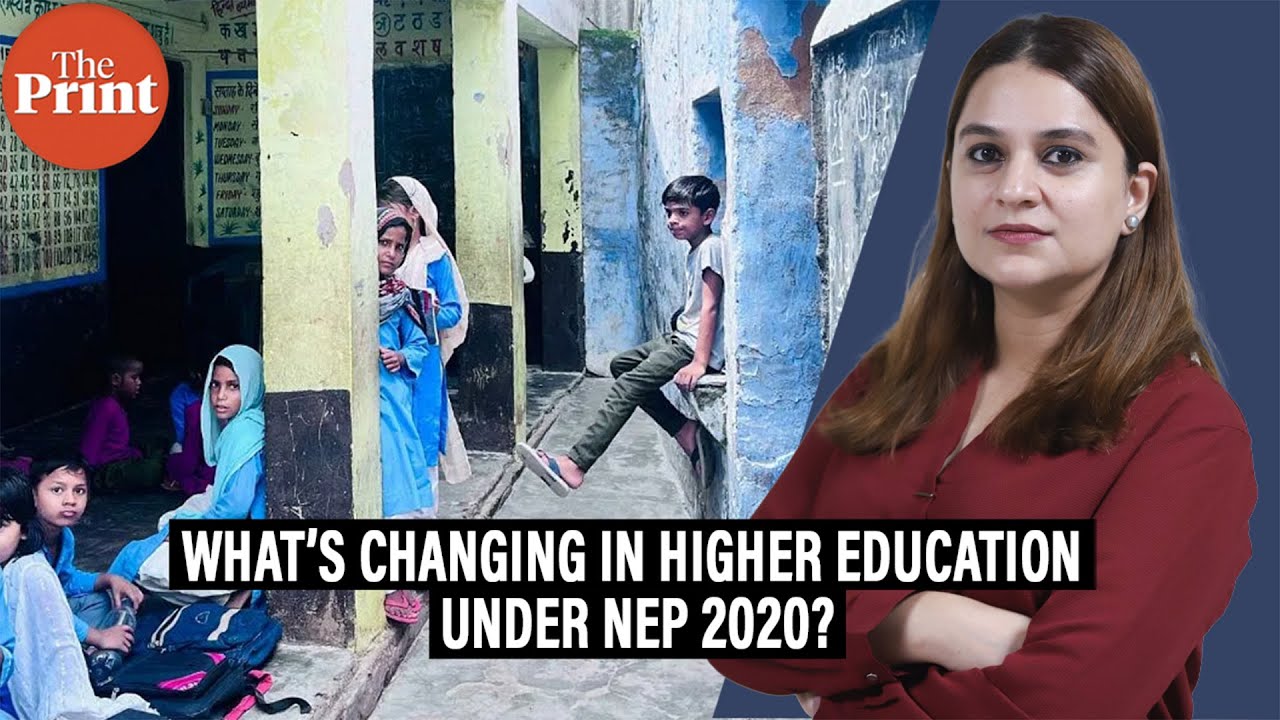
Experiential Learning Is Replacing Passive Learning
Experiential learning is a central feature of NEP 2020. To know abut key feature explore the article Key Features of the National Education Policy 2020 Explained.
Instead of simply reading about concepts, students learn by actively participating in educational experiences.
Examples include:
- Science experiments
- Field visits
- Community projects
- Group discussions
- Role-playing
- Simulations
- Art integration
- Research activities
Learning through experience improves understanding, retention, and critical thinking.
Students also develop confidence, communication, and teamwork skills.
Emphasis on Critical Thinking and Problem Solving
The future workplace values individuals who can solve complex problems, adapt to changing environments, and think creatively.
NEP 2020 prepares students for these expectations by encouraging:
- Logical reasoning
- Decision-making
- Innovation
- Creativity
- Research
- Inquiry-based learning
- Analytical thinking
Teachers now ask students to explain their reasoning instead of merely writing textbook definitions.
This shift creates independent thinkers who can tackle real-world challenges.
Holistic Development Is Now a Core Objective
Education is no longer limited to academics alone.
Holistic development means nurturing every aspect of a child’s personality.
Schools increasingly focus on:
- Physical health
- Mental well-being
- Emotional intelligence
- Moral values
- Leadership
- Creativity
- Sports
- Arts
- Music
- Community service
Students become well-rounded individuals rather than examination-focused learners.
Greater Focus on Inclusive Education
NEP 2020 aims to ensure that every child receives quality education regardless of background.
Inclusive education supports:
- Children with disabilities
- Economically weaker students
- Rural learners
- Tribal communities
- Minority groups
- Girls’ education
- Gifted learners
The policy promotes equal educational opportunities through better infrastructure, teacher training, scholarships, and accessible learning resources.
Indian Knowledge Systems Receive More Recognition
The policy also encourages schools to integrate India’s rich cultural and intellectual heritage into education.
Students learn about:
- Indian mathematics
- Ancient scientific contributions
- Traditional arts
- Local history
- Environmental knowledge
- Indigenous practices
- Constitutional values
- Cultural diversity
This strengthens national identity while maintaining global educational standards.
Environmental Awareness Becomes Part of Learning
Climate change and environmental sustainability have become global priorities.
Schools increasingly teach students about:
- Climate action
- Biodiversity
- Renewable energy
- Water conservation
- Waste management
- Sustainable development
- Green technologies
Environmental education develops responsible citizens who understand the importance of protecting natural resources.
Life Skills Education Gains Importance
Academic excellence alone is no longer sufficient for success.
Students also need essential life skills.
Schools now encourage development of:
- Communication
- Time management
- Financial literacy
- Emotional intelligence
- Conflict resolution
- Leadership
- Collaboration
- Adaptability
- Decision-making
These skills improve both academic performance and future employability.
Career Guidance Begins Earlier
Students often struggled to choose suitable careers due to limited exposure.
NEP 2020 promotes structured career guidance throughout school education.
Schools increasingly organize:
- Career counseling sessions
- Industry interactions
- Internship opportunities
- Skill assessments
- Career awareness workshops
- Professional mentoring
Students can make informed educational and career decisions based on their strengths and interests.
Benefits of NEP 2020 for Students
The reforms introduced under NEP 2020 provide numerous long-term advantages.
Students benefit from:
- Better conceptual understanding
- Reduced examination pressure
- Flexible subject selection
- Improved digital literacy
- Strong communication skills
- Greater creativity
- Enhanced problem-solving abilities
- Better career readiness
- Practical learning experiences
- Increased confidence
These benefits prepare learners for higher education as well as rapidly changing global job markets.
Benefits of NEP 2020 for Teachers
Teachers also gain significant advantages from the policy.
Key benefits include:
- Continuous professional development
- Modern teaching methodologies
- Better classroom engagement
- Digital teaching resources
- Academic flexibility
- Enhanced professional recognition
- Improved assessment practices
- Opportunities for innovation
Well-trained teachers directly contribute to improved student outcomes.
Benefits of NEP 2020 for Parents
Parents also experience positive changes through the evolving education system.
The policy helps parents by:
- Reducing excessive exam pressure
- Encouraging balanced child development
- Improving communication between schools and families
- Supporting individual learning styles
- Building practical life skills
- Promoting mental well-being
Parents can participate more actively in their children’s educational journey.
Benefits of NEP 2020 for Schools
Educational institutions benefit from adopting learner-centered practices.
Schools can:
- Improve teaching quality
- Enhance student engagement
- Modernize infrastructure
- Integrate educational technology
- Strengthen teacher training
- Encourage innovation
- Improve academic outcomes
- Increase community participation
These improvements contribute to higher educational standards across the country.
Role of Digital Education in NEP 2020
Digital education has become one of the strongest pillars supporting how NEP 2020 is transforming school education in India.
Technology helps bridge learning gaps between urban and rural areas while expanding access to quality educational resources.
Digital initiatives support:
- Hybrid learning
- Online teacher training
- Virtual classrooms
- Digital assessments
- Interactive learning content
- AI-assisted education
- Personalized learning pathways
As internet connectivity and digital infrastructure continue to improve, technology will play an even greater role in delivering equitable, high-quality education across India.
Challenges in Implementing NEP 2020
While there is broad support for the reforms, implementing such a large-scale policy across a diverse country like India comes with several challenges. The success of How NEP 2020 Is Transforming School Education in India depends on coordinated efforts by governments, schools, teachers, parents, and communities.
Infrastructure Gaps
Many government schools, particularly in rural and remote areas, still require improved classrooms, libraries, laboratories, sports facilities, and reliable internet connectivity. Without adequate infrastructure, implementing digital learning and activity-based education becomes difficult.
Teacher Training Requirements
Teachers are central to the success of NEP 2020. However, transitioning from traditional teaching methods to competency-based and student-centered learning requires continuous professional development. Large-scale teacher training programs must remain a priority.
Digital Divide
Although digital education is expanding, unequal access to smartphones, laptops, tablets, and high-speed internet remains a challenge. Students from economically weaker families may not benefit equally from technology-driven learning.
Variation Across States
Education is implemented by individual states and union territories. As a result, the pace of NEP implementation differs across India. Some states have adopted reforms more quickly, while others continue to roll out changes gradually.
Financial Investment
Successfully implementing the policy requires substantial funding for infrastructure, teacher development, digital resources, curriculum redesign, and educational research. Consistent investment will be necessary to achieve long-term goals.
Government Initiatives Supporting NEP 2020
Several national initiatives support the successful implementation of NEP reforms.
Some major initiatives include:
- NIPUN Bharat Mission
- DIKSHA Digital Learning Platform
- PM eVIDYA
- Samagra Shiksha
- National Curriculum Framework (NCF)
- PARAKH (Performance Assessment, Review, and Analysis of Knowledge for Holistic Development)
- Vidya Pravesh Programme
- National Digital Education Architecture (NDEAR)
These initiatives aim to strengthen foundational literacy, improve digital education, modernize assessments, and enhance teacher capacity across the country.
How NEP 2020 Benefits Rural Education
One of the long-term goals of NEP 2020 is to reduce educational inequality between urban and rural India.
Rural schools are expected to benefit from:
- Better digital learning resources
- Improved teacher training
- Foundational literacy programs
- Flexible learning methods
- Vocational education opportunities
- Community participation
- Local language instruction
- Greater use of educational technology
As infrastructure improves, rural students can access educational opportunities comparable to those available in urban schools.
Impact of NEP 2020 on Private Schools
Private schools have also begun aligning their teaching methods with NEP guidelines.
Many institutions are introducing:
- Experiential learning
- Project-based education
- Flexible curriculum planning
- Competency-based assessments
- Coding classes
- Artificial intelligence awareness
- Robotics education
- Career guidance programs
- Mental health support
Private schools often have greater flexibility to adopt educational innovations quickly, serving as early examples of NEP implementation.
Impact of NEP 2020 on Government Schools
Government schools are gradually adopting reforms through improved infrastructure, teacher training, digital resources, and revised curricula.
Several positive developments include:
- Smart classrooms
- Digital learning materials
- Foundational literacy programs
- Teacher capacity building
- Better classroom assessments
- Increased enrollment initiatives
- Inclusive education programs
Continued government support will play a key role in ensuring these reforms reach every student.
Future of School Education Under NEP 2020
The future of Indian school education looks significantly different from the traditional model.
Students will increasingly experience:
- Personalized learning
- Flexible academic pathways
- Technology-enabled classrooms
- Skill-based education
- Competency-driven assessments
- Career-oriented learning
- Interdisciplinary subject choices
- Lifelong learning opportunities
Schools are expected to become centers of innovation where students develop knowledge, creativity, confidence, leadership, and practical skills.
How Parents Can Support NEP 2020
Parents play an essential role in helping children benefit from educational reforms.
They can support learning by:
- Encouraging curiosity at home
- Promoting reading habits
- Supporting project-based activities
- Limiting unhealthy screen time
- Encouraging sports and creative arts
- Communicating regularly with teachers
- Appreciating effort instead of only examination scores
- Helping children develop problem-solving skills
Active parental involvement strengthens both academic achievement and emotional development.
How Teachers Can Maximize the Benefits of NEP 2020
Teachers can further strengthen implementation by adopting innovative classroom practices.
Some effective approaches include:
- Encouraging classroom discussions
- Using real-life examples
- Integrating technology into lessons
- Promoting collaborative learning
- Conducting practical activities
- Assessing conceptual understanding
- Supporting individual learning needs
- Building positive classroom environments
These strategies align closely with the learner-centered philosophy of NEP 2020.
Role of Students in the Success of NEP 2020
Students are active participants in the transformation of school education.
To make the most of NEP reforms, students should:
- Ask questions confidently
- Participate in classroom discussions
- Develop reading habits
- Practice critical thinking
- Learn digital skills
- Explore vocational opportunities
- Engage in extracurricular activities
- Build communication and teamwork skills
Developing these habits prepares students for higher education and future careers.
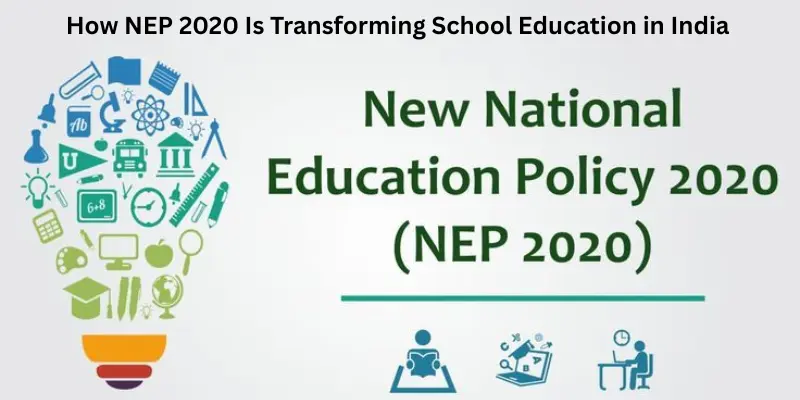
Frequently Asked Questions
What is the main aim of NEP 2020?
The main aim is to create a flexible, inclusive, skill-oriented, and learner-centered education system that promotes conceptual understanding, critical thinking, creativity, and holistic development.
How is NEP 2020 transforming school education in India?
It is transforming school education through competency-based learning, flexible subject choices, digital education, vocational training, improved teacher development, multilingual learning, and holistic assessments.
What is the new 5+3+3+4 education structure?
It replaces the old 10+2 model with four developmental stages: Foundational (5 years), Preparatory (3 years), Middle (3 years), and Secondary (4 years), aligning education with children’s cognitive growth.
Does NEP 2020 reduce examination pressure?
Yes. The policy promotes competency-based assessments, project work, continuous evaluation, and conceptual understanding, reducing reliance on rote memorization and high-pressure exams.
Why is vocational education important under NEP 2020?
Vocational education introduces practical skills from middle school, helping students develop employability, entrepreneurship, and career awareness while reducing the gap between education and industry needs.
What are the biggest challenges in implementing NEP 2020?
Major challenges include infrastructure gaps, teacher training, funding requirements, the digital divide, and ensuring uniform implementation across different states and regions.
Conclusion
The answer to How NEP 2020 Is Transforming School Education in India is evident in every major reform introduced since the policy’s launch. From the new 5+3+3+4 academic structure and competency-based learning to digital education, vocational training, multilingual instruction, and flexible subject choices, NEP 2020 is reshaping how students learn and how teachers teach.
Instead of emphasizing memorization, the policy encourages curiosity, creativity, collaboration, innovation, and practical application of knowledge. Students are being prepared not only for examinations but also for higher education, employment, entrepreneurship, and responsible citizenship.
Although implementation challenges remain, sustained investment in infrastructure, teacher training, technology, and curriculum development will determine the long-term success of these reforms. As schools, educators, parents, and policymakers continue working together, NEP 2020 has the potential to create a more inclusive, equitable, and future-ready education system.
For students, this transformation offers greater flexibility, stronger foundational skills, enhanced career opportunities, and a learning experience that is more engaging and relevant to the demands of the 21st century.

15 Benefits of NEP 2020 for Teachers: Professional Growth, Career Opportunities & Better Teaching




- Be Respectful
- Stay Relevant
- Stay Positive
- True Feedback
- Encourage Discussion
- Avoid Spamming
- No Fake News
- Don't Copy-Paste
- No Personal Attacks
- Be Respectful
- Stay Relevant
- Stay Positive
- True Feedback
- Encourage Discussion
- Avoid Spamming
- No Fake News
- Don't Copy-Paste
- No Personal Attacks
