Key Features of the National Education Policy 2020 Explained: Complete Guide for Students, Parents & Teachers (2026)
Published: 25 Jul 2026
Introduction
The Key Features of the National Education Policy 2020 Explained have become one of the most discussed education topics in India. The National Education Policy (NEP) 2020 is the first comprehensive education reform introduced after more than three decades, replacing the National Policy on Education of 1986. It aims to transform India’s education system into one that is flexible, inclusive, multidisciplinary, skill-oriented, and globally competitive.
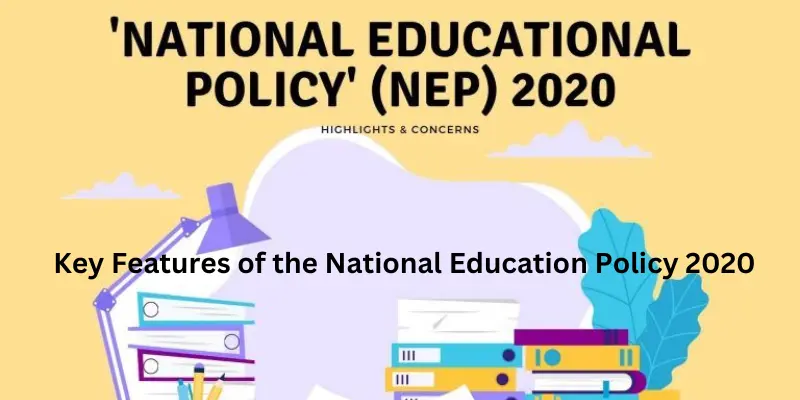
The policy focuses on preparing students for the future by encouraging creativity, critical thinking, practical learning, digital education, and lifelong learning. Instead of relying mainly on rote memorization, NEP 2020 promotes conceptual understanding and competency-based education.
Parents, students, teachers, educational institutions, and policymakers are all affected by these reforms. Whether someone is studying in primary school, preparing for higher education, or teaching in a classroom, understanding the key features of the National Education Policy 2020 is essential.
This complete guide explains every major feature of NEP 2020, its objectives, benefits, implementation, challenges, and future impact on India’s education system.
What Is the National Education Policy 2020?
The National Education Policy 2020 is a comprehensive education framework approved by the Government of India to modernize school and higher education. It seeks to improve learning quality while making education accessible, affordable, equitable, and relevant to the needs of the 21st century.
The policy introduces major reforms across:
- Early childhood education
- School education
- Higher education
- Teacher training
- Vocational education
- Digital learning
- Assessment methods
- Research and innovation
Its long-term goal is to make India a global knowledge superpower by developing capable, skilled, and responsible citizens.
Objectives of the National Education Policy 2020
Understanding the objectives helps explain why the policy introduces several structural changes.
The major objectives include improving learning outcomes, reducing school dropout rates, promoting multidisciplinary education, strengthening foundational literacy and numeracy, increasing Gross Enrollment Ratio (GER), promoting Indian languages, encouraging innovation, enhancing research, integrating technology into classrooms, and preparing students for future careers.
The policy also focuses on equal educational opportunities for children from rural, urban, tribal, economically weaker, and differently-abled backgrounds.
Why Was NEP 2020 Introduced?
India’s education system had changed very little over the previous three decades despite significant technological and economic growth. Many students were graduating without practical skills needed for employment or entrepreneurship.
Some major issues included:
- Heavy dependence on rote learning
- Exam-oriented education
- Limited flexibility in choosing subjects
- Lack of vocational education
- Poor foundational learning
- High dropout rates
- Outdated curriculum
- Limited research opportunities
- Unequal access to quality education
The National Education Policy 2020 was introduced to address these challenges and create a learner-centered education system.
Key Features of the National Education Policy 2020 Explained
The Key Features of the National Education Policy 2020 Explained begin with structural reforms that reshape how Indian students learn from preschool to university.
New 5+3+3+4 School Structure
One of the biggest reforms replaces the old 10+2 education structure with a new 5+3+3+4 model.
The new structure is based on children’s cognitive development and learning abilities.
Foundational Stage (5 Years)
This stage includes three years of preschool or Anganwadi education followed by Classes 1 and 2. The focus is on play-based, activity-based, and discovery-based learning. Young learners develop communication skills, social interaction, basic numeracy, and literacy.
Preparatory Stage (3 Years)
Classes 3 to 5 emphasize interactive classroom learning, language development, mathematics, science, arts, and physical education. Students begin building conceptual understanding instead of memorizing facts.
Middle Stage (3 Years)
Classes 6 to 8 introduce subject-specific learning with practical activities, coding, vocational exposure, and project-based education. Students start exploring different career interests.
Secondary Stage (4 Years)
Classes 9 to 12 offer multidisciplinary subject choices with greater flexibility. Students can combine science, commerce, arts, music, sports, and vocational subjects according to their interests.
This structure promotes holistic development rather than limiting students to rigid academic streams.
Flexible Subject Selection
Another major reform allows students to choose subjects across different disciplines.
Instead of separating Science, Commerce, and Arts into fixed streams, students can create personalized combinations.
For example, a student may study:
- Physics with Music
- Mathematics with Political Science
- Biology with Economics
- Computer Science with Fine Arts
This flexibility supports individual interests, creativity, and career aspirations.
Focus on Foundational Literacy and Numeracy
The policy recognizes that reading, writing, and basic mathematics form the foundation of lifelong learning.
NEP 2020 introduces a national mission to ensure every child achieves foundational literacy and numeracy by Grade 3.
Schools are encouraged to use activity-based teaching, interactive learning methods, and continuous assessment to strengthen basic learning.
Children struggling in early grades receive additional academic support before progressing to advanced concepts.
Early Childhood Care and Education (ECCE)
The policy places significant emphasis on early childhood education.
Scientific research shows that nearly 85% of brain development occurs before the age of six.
Therefore, quality preschool education becomes a priority.
Children receive learning experiences through:
- Storytelling
- Games
- Art activities
- Music
- Rhymes
- Interactive learning
- Physical activities
This approach improves language development, emotional intelligence, creativity, and problem-solving skills.
Mother Tongue as Medium of Instruction
One of the most debated features recommends teaching children in their mother tongue or regional language until at least Grade 5, and preferably Grade 8 wherever possible.
Research indicates that young children understand concepts better when taught in a familiar language.
The policy also promotes multilingual education while encouraging students to learn additional Indian and foreign languages.
Students continue developing English proficiency alongside regional languages.
Experiential Learning
Traditional classroom lectures are gradually replaced with experiential learning methods.
Students actively participate in:
- Science experiments
- Field visits
- Educational projects
- Group discussions
- Problem-solving exercises
- Case studies
- Practical demonstrations
Learning becomes more engaging, enjoyable, and meaningful.
Reduction in Rote Learning
One of the strongest messages in the Key Features of the National Education Policy 2020 Explained is reducing memorization-based education.
Instead of remembering textbook answers, students learn through:
- Conceptual understanding
- Critical thinking
- Creativity
- Logical reasoning
- Innovation
- Analytical skills
Teachers are encouraged to design classrooms where students ask questions, investigate problems, and develop independent thinking.
Competency-Based Education
The curriculum focuses on competencies rather than textbook completion.
Students demonstrate their learning through practical application instead of simply reproducing information during examinations.
Competency-based education develops:
- Communication
- Leadership
- Teamwork
- Decision-making
- Creativity
- Digital literacy
- Life skills
These competencies better prepare students for higher education and employment.
Coding and Digital Skills from Middle School
Coding is introduced from Class 6 onwards.
Students receive exposure to:
- Programming basics
- Artificial Intelligence
- Robotics
- Computational thinking
- Data analysis
- Digital tools
These skills align education with future technological careers.
Vocational Education from Class 6
Vocational education becomes an integral part of school learning.
Students receive practical exposure to various occupations through internships and hands-on activities.
Examples include:
- Carpentry
- Gardening
- Pottery
- Electrical work
- Local crafts
- Agriculture
- Entrepreneurship
The objective is to remove the distinction between academic and vocational education while developing employable skills.
Integration of Technology in Education
Digital education receives major attention under NEP 2020.
Technology is integrated through:
- Smart classrooms
- Digital textbooks
- Online learning platforms
- Virtual laboratories
- Educational applications
- AI-enabled learning
- Interactive content
Digital learning helps improve accessibility, especially for remote and rural students.
Assessment Reforms Under the National Education Policy 2020
One of the most significant Key Features of the National Education Policy 2020 Explained is the complete transformation of student assessment. Traditional examinations often measured how well students could memorize information rather than how effectively they understood concepts. NEP 2020 introduces an assessment system that evaluates knowledge, analytical ability, creativity, communication, and practical application.
Schools are encouraged to conduct regular formative assessments throughout the academic year. Instead of depending solely on one final examination, students receive continuous feedback that helps identify strengths and areas requiring improvement. This learner-centered approach reduces unnecessary pressure while promoting steady academic growth.
Assessment methods now include classroom participation, projects, presentations, experiments, portfolios, group activities, and practical assignments. These methods provide a more accurate picture of a student’s overall development.
Holistic Progress Card
The traditional report card has been redesigned into a holistic progress card.
Rather than displaying only examination marks, the progress card evaluates multiple aspects of student development.
The holistic progress card includes:
- Academic performance
- Communication skills
- Creativity
- Critical thinking
- Problem-solving ability
- Leadership qualities
- Teamwork
- Physical fitness
- Emotional development
- Life skills
- Co-curricular participation
Students also participate in self-assessment and peer assessment. This encourages responsibility, self-awareness, and continuous improvement.
Parents receive a broader understanding of their child’s development instead of focusing only on examination scores.
PARAKH: National Assessment Centre
The National Education Policy 2020 introduces PARAKH (Performance Assessment, Review, and Analysis of Knowledge for Holistic Development).
PARAKH aims to establish uniform standards for student assessment across India.
Its responsibilities include developing competency-based assessments, guiding examination reforms, improving learning outcomes, and supporting schools in implementing modern evaluation methods.
This national framework helps maintain consistency while allowing flexibility according to local educational needs.
Board Examination Reforms
Board examinations remain important, but their purpose changes significantly.
The policy recommends examinations that evaluate conceptual understanding instead of memorized answers.
Students may receive opportunities to appear for board examinations more than once, reducing pressure associated with a single attempt.
Examinations are expected to become:
- More flexible
- Less stressful
- Competency-based
- Application-oriented
- Concept-focused
Students are encouraged to demonstrate understanding rather than reproduce textbook content.
Multidisciplinary Education
Another major reform discussed in the Key Features of the National Education Policy 2020 Explained is multidisciplinary education.
Students are no longer restricted to rigid academic streams.
Educational institutions are encouraged to combine various disciplines, allowing learners to explore multiple interests.
A student interested in engineering may also study music, economics, psychology, or literature.
Similarly, students pursuing humanities can learn mathematics, coding, environmental science, or entrepreneurship.
This flexibility supports innovation because many modern careers require knowledge across several fields.
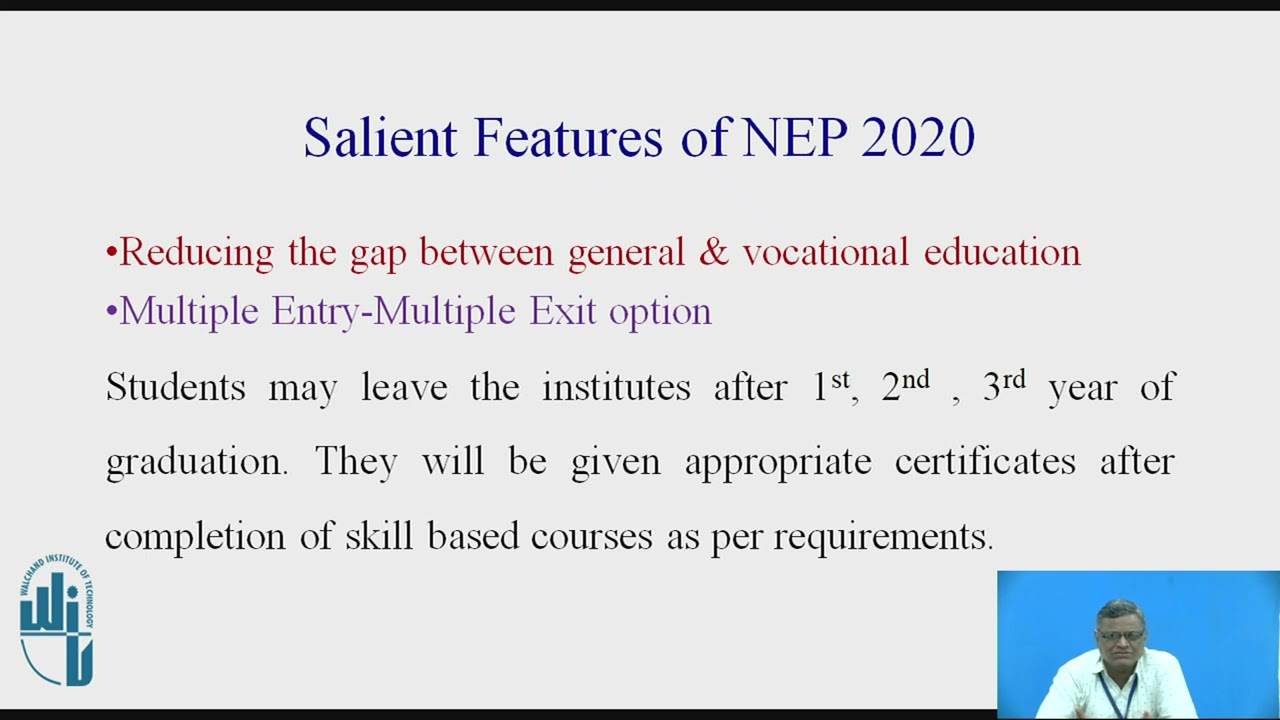
Multiple Entry and Exit Options in Higher Education
Higher education becomes significantly more flexible under NEP 2020.
Students can temporarily leave their studies for personal, financial, or professional reasons without losing previously earned credits.
The proposed structure includes:
- One year of study leading to a certificate.
- Two years leading to a diploma.
- Three years leading to a bachelor’s degree.
- Four years leading to a bachelor’s degree with research.
This flexibility reduces dropout-related losses and allows students to continue education whenever circumstances permit.
Academic Bank of Credits (ABC)
The Academic Bank of Credits is another innovative feature.
Students accumulate academic credits digitally throughout their educational journey.
These credits can later be transferred between participating higher education institutions.
The system offers several advantages:
- Greater flexibility
- Easier student mobility
- Recognition of prior learning
- Reduced academic loss
- Improved lifelong learning opportunities
Students gain greater control over their educational pathways.
Higher Education Commission of India (HECI)
The National Education Policy 2020 proposes establishing the Higher Education Commission of India as a unified regulatory body for higher education.
Its objectives include:
- Improving institutional quality
- Promoting transparency
- Simplifying regulations
- Enhancing accountability
- Encouraging academic excellence
A streamlined regulatory framework supports consistent educational standards across universities.
Promotion of Research and Innovation
Research becomes a central focus of higher education reforms.
The policy encourages universities to build strong research cultures that address national and global challenges.
Students receive greater opportunities to participate in:
- Scientific research
- Social science studies
- Technological innovation
- Environmental research
- Public policy analysis
- Entrepreneurship projects
Innovation is viewed as a key driver of India’s future economic growth.
National Research Foundation (NRF)
The National Research Foundation has been proposed to strengthen research across universities and colleges.
Its objectives include:
- Funding quality research
- Supporting young researchers
- Encouraging interdisciplinary projects
- Building collaborations
- Improving research infrastructure
The foundation aims to increase India’s contribution to global research and innovation.
Teacher Education Reforms
Teachers remain the foundation of educational success.
The National Education Policy 2020 introduces significant reforms to improve teacher preparation and professional development.
Future teachers are expected to complete a four-year integrated Bachelor of Education (B.Ed.) program that combines subject knowledge with modern teaching practices.
Teacher education focuses on:
- Child psychology
- Classroom management
- Digital teaching
- Inclusive education
- Assessment strategies
- Practical training
- Experiential learning
Well-trained teachers create better learning experiences for students.
Continuous Professional Development for Teachers
Learning does not end after teacher certification.
Teachers are encouraged to participate regularly in professional development programs.
Training includes:
- New teaching methodologies
- Educational technology
- Curriculum updates
- Classroom innovation
- Student assessment
- Leadership development
Continuous learning enables teachers to adapt to changing educational needs.
Teacher Empowerment
The policy emphasizes professional autonomy and respect for teachers.
Teachers receive greater flexibility in selecting teaching strategies suitable for their classrooms.
Administrative burdens are expected to decrease, allowing educators to devote more time to student learning.
Professional growth opportunities also contribute to higher teaching quality and improved classroom outcomes.
Inclusive Education for Every Learner
The Key Features of the National Education Policy 2020 Explained place strong emphasis on educational inclusion.
Every child deserves equal learning opportunities regardless of socioeconomic background, gender, disability, language, or geographical location.
The policy supports:
- Gender equality
- Education for economically disadvantaged students
- Support for tribal communities
- Inclusive classrooms
- Accessible learning resources
- Scholarships
- Special education support
Inclusive education strengthens social equity while improving national educational outcomes.
Education for Children with Disabilities
Students with disabilities receive additional support through inclusive educational practices.
Schools are encouraged to provide:
- Accessible infrastructure
- Assistive technologies
- Special educators
- Individual learning support
- Flexible teaching methods
These measures help ensure every learner participates fully in educational activities.
Equity and Equal Opportunities
The National Education Policy 2020 seeks to reduce educational inequalities across India.
Special attention is given to underserved regions, rural schools, marginalized communities, and economically weaker sections.
Government initiatives focus on improving school infrastructure, teacher availability, digital access, and learning resources.
Educational equity helps every student develop their full potential regardless of background.
Promotion of Indian Languages and Culture
The policy recognizes India’s linguistic and cultural diversity as valuable educational assets.
Schools are encouraged to preserve and promote Indian languages through multilingual education.
Students also learn about:
- Indian history
- Traditional knowledge
- Cultural heritage
- Arts
- Literature
- Local traditions
This balanced approach helps students remain globally competitive while staying connected to their cultural roots.
Internationalization of Higher Education
The National Education Policy 2020 encourages collaboration between Indian institutions and leading international universities.
Global partnerships support:
- Student exchange programs
- Faculty collaboration
- Joint research
- International academic standards
- Global learning opportunities
These initiatives improve educational quality while increasing India’s global academic presence.
Benefits of the National Education Policy 2020 for Students
One of the most important aspects of the Key Features of the National Education Policy 2020 Explained is how the policy benefits students at every stage of learning. NEP 2020 aims to create confident, skilled, and responsible individuals who can adapt to a rapidly changing world.
Students gain several advantages through the reforms introduced in the policy.
Personalized Learning Opportunities
Students can choose subjects according to their interests rather than being restricted to fixed academic streams. This flexibility encourages creativity, motivation, and better career planning.
Improved Learning Experience
Activity-based learning, practical projects, digital resources, and interactive classrooms make education more engaging. Students understand concepts instead of memorizing textbook content.
Better Career Readiness
Coding, vocational education, internships, entrepreneurship, communication skills, and critical thinking prepare students for future employment and higher education.
Reduced Academic Pressure
Continuous assessments and competency-based examinations reduce stress associated with high-stakes testing while encouraging consistent learning throughout the academic year.
Global Competitiveness
Exposure to multidisciplinary education, technology, innovation, and research equips Indian students with skills valued in both national and international workplaces.
Benefits of the National Education Policy 2020 for Parents
Parents play a vital role in a child’s education, and NEP 2020 recognizes their importance.
The policy creates greater transparency between schools and families while helping parents understand their children’s overall development.
Parents benefit through:
- Better communication with schools.
- Holistic progress reports instead of only examination marks.
- Improved learning quality.
- Stronger foundational education.
- Flexible academic pathways.
- Better career opportunities for children.
- Increased focus on values and life skills.
Parents can also participate more actively in supporting children’s learning because educational goals become clearer and more student-centered.
Benefits of the National Education Policy 2020 for Teachers
Teachers remain the backbone of educational reform.
The National Education Policy 2020 provides opportunities for teachers to improve professionally while enhancing classroom effectiveness.
Major benefits include:
- Better teacher training.
- Continuous professional development.
- Modern teaching methods.
- Greater classroom flexibility.
- Reduced administrative burden.
- Access to digital teaching tools.
- Professional recognition.
- Improved teaching standards.
Well-trained teachers create stronger learning environments and contribute directly to improved student outcomes.
Benefits for Schools and Educational Institutions
Schools also experience significant improvements under NEP 2020.
Institutions are encouraged to adopt innovative teaching practices, modern technology, and competency-based education.
Expected benefits include:
- Improved educational quality.
- Better infrastructure planning.
- Digital classrooms.
- Modern curriculum.
- Enhanced student engagement.
- Greater accountability.
- Improved academic performance.
- Better teacher support systems.
Schools that successfully implement these reforms become more capable of preparing students for higher education and future careers.
Role of Technology in NEP 2020
Technology plays a central role in transforming India’s education system.
The National Education Policy 2020 encourages schools and universities to integrate digital tools into everyday learning.
Technology supports education through:
- Online classrooms.
- Learning management systems.
- Virtual laboratories.
- Artificial Intelligence.
- Educational apps.
- Digital textbooks.
- Smart boards.
- Interactive assessments.
Technology also improves access for students living in remote and rural areas where educational resources may be limited.
Digital education helps bridge learning gaps while expanding educational opportunities across the country.
Skill Development Under NEP 2020
One of the strongest Key Features of the National Education Policy 2020 Explained is its emphasis on practical skills.
Modern employers increasingly value abilities beyond academic qualifications.
The policy encourages development of:
- Communication skills.
- Leadership.
- Teamwork.
- Digital literacy.
- Financial literacy.
- Entrepreneurial thinking.
- Creativity.
- Innovation.
- Critical thinking.
- Problem-solving.
- Decision-making.
- Adaptability.
These skills prepare learners for higher education, employment, entrepreneurship, and lifelong success.
Vocational Education and Employability
Vocational education becomes an essential component of mainstream education instead of being treated as a separate pathway.
Students receive practical exposure through internships, local industry collaborations, and skill-based training.
Examples include:
- Agriculture.
- Electrical work.
- Carpentry.
- Coding.
- Handicrafts.
- Graphic design.
- Tourism.
- Retail management.
- Food processing.
- Healthcare support.
Early exposure to vocational learning improves employability while helping students explore different career options.
Challenges in Implementing the National Education Policy 2020
Although the policy offers transformative reforms, successful implementation requires addressing several practical challenges.
Some major challenges include:
Teacher Training
Millions of teachers require professional development to adopt competency-based teaching methods and digital education effectively.
Infrastructure Development
Many schools need improved classrooms, internet connectivity, laboratories, libraries, and digital equipment.
Funding Requirements
Implementing nationwide reforms requires sustained financial investment from both central and state governments.
Digital Divide
Unequal access to internet services and digital devices continues to affect students in rural and economically weaker communities.
Language Implementation
Providing quality learning materials in multiple regional languages requires careful planning and significant educational resources.
Administrative Coordination
Successful implementation depends on effective collaboration between governments, educational boards, schools, universities, teachers, and parents.
Addressing these challenges will determine how effectively NEP 2020 achieves its long-term objectives.
Future of Education in India Under NEP 2020
The future of Indian education is expected to become more learner-centered, technology-driven, flexible, and globally competitive.
Over the coming years, education is likely to focus more on:
- Innovation.
- Artificial Intelligence.
- Digital learning.
- Research.
- Entrepreneurship.
- Skill development.
- Sustainability.
- Global collaboration.
- Personalized education.
- Lifelong learning.
These reforms aim to prepare Indian students for emerging industries and future economic opportunities.
Why NEP 2020 Is a Landmark Education Reform
The National Education Policy 2020 represents one of the most ambitious educational reforms in India’s history.
Its strength lies in balancing academic excellence with practical skills, technological advancement, cultural values, and inclusive education.
Instead of preparing students only for examinations, the policy prepares them for real-life challenges, higher education, employment, innovation, and responsible citizenship.
If implemented effectively, the reforms have the potential to strengthen India’s position as a global knowledge economy while improving educational opportunities for millions of learners.
Conclusion
Understanding the Key Features of the National Education Policy 2020 Explained helps students, parents, teachers, and educational institutions appreciate the vision behind India’s largest education reform in decades.
The policy introduces structural changes across school education, higher education, teacher preparation, assessment, research, technology, vocational learning, and skill development. It promotes flexibility, creativity, innovation, inclusiveness, and lifelong learning while reducing dependence on rote memorization.
Although implementation presents challenges, the long-term vision of NEP 2020 is to create an education system that is equitable, high-quality, future-ready, and globally respected. As schools and universities continue adopting these reforms, learners across India are expected to benefit from a more engaging, practical, and holistic educational experience.
Frequently Asked Questions (FAQs)
1. What are the key features of the National Education Policy 2020?
The major features include the 5+3+3+4 school structure, multidisciplinary education, flexible subject choices, competency-based assessments, vocational education, digital learning, teacher training reforms, research promotion, and holistic student development.
2. Why was the National Education Policy 2020 introduced?
The policy was introduced to modernize India’s education system, improve learning quality, reduce rote learning, enhance employability, promote research, and prepare students for future careers.
3. What is the 5+3+3+4 structure in NEP 2020?
It replaces the traditional 10+2 system with four developmental stages: Foundational (5 years), Preparatory (3 years), Middle (3 years), and Secondary (4 years), based on children’s cognitive development.
4. How does NEP 2020 benefit students?
Students benefit through flexible subject selection, practical learning, reduced exam pressure, digital education, vocational training, critical thinking, and better career preparation.
5. What changes has NEP 2020 introduced for teachers?
The policy improves teacher education, promotes continuous professional development, encourages modern teaching practices, and gives teachers greater professional autonomy.
6. Is the National Education Policy 2020 fully implemented across India?
Implementation is being carried out in phases by the central government, state governments, educational boards, schools, and higher education institutions. The pace of implementation varies across different states and institutions.

How NEP 2020 Is Transforming School Education in India: Key Changes, Benefits & Challenges (2026 Guide)




- Be Respectful
- Stay Relevant
- Stay Positive
- True Feedback
- Encourage Discussion
- Avoid Spamming
- No Fake News
- Don't Copy-Paste
- No Personal Attacks
- Be Respectful
- Stay Relevant
- Stay Positive
- True Feedback
- Encourage Discussion
- Avoid Spamming
- No Fake News
- Don't Copy-Paste
- No Personal Attacks
