NEP 2020 Benefits for Students Across Different Education Levels: Complete Guide for Learners in India (2026)
Published: 1 Aug 2026
Introduction
The NEP 2020 Benefits for Students Across Different Education Levels can be understood through the policy’s attempt to make education more flexible, inclusive, skill-oriented, multidisciplinary, and focused on holistic development. The National Education Policy 2020 was designed to transform both school and higher education in India rather than simply change individual subjects or examination patterns. Its framework covers early childhood care and education, foundational learning, school education, vocational exposure, undergraduate studies, research, technology-enabled learning, and lifelong learning.
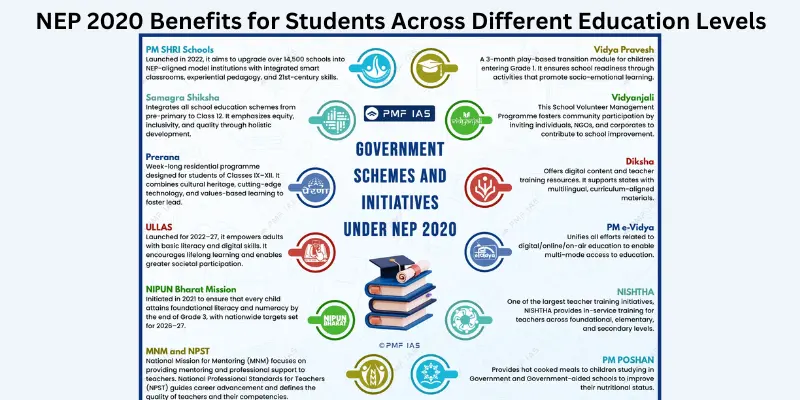
For students, the most important change is the movement away from an education model dominated by memorization and rigid academic pathways. NEP 2020 emphasizes conceptual understanding, critical thinking, creativity, communication, problem-solving, experiential learning, vocational skills, and multidisciplinary education. These objectives are intended to help learners develop knowledge and practical abilities that remain useful beyond examinations.
The policy proposes the 5+3+3+4 curricular and pedagogical structure, covering foundational, preparatory, middle, and secondary stages. It also gives greater importance to foundational literacy and numeracy, mother tongue or regional languages in the early years where feasible, arts and sports, vocational education, technology, and flexible subject choices.
At the higher education level, NEP 2020 promotes multidisciplinary institutions, flexible undergraduate education, multiple entry and exit options, academic credit mobility, research, technology, and wider access. The Ministry of Education has also identified initiatives such as the Academic Bank of Credits, multiple entry-exit, National Digital Education Architecture, and internationalization of higher education as part of the policy implementation landscape.
The actual experience of students can vary because implementation depends on schools, colleges, universities, state governments, teachers, infrastructure, and available resources. Therefore, the benefits discussed in this article should be understood as the intended and emerging benefits of NEP 2020 rather than as identical changes already experienced by every student across India.
What Is NEP 2020 and Why Does It Matter to Students?
The National Education Policy 2020 is India’s comprehensive education policy aimed at restructuring education from early childhood through higher education. It seeks to improve access, equity, quality, affordability, and accountability while encouraging a more holistic approach to learning.
For students, NEP 2020 matters because education is no longer viewed only as preparation for examinations. The policy describes education as a means of developing knowledgeable, skilled, ethical, creative, and socially responsible individuals. At the higher education level, it specifically emphasizes developing holistic individuals and incorporating skills and values throughout the learning process.
The policy also recognizes problems associated with rigid separation between disciplines. Traditional academic structures often required students to select narrow streams at an early stage. NEP 2020 seeks greater flexibility, allowing students to explore combinations involving sciences, social sciences, arts, humanities, sports, vocational education, and other areas according to institutional availability.
This approach can be particularly useful for students whose interests do not fit neatly into traditional academic categories. A learner interested in computer science and design, for example, may benefit from an educational environment that allows interdisciplinary learning instead of treating every field as completely separate.
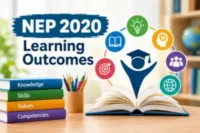
Another important aspect is the focus on learning outcomes. Students are expected to understand concepts rather than simply memorize information. This can encourage classroom activities involving experimentation, discussion, projects, practical work, problem-solving, and application of knowledge.
NEP 2020 Benefits for Students in Early Childhood Education
Early childhood is the first major stage addressed by NEP 2020. The policy recognizes that cognitive, language, social, emotional, physical, and foundational development begins well before conventional primary schooling.
The policy incorporates early childhood care and education into the broader educational structure and places strong emphasis on play-based, activity-based, and inquiry-based learning. The foundational stage covers five years, including three years of preschool or Anganwadi education followed by Grades 1 and 2.
Play-Based and Activity-Based Learning
One of the important NEP 2020 benefits for students at the foundational stage is greater emphasis on learning through play, activities, exploration, and interaction.
Young children can find abstract and highly formal classroom instruction difficult. Play-based learning can make concepts easier to understand because children interact with objects, stories, games, sounds, images, movement, and other learning experiences.
Instead of treating early education as a smaller version of conventional schooling, NEP 2020 promotes developmentally appropriate learning. This can support curiosity and make the initial experience of education more engaging.
Improved Foundational Literacy and Numeracy
Foundational literacy and numeracy are central to the policy. Students need basic reading, writing, comprehension, and mathematical abilities before they can successfully engage with more advanced academic material.
NEP 2020 gives foundational literacy and numeracy high priority, with the broader objective of ensuring that children acquire these essential competencies during the early years of schooling. The Ministry of Education has also listed foundational literacy and numeracy resource tools among initiatives connected with NEP implementation.
Strong foundational skills can benefit students throughout their education. A child who understands basic reading and mathematics is better positioned to learn science, social studies, languages, technology, and other subjects later.
Learning in Familiar Languages
NEP 2020 recommends that, wherever possible, the medium of instruction until at least Grade 5, and preferably beyond, should be the home language, mother tongue, local language, or regional language.
For young learners, learning complex concepts through a familiar language can make classroom communication easier. It may also help children develop conceptual understanding before they face the additional challenge of learning through a less familiar language.
This does not mean that English or other languages lose importance. Instead, the policy emphasizes multilingualism and language learning while seeking to reduce the disadvantage students can face when early conceptual education is delivered in a language they do not understand well.
NEP 2020 Benefits for Primary and Preparatory Stage Students
The preparatory stage covers Grades 3 to 5. At this stage, students gradually move from foundational learning toward broader subject-based learning.
The policy recommends an approach that continues to emphasize activity, discovery, discussion, and experiential learning instead of relying exclusively on textbook-based instruction.
Better Conceptual Understanding
A major expected benefit is greater emphasis on understanding concepts.
Students may be asked to investigate a problem, conduct an activity, discuss an idea, or connect classroom concepts with everyday experiences. Such approaches can help learners understand why something happens rather than simply remember the answer.
For example, mathematical concepts can be connected with shopping, measurement, patterns, games, and daily activities. Environmental science can be linked with local surroundings, water conservation, plants, waste management, and community life.
Holistic Development Beyond Academics
NEP 2020 does not treat academic marks as the only measure of student development. Arts, sports, physical education, communication, creativity, values, and other areas receive greater recognition in the policy framework.
This can provide students with opportunities to identify strengths that may not appear through conventional examinations.
A child who performs moderately in mathematics but demonstrates strong artistic, athletic, communication, leadership, or creative abilities can receive a broader educational experience.
Development of Social and Emotional Skills
Students spend a significant part of childhood learning how to communicate, cooperate, manage emotions, solve disagreements, and work with others.
Activity-based and collaborative learning can provide opportunities to develop these abilities. Group projects, classroom discussions, creative activities, sports, and peer interaction can help children practice cooperation and communication.
These skills are increasingly relevant because academic knowledge alone does not determine how effectively a student performs in higher education, employment, or society.
NEP 2020 Benefits for Middle School Students
The middle stage generally covers Grades 6 to 8. NEP 2020 proposes more subject-oriented learning during this stage while retaining experiential and exploratory approaches.
One of the most discussed changes for students at this level is greater exposure to vocational education.
Early Exposure to Vocational Education
NEP 2020 recommends exposing students to vocational education from the middle-school years. The policy also discusses internships and practical exposure, including opportunities to learn from local vocational experts.
This is significant because students traditionally encounter career-oriented education much later.
Early vocational exposure does not necessarily mean that students must choose a career at a young age. Instead, it can help them understand different types of work and discover their interests.
Students may gain exposure to areas such as crafts, technology, agriculture, entrepreneurship, local industries, services, and other practical fields depending on the educational environment.
The Ministry also identifies vocationalization of school education as an initiative intended to integrate vocational education with general academic education and provide students with exposure to work environments and different career options.
Coding and Contemporary Skills
Technology and computational thinking receive increased attention in the NEP framework. Students can benefit from exposure to digital tools, problem-solving, coding, and technology-enabled learning.
The purpose is not simply to make every student a programmer. Digital and computational skills can develop logical thinking and help students understand how modern technologies operate.
This becomes increasingly important as education, employment, communication, research, and business become more dependent on digital systems.
More Practical Learning
Middle-school students can benefit from learning activities that connect classroom concepts with practical situations.
Science experiments, projects, field activities, vocational exposure, local community studies, and technology-based assignments can make learning more meaningful.
Practical learning can also help students recognize how academic knowledge is used outside the classroom.
NEP 2020 Benefits for Secondary School Students
Secondary education represents an important stage because students begin making decisions that can influence higher education and future careers.
NEP 2020 seeks to provide greater flexibility at the secondary level and reduce rigid separation among arts, science, humanities, vocational, and other areas. The policy specifically identifies rigid separation of disciplines and early specialization as problems within the existing education system.
Greater Flexibility in Subject Selection
Students can potentially benefit from more flexible subject combinations.
Traditional systems often encourage students to select predefined streams such as science, commerce, or humanities. NEP 2020 envisions greater flexibility, allowing students to explore subjects across different areas where institutional arrangements permit.
This can support students with interdisciplinary interests.
For example, a student interested in economics and mathematics can combine relevant subjects, while another student may wish to connect computer science with arts or design.
The exact options available will depend on the school, board, teachers, infrastructure, and implementation arrangements.
Career Awareness Before College
Another important NEP 2020 benefit for students is increased attention to career awareness.
Students often make higher education decisions without sufficient understanding of available careers, courses, skills, and employment pathways. Exposure to vocational education, practical learning, career guidance, and multidisciplinary subjects can help students make more informed decisions.
The Ministry has also identified career guidance-related initiatives within the broader implementation of NEP 2020.
Reduced Dependence on Rote Learning
NEP 2020 emphasizes conceptual understanding, critical thinking, creativity, and learning outcomes. This creates the possibility of reducing excessive dependence on memorization.
For secondary students, this can be particularly important because examination preparation often becomes increasingly intense at this stage.
A stronger focus on understanding can help students apply information to unfamiliar questions rather than reproduce memorized answers.
NEP 2020 Benefits for Students Preparing for Higher Education
Students approaching higher education can benefit from the policy’s emphasis on multidisciplinary learning, flexibility, skill development, and broader career preparation.
NEP 2020 seeks to create higher education institutions that offer broader academic experiences rather than highly fragmented and narrowly specialized structures. The Ministry describes multidisciplinary education, flexible curriculum, improved student support, online education, open and distance learning, and greater inclusion among important directions for higher education reform.
Better Preparation for Future Careers
Modern careers increasingly require combinations of technical knowledge, communication, digital literacy, creativity, teamwork, and problem-solving.
NEP 2020’s emphasis on multidisciplinary and skill-oriented education can help students develop a broader skill profile.
A student entering engineering, medicine, business, social sciences, arts, or another field can benefit from learning experiences that extend beyond a narrow collection of textbook concepts.
Improved Awareness of Multiple Career Paths
A flexible education system can help students recognize that one academic subject does not necessarily lead to only one career.
For example, mathematics can support careers in data science, economics, finance, engineering, education, research, computing, and other areas. Similarly, humanities subjects can connect with law, public policy, media, education, research, business, social services, and creative industries.
Such flexibility can make career planning more informed and less dependent on conventional assumptions about academic streams.
NEP 2020 Benefits for Undergraduate Students
The higher education component is one of the most significant areas of NEP 2020. The policy proposes a multidisciplinary undergraduate education system with greater flexibility and multiple pathways.
Multidisciplinary Higher Education
Students can benefit from studying across disciplines rather than being confined to one narrow academic area.
The policy envisions large multidisciplinary universities and colleges and encourages institutions to move away from single-stream structures over time.
This approach can help students develop broader perspectives.
An engineering student may benefit from exposure to management or communication. A social science student may benefit from data analysis or technology. A business student may gain from psychology or design.
The exact academic combinations depend on individual institutions, but the policy direction is toward greater flexibility.
Multiple Entry and Exit Options
One of the most important NEP 2020 benefits for students in higher education is greater flexibility through multiple entry and exit pathways.
The policy proposes undergraduate programmes with different stages of certification, including a certificate after one year, a diploma after two years, a bachelor’s degree after three years, and a four-year multidisciplinary bachelor’s degree as the preferred option.
This framework is intended to provide flexibility for students whose education may be interrupted or who need to leave higher education temporarily.
It can also reduce the situation in which students receive no formal recognition for substantial study when they cannot complete an entire degree.
Academic Credit Mobility
The Academic Bank of Credits is another important development associated with NEP 2020. The Ministry lists Academic Bank of Credit and multiple entry-exit among NEP higher education initiatives.
The concept supports the accumulation and transfer of academic credits under applicable institutional and regulatory frameworks.
For students, this can potentially make higher education more flexible by supporting movement between programmes or institutions where the relevant rules permit it.
Greater Choice and Flexibility
The broader objective is to give students greater control over their educational pathways.
Instead of assuming that every learner should follow exactly the same four-year route, the system can accommodate different academic circumstances, interests, and life situations.
This flexibility is particularly relevant to students who combine education with employment, family responsibilities, entrepreneurship, competitive preparation, or other commitments.
NEP 2020 Benefits for Students From Disadvantaged Backgrounds
Equity and inclusion are major components of NEP 2020. The policy recognizes that students from socio-economically disadvantaged groups can face barriers related to geography, finances, language, gender, disability, social circumstances, and access to quality institutions.
The policy proposes measures for disadvantaged groups, including scholarships, inclusion, improved access, support systems, and greater awareness of educational opportunities. It also discusses a coordinated system through which scholarships and other opportunities for students from socio-economically disadvantaged groups can be announced through a single-window mechanism.
Greater Focus on Inclusive Education
Students with disabilities can benefit from an education system that places greater emphasis on accessibility and inclusion.
The higher education framework calls for infrastructure and learning materials to be accessible to learners with disabilities.
Inclusive education can help ensure that disability does not automatically become a barrier to participation.
Support for Socio-Economically Disadvantaged Students
NEP 2020 identifies socio-economically disadvantaged groups as an important focus area.
The policy recognizes that equal access to education requires more than simply opening schools and colleges. Students may need financial support, transportation, language assistance, scholarships, appropriate infrastructure, counseling, and other forms of support.
This broader approach is essential because educational opportunity depends on the circumstances in which a student learns.
NEP 2020 Benefits Through Vocational Education
Vocational education is one of the important areas where students can experience a practical change under NEP 2020. The policy seeks to reduce the traditional separation between academic education and skill-based learning. Students are encouraged to understand different occupations and develop practical skills alongside conventional academic knowledge.
NEP 2020 proposes that students receive exposure to vocational education from the middle-school stage. The policy also recommends internships with local vocational experts and opportunities for students to experience practical work. This approach can help learners understand that successful careers are not limited to conventional academic professions.
Practical Skills for Future Careers
Students can develop skills that have direct applications outside the classroom. Depending on the institution and available programmes, vocational exposure may include areas such as crafts, agriculture, technology, entrepreneurship, healthcare support, tourism, manufacturing, and other local occupations.
Early exposure can help students identify their interests before making major educational decisions. It can also reduce the perception that vocational education is less valuable than conventional academic education.
For students who prefer practical learning, this can be particularly useful. A learner who struggles with purely theoretical instruction may demonstrate stronger abilities when learning involves tools, projects, demonstrations, field activities, or real-world problems.
Internship and Work-Based Exposure
The emphasis on internships can introduce students to actual working environments. Instead of learning about an occupation only from textbooks, students may observe how professionals perform tasks, communicate with customers, use equipment, manage time, and solve practical problems.
Such experiences can contribute to career awareness. They may also help students understand the difference between what they imagine a career to be and what the profession actually involves.
NEP 2020 Benefits Through Skill Development
Skill development is closely connected with the broader objectives of NEP 2020. The policy emphasizes skills such as communication, critical thinking, problem-solving, collaboration, creativity, digital literacy, and vocational competence.
Communication and Collaboration Skills
Academic success often depends on more than subject knowledge. Students also need to communicate ideas clearly, participate in discussions, work with others, and present information.
Project-based activities and collaborative learning can create opportunities to develop these abilities.
Students may learn how to divide responsibilities, listen to different opinions, resolve disagreements, present findings, and complete a common task. These experiences can become useful in higher education and professional environments.
Critical Thinking and Problem-Solving
NEP 2020 places considerable emphasis on conceptual understanding and higher-order thinking rather than excessive memorization.
Critical thinking encourages students to examine information, compare evidence, identify relationships, and reach reasoned conclusions.
Problem-solving skills are similarly important because real-world situations rarely provide questions with a single memorized answer. Students who learn to approach unfamiliar problems can become more adaptable learners.
NEP 2020 Benefits Through Assessment Reform
Assessment is another important part of the policy. NEP 2020 proposes moving away from assessment practices that primarily test memorization and toward assessments that evaluate understanding, competencies, application, and broader development.
Competency-Based Assessment
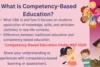
Competency-based assessment focuses on what students can understand and apply rather than only what they can reproduce from memory.
This approach can encourage students to understand concepts more deeply. For example, instead of simply remembering a scientific definition, a student may need to explain a phenomenon, interpret information, conduct an activity, or apply a concept to a practical situation.
Such assessment can make learning more meaningful because students recognize that understanding is more valuable than memorizing isolated information.
Reduced Examination Pressure
NEP 2020 aims to make examinations less stressful and more focused on testing essential competencies. The policy also discusses board examinations that assess core capacities and allow students greater flexibility in how they demonstrate learning.
The intention is not to eliminate examinations but to reduce the dominance of high-stakes testing over the entire learning process.
For students, this can potentially create a healthier relationship with education. Instead of studying only before examinations, learners can focus more consistently on understanding concepts and developing skills.
NEP 2020 Benefits Through Technology-Enabled Learning
Technology has become an increasingly important component of education. NEP 2020 recognizes the potential of digital technologies for improving teaching, learning, assessment, teacher development, and access to educational resources.
The policy proposes greater use of technology while also acknowledging the digital divide and the need to address unequal access.
Access to Digital Educational Resources
Students can benefit from online educational materials, digital libraries, educational videos, virtual learning resources, and technology-supported classroom activities.
Digital resources can supplement classroom teaching and provide students with additional opportunities to revise difficult concepts.
A student who does not understand a topic during a classroom lesson may be able to revisit the concept through another explanation, animation, simulation, or digital learning resource.
Support for Remote and Flexible Learning
Technology can also support students who cannot always access conventional classroom education.
Online and open-distance learning can provide additional pathways for learners, particularly at the higher education level. The Ministry of Education identifies online education and open and distance learning as important components of higher education development under NEP 2020.
However, technology cannot automatically solve educational inequality. Students require devices, connectivity, electricity, digital skills, and appropriate learning environments. Therefore, the effectiveness of technology-based education depends heavily on infrastructure and accessibility.
NEP 2020 Benefits Through Multilingual Education
Language is another major component of NEP 2020. The policy promotes multilingualism and recommends that, wherever possible, children receive early education through their home language, mother tongue, local language, or regional language.
Better Early Conceptual Understanding
Children often understand ideas more easily when they are explained in a language they already know well.
Using familiar languages during the foundational years can help students participate more actively in classroom discussions. It can also make it easier for teachers to explain unfamiliar concepts.
This does not mean students should avoid learning other languages. NEP 2020 promotes multilingual learning, which can help learners communicate across different linguistic environments.
Preservation of Linguistic and Cultural Knowledge
Language carries cultural knowledge, stories, traditions, local history, and community identity. Greater recognition of Indian languages can provide students with opportunities to engage with educational material connected to their linguistic and cultural backgrounds.
Students may also benefit from access to educational resources in multiple Indian languages as digital and translated resources expand.
NEP 2020 Benefits for Students With Different Learning Needs
A student population is not academically or socially uniform. Learners have different abilities, interests, backgrounds, learning speeds, and educational requirements.
NEP 2020’s emphasis on inclusive and holistic education can support a more flexible approach to student needs.
Greater Attention to Individual Learning
A one-size-fits-all teaching model may not work equally well for every learner. Students differ in how they understand information and how quickly they develop particular skills.
Experiential activities, projects, technology-supported learning, multiple assessment methods, and flexible academic pathways can provide additional ways for students to demonstrate their abilities.
This is particularly important for students who may not perform well under conventional examination-focused systems but possess strong practical, creative, analytical, or communication skills.
Support for Students With Disabilities
Inclusive education is an important part of the policy framework. NEP 2020 emphasizes accessibility and appropriate support for learners with disabilities.
Accessible infrastructure, learning materials, assistive technologies, trained educators, and supportive learning environments can help students participate more effectively.
The objective is to ensure that disability does not unnecessarily restrict educational opportunities.
NEP 2020 Benefits for Undergraduate Students
The higher education reforms proposed under NEP 2020 can significantly affect students entering universities and colleges.
The policy promotes multidisciplinary institutions and flexible undergraduate programmes. This represents a shift from narrowly structured degree programmes toward broader educational experiences.
Flexible Undergraduate Programme
Students can potentially choose subjects from different academic areas according to institutional provisions.
This flexibility can help students build combinations that match their career goals.
For example, a student studying business may also develop knowledge of data analysis, psychology, communication, or technology. A student studying science may explore entrepreneurship, economics, or communication.
Such combinations can support interdisciplinary problem-solving.
Multiple Entry and Exit Pathways
The proposed undergraduate framework recognizes different stages of completion. Students may receive appropriate academic recognition for completing defined periods of study under applicable regulations.
This can be useful when students face financial difficulties, personal circumstances, employment requirements, or other reasons for interrupting education.
Rather than treating interruption as complete educational failure, a flexible system can provide alternative pathways for continuing education later.
NEP 2020 Benefits Through Academic Bank of Credits
The Academic Bank of Credits is designed to facilitate the accumulation and transfer of academic credits earned by students from recognized higher education institutions under applicable rules.
Greater Academic Flexibility
Credit-based mobility can give students greater flexibility when changing programmes or institutions where transfer arrangements are available.
A student may have opportunities to build an academic record across different learning experiences rather than being tied entirely to one fixed institutional pathway.
The Academic Bank of Credits is part of the higher education initiatives associated with NEP 2020 implementation.
Support for Lifelong Learning
Education is increasingly becoming a lifelong process. People may need to return to education after employment, career changes, family responsibilities, or technological changes in their profession.
A more flexible credit system can support this idea by making it easier for learners to continue accumulating relevant academic achievements over time, subject to institutional and regulatory requirements.
NEP 2020 Benefits for Career Preparation
One of the broader objectives of NEP 2020 is to make education more relevant to students’ future lives and careers.
Career preparation does not begin only after graduation. Students can gradually develop awareness of their interests, abilities, educational options, and employment possibilities throughout their education.
Connecting Education With Employability
Employability depends on a combination of academic knowledge and practical capabilities.
Students need subject expertise, but they may also need digital literacy, communication, teamwork, adaptability, problem-solving, and professional awareness.
NEP 2020’s emphasis on vocational exposure, multidisciplinary education, internships, practical learning, and skill development can contribute to a broader employability-oriented education system.
Entrepreneurship and Innovation
Students can also benefit from greater exposure to entrepreneurship and innovation.
An education system that encourages creativity and problem-solving can help learners think beyond conventional employment pathways. Students may develop ideas for products, services, social initiatives, research projects, or small businesses.
Entrepreneurial education can also teach students about identifying problems, evaluating opportunities, managing resources, communicating ideas, and taking informed decisions.
NEP 2020 Benefits for Research-Oriented Students
Research is another important area in higher education. NEP 2020 seeks to strengthen research culture and improve India’s research ecosystem.
Students pursuing advanced education can benefit from greater emphasis on research, innovation, multidisciplinary collaboration, and problem-solving.
Greater Exposure to Research
Research-oriented learning can encourage students to ask questions rather than simply receive information.
Undergraduate students can potentially gain exposure to research projects, academic writing, laboratory work, data analysis, field research, and other activities depending on their institution and programme.
These experiences can be particularly valuable for students considering postgraduate education, doctoral studies, scientific research, policy work, or academic careers.
Innovation and Problem-Solving
Research education can also connect academic knowledge with real-world challenges.
Students may investigate issues related to healthcare, climate change, education, agriculture, technology, economics, public policy, or other fields.
Such opportunities can help students understand how knowledge is created and how research can contribute to practical solutions.
NEP 2020 Benefits for Lifelong Learning
The idea of lifelong learning is increasingly important because careers and technologies continue to change.
Students entering education today may work in industries that evolve significantly during their professional lives. Therefore, education needs to prepare learners not only for their first job but also for continuous learning.
NEP 2020’s emphasis on flexibility, multidisciplinary education, vocational skills, digital learning, and continuing education can support this broader objective.
Students can develop the mindset that education does not end with a school certificate, diploma, or university degree. Instead, learning can continue through professional courses, online resources, vocational programmes, higher education, research, and workplace learning.
NEP 2020 Benefits for Students Through Holistic Education
One of the most significant objectives of NEP 2020 is to move education beyond academic achievement alone. The policy promotes holistic development by giving importance to intellectual, social, emotional, physical, ethical, creative, and practical abilities.
For students, this broader approach can create opportunities to develop different types of strengths. Academic performance remains important, but students can also develop abilities through sports, arts, cultural activities, projects, community participation, vocational education, and other learning experiences.
Balanced Development of Student Abilities
A student’s future success depends on more than examination scores. Communication, creativity, emotional awareness, teamwork, leadership, adaptability, and decision-making can influence higher education and professional development.
NEP 2020’s holistic approach encourages schools and higher education institutions to recognize these dimensions as part of student development.
This can also help students discover abilities that may remain unnoticed in a purely examination-oriented system.
Arts, Sports, and Extracurricular Learning
NEP 2020 seeks to reduce the separation between academic and extracurricular areas. Arts, music, sports, physical education, and other activities are treated as important components of education.
Participation in these areas can help students develop discipline, creativity, cooperation, confidence, and physical well-being.
A student interested in music, painting, athletics, theatre, or another creative activity should not necessarily have to treat that interest as unrelated to education. A holistic system can provide greater space for such interests while maintaining academic learning.
NEP 2020 Benefits Through Experiential Learning
Experiential learning is another important element of the policy. Instead of relying entirely on lectures and textbooks, students can learn through projects, experiments, field activities, practical exercises, discussions, and real-world applications.
Learning by Doing
Learning by doing can help students connect theoretical concepts with practical situations.
For example, science students can understand concepts through experiments, mathematics students can apply calculations to real-life situations, and social science students can study their local communities.
This approach can make education more engaging and may help students remember concepts because they have experienced their practical application.
Project-Based Learning
Projects can encourage students to research topics, collect information, analyze findings, work with peers, and present conclusions.
Project-based learning can also develop several skills simultaneously. A student may need to read information, evaluate sources, calculate data, prepare a presentation, communicate with teammates, and explain the final result.
These skills can remain useful across different academic levels and careers.
NEP 2020 Benefits Through Improved Career Guidance
Career decisions can be challenging for students because the number of educational and professional options continues to expand.
NEP 2020’s emphasis on multidisciplinary learning, vocational exposure, practical education, and flexible pathways can provide students with a broader understanding of potential careers.
Earlier Career Awareness
Career awareness can begin before students reach university.
Exposure to vocational activities, practical projects, technology, entrepreneurship, and different academic disciplines can help students understand their interests.
A student who experiences different areas before selecting a higher education pathway may be better prepared to evaluate career options.
More Informed Higher Education Choices
Students often select courses because of social pressure, family expectations, peer influence, or incomplete information.
Greater exposure to career pathways can encourage students to examine factors such as personal interests, required qualifications, employment opportunities, skills, and long-term professional development.
This does not guarantee that every student will make the right decision, but better information can improve the quality of educational choices.
NEP 2020 Benefits for Students Entering the Workforce
The relationship between education and employment is increasingly important. Employers often seek graduates who can combine technical knowledge with communication, adaptability, teamwork, digital competence, and problem-solving.
NEP 2020’s broader approach to skills can help students prepare for these expectations.
Development of Transferable Skills
Transferable skills are abilities that can be used across different professions.
Communication, critical thinking, teamwork, leadership, digital literacy, time management, and problem-solving are examples.
A student may change jobs or even careers several times during working life. Transferable skills can therefore provide long-term value because they are not restricted to one occupation.
Adaptability to Changing Careers
Technological changes can create new professions while reducing demand for some existing tasks.
Students need the ability to learn new technologies and acquire new knowledge throughout their careers.
An education system that emphasizes learning how to learn can help students adapt more effectively when professional requirements change.
NEP 2020 Benefits for Students in Rural and Remote Areas
Access and equity are important objectives of NEP 2020. Students living in rural and remote areas may face challenges involving educational infrastructure, qualified teachers, transportation, digital access, and availability of specialized courses.
The policy includes measures intended to improve access and strengthen educational opportunities across different communities.
Technology as an Additional Learning Resource
Digital education can potentially provide rural students with access to resources that may not be available locally.
Online courses, recorded lectures, digital libraries, educational platforms, and virtual resources can supplement classroom education.
However, digital education is beneficial only when students have reliable access to devices, internet connectivity, electricity, and appropriate support.
Expansion of Educational Opportunities
A broader higher education ecosystem can potentially reduce dependence on a limited number of institutions.
Online, open, distance, and blended learning can provide additional pathways for students who cannot relocate to major cities.
The effectiveness of these pathways depends on programme quality, accreditation, student support, digital infrastructure, and institutional capacity.
NEP 2020 Benefits for Economically Disadvantaged Students
Financial circumstances can significantly influence educational opportunities. NEP 2020 recognizes the importance of improving access for socio-economically disadvantaged groups.
Greater Focus on Educational Access
Students from economically weaker backgrounds can benefit when scholarships, financial support, accessible institutions, and inclusive educational programmes are expanded.
Financial assistance can reduce the risk that students discontinue education because of affordability problems.
However, the availability and eligibility of specific financial support programmes can vary. Students should verify current scholarship requirements through official government, institutional, or regulatory sources.
Flexible Educational Pathways
Multiple educational pathways can also benefit students who need to combine education with employment or other responsibilities.
A flexible system may allow some learners to continue education at a pace that better reflects their circumstances.
This is particularly relevant to students who cannot follow a conventional full-time educational pathway continuously.
NEP 2020 Benefits Through Student-Centered Education
A student-centered approach recognizes learners as active participants rather than passive recipients of information.
NEP 2020 promotes learning approaches that encourage questioning, exploration, creativity, discussion, and application.
More Active Classroom Participation
Students can become more involved in their own learning through projects, classroom discussions, experiments, presentations, and collaborative assignments.
Active participation can improve engagement and encourage learners to take greater responsibility for understanding concepts.
Development of Independent Learning Skills
Independent learning becomes increasingly important as students progress toward university and employment.
Students need to know how to find information, evaluate sources, organize their time, identify weaknesses, and seek help when necessary.
These abilities can help learners continue developing even when formal classroom instruction is unavailable.
NEP 2020 Benefits for Higher Education Flexibility
Flexibility is one of the defining features of the higher education vision under NEP 2020.
Students are expected to have greater opportunities to select courses, combine disciplines, pursue different learning pathways, and potentially move between educational options under applicable regulations.
Freedom to Explore Different Disciplines
Multidisciplinary education can allow students to explore interests outside their main subject.
This can be valuable because many modern problems do not belong to a single academic discipline.
For example, climate change involves science, economics, public policy, technology, geography, and social behavior. Similarly, healthcare involves medicine, technology, psychology, economics, ethics, and management.
Students with interdisciplinary education can develop broader perspectives on such problems.
Greater Choice in Academic Pathways
The ability to choose different courses and educational pathways can help students align their studies with their individual goals.
This is especially useful for learners whose interests change over time.
A student does not necessarily have the same interests at age 18 that they had at age 15. Educational flexibility can make it easier to adjust academic direction when institutional rules permit.
NEP 2020 Benefits for Students Compared With Traditional Education
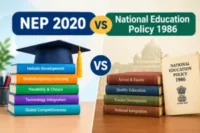
The significance of NEP 2020 becomes clearer when several proposed changes are compared with traditional education approaches.
Traditional education has often been associated with strong subject boundaries, examination-focused learning, memorization, limited vocational exposure, and relatively rigid educational pathways.
NEP 2020 seeks greater flexibility, conceptual learning, multidisciplinary education, practical exposure, skill development, and holistic assessment.
| Traditional Approach | NEP 2020 Direction |
|---|---|
| Greater emphasis on memorization | Greater emphasis on conceptual understanding |
| Rigid subject combinations | Greater subject flexibility |
| Limited early vocational exposure | Earlier exposure to vocational education |
| Examination-centered learning | Competency and holistic assessment |
| Strong separation between disciplines | Multidisciplinary education |
| Limited practical exposure | Experiential and practical learning |
| Fixed higher education pathways | Greater flexibility and multiple pathways |
| Academic knowledge prioritized | Academic and practical skills combined |
This comparison should not be interpreted as meaning that every traditional school or college followed exactly the same model or that every NEP 2020 initiative has already been implemented uniformly. Educational institutions differ considerably.
Challenges That May Affect NEP 2020 Benefits for Students
The potential NEP 2020 benefits for students across different education levels are substantial, but implementation presents challenges.
A policy framework can establish objectives, but actual results depend on infrastructure, teachers, funding, technology, curriculum development, institutional capacity, and monitoring.
Teacher Training Requirements
Teachers play a central role in implementing changes in curriculum, pedagogy, assessment, technology, and experiential learning.
If teachers do not receive sufficient training and resources, it can be difficult to shift from traditional teaching methods to more student-centered approaches.
Professional development therefore remains essential for successful implementation.
Infrastructure and Digital Divide
Technology-enabled education requires reliable infrastructure.
Students without suitable devices or internet access may not receive the same benefits as students in well-connected areas.
This creates a risk that technology could widen educational inequality if digital access is not expanded alongside digital learning.
Variation Between Institutions
Implementation can differ between schools, colleges, universities, states, and regions.
One institution may offer extensive vocational programmes and multidisciplinary choices, while another may have fewer resources.
Students and parents therefore need to distinguish between what NEP 2020 proposes nationally and what a particular institution currently provides.
How Students Can Make the Most of NEP 2020
Students can take advantage of the opportunities associated with the policy by becoming active participants in their education.
Explore Subjects Beyond the Main Stream
Students should consider exploring subjects outside their primary academic area whenever their institution allows it.
Learning basic skills in communication, technology, data, finance, entrepreneurship, or another complementary discipline can strengthen an academic profile.
Develop Practical Skills
Students should not depend entirely on examination results.
Projects, internships, vocational courses, competitions, research activities, volunteering, presentations, and practical assignments can help develop skills that academic examinations may not fully measure.
Build Digital Literacy
Digital literacy is increasingly important across almost every academic and professional field.
Students can learn how to use productivity tools, online learning platforms, digital research resources, presentation software, data tools, and responsible online communication.
Develop Communication Skills
Strong communication can benefit students in school, university, interviews, internships, and professional life.
Reading, writing, presentations, group discussions, and public speaking can gradually improve communication abilities.
Learn How to Evaluate Information
The internet provides enormous amounts of information, but not all information is reliable.
Students should learn to distinguish credible educational and government sources from unsupported claims, misleading content, and low-quality material.
This skill is particularly important when researching assignments, health information, careers, scholarships, and higher education opportunities.
Frequently Asked Questions About NEP 2020 Benefits for Students
What are the main NEP 2020 benefits for students?
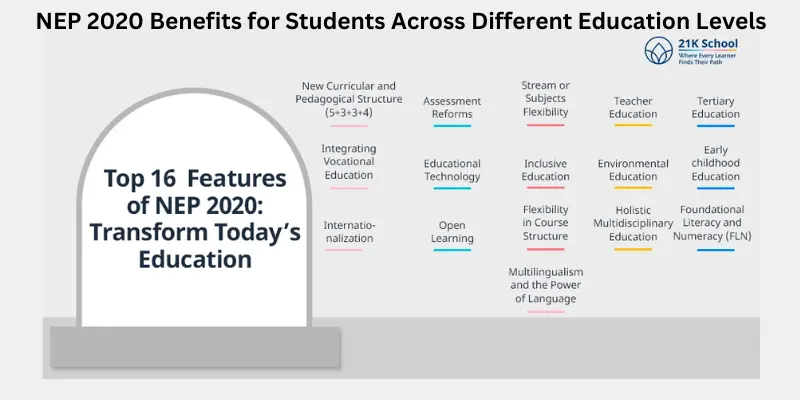
The major benefits include greater emphasis on conceptual understanding, holistic development, vocational education, practical learning, multidisciplinary education, flexible subject choices, skill development, technology-enabled learning, inclusive education, and flexible higher education pathways.
How does NEP 2020 benefit school students?
School students can benefit from the 5+3+3+4 curricular structure, foundational literacy and numeracy, activity-based learning, experiential education, vocational exposure, multilingual learning, skill development, and greater emphasis on holistic development.
How does NEP 2020 benefit higher education students?
Higher education students can benefit from multidisciplinary programmes, flexible curricula, multiple entry and exit pathways, academic credit mobility, research opportunities, vocational skills, digital learning, and broader academic choices, depending on institutional implementation.
Does NEP 2020 reduce the importance of examinations?
NEP 2020 does not eliminate examinations. Instead, it seeks to make assessment more focused on competencies, conceptual understanding, application, and broader learning outcomes while reducing excessive dependence on rote memorization.
How does NEP 2020 help students choose careers?
The policy promotes vocational exposure, practical learning, multidisciplinary education, internships, skill development, and career awareness. These experiences can help students understand their interests and evaluate different educational and professional pathways.
Does NEP 2020 allow students to study different subjects together?
The policy promotes greater flexibility and multidisciplinary education. However, the actual combination of subjects available depends on the specific school, college, university, board, curriculum, and applicable regulations.
How does NEP 2020 support students from disadvantaged backgrounds?
NEP 2020 emphasizes equity and inclusion and proposes measures related to access, scholarships, support systems, inclusive education, and educational opportunities for socio-economically disadvantaged groups.
Is NEP 2020 implemented in the same way across India?
No. Implementation can vary among states and educational institutions. The policy provides a national framework, while the actual availability of programmes, courses, infrastructure, assessments, and institutional reforms depends on implementation arrangements.
Final Takeaway: NEP 2020 Benefits for Students Across Different Education Levels
The NEP 2020 Benefits for Students Across Different Education Levels cover a broad educational journey, beginning with foundational learning and continuing through school education, vocational exposure, undergraduate studies, research, and career development.
At the foundational level, students can benefit from play-based learning, foundational literacy, numeracy, and developmentally appropriate education. Primary and middle-school learners can gain from experiential education, practical activities, vocational exposure, digital skills, and broader development.
Secondary students can benefit from greater flexibility, multidisciplinary learning, career awareness, and competency-focused assessment. At the higher education level, flexible curricula, multidisciplinary programmes, multiple entry and exit pathways, academic credit mobility, research opportunities, and skill development represent important areas of reform.
The policy also places strong emphasis on inclusion, technology, languages, equity, lifelong learning, and holistic development.
The most important point for students and parents is that NEP 2020 is a framework for educational transformation rather than a single change that affects every learner in exactly the same way. Its benefits depend on implementation at the school, college, university, state, and national levels.
Students can maximize the opportunities associated with NEP 2020 by developing both academic knowledge and practical skills, exploring different disciplines, using technology responsibly, improving communication, participating in projects and internships, and making informed decisions about higher education and careers.
Ultimately, the intended direction of NEP 2020 is toward an education system in which students are not prepared only to pass examinations. They are expected to develop the knowledge, skills, creativity, values, adaptability, and confidence needed to continue learning and contribute meaningfully to society and the changing world of work.
Challenges of NEP 2020 and Practical Solutions: Key Issues, Reforms & Way Forward (2026)


- Be Respectful
- Stay Relevant
- Stay Positive
- True Feedback
- Encourage Discussion
- Avoid Spamming
- No Fake News
- Don't Copy-Paste
- No Personal Attacks
- Be Respectful
- Stay Relevant
- Stay Positive
- True Feedback
- Encourage Discussion
- Avoid Spamming
- No Fake News
- Don't Copy-Paste
- No Personal Attacks
