Future of Indian Education After NEP 2020: Trends, Changes & Vision
Published: 15 Aug 2026
The Future of Indian Education After NEP 2020 is being shaped by major changes in curriculum, pedagogy, assessment, technology, teacher development, vocational education, higher education, and student choice. The National Education Policy 2020 was approved by the Union Cabinet on 29 July 2020 after an extensive consultation process. The policy aims to create an education system aligned with the needs of the 21st century while improving access, equity, quality, affordability, and accountability.
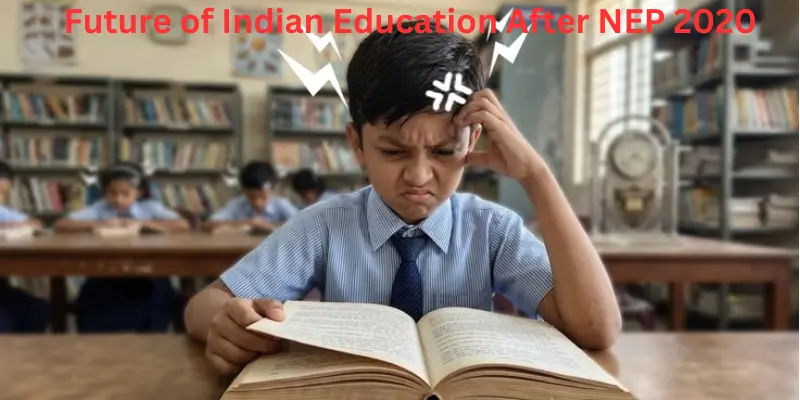
The Future of Indian Education After NEP 2020 is not limited to replacing an old curriculum with a new one. It represents a broader shift from memorization toward conceptual understanding, competency development, critical thinking, multidisciplinary learning, practical skills, research, technology, and lifelong learning. The National Curriculum Framework for School Education also reflects this direction through its emphasis on holistic, multidisciplinary, experiential, and learner-centred education.
For students, the changing education system can create greater flexibility and opportunities. For teachers, it requires new professional capabilities. For schools and colleges, it demands changes in curriculum design, assessment, infrastructure, teacher training, and governance. For policymakers, the major challenge is ensuring that these reforms reach students across different regions and socioeconomic backgrounds.
What Is The Future Of Indian Education After NEP 2020?
The Future of Indian Education After NEP 2020 can be understood as a movement toward a more flexible, skill-oriented, technology-enabled, inclusive, and multidisciplinary education system.
NEP 2020 introduced a new 5+3+3+4 curricular structure covering the Foundational, Preparatory, Middle, and Secondary stages. The structure corresponds broadly to ages 3–8, 8–11, 11–14, and 14–18. The policy places greater emphasis on age-appropriate learning, activity-based education, conceptual understanding, critical thinking, and student choice.
The policy also seeks to reduce rigid boundaries between academic and vocational education, arts and sciences, curricular and extracurricular activities, and different disciplines. This approach can influence the way students select subjects and develop career pathways.
The Future of Indian Education After NEP 2020 will therefore depend on how successfully these policy principles are translated into classroom practices. Policy documents establish the direction, while schools, teachers, universities, state governments, examination bodies, and education technology providers determine how learners experience the reforms.
Major Changes Shaping The Future Of Indian Education
Shift From Rote Learning To Competency-Based Learning
One of the most important changes in the Future of Indian Education After NEP 2020 is the movement away from excessive dependence on memorization.
Competency-based education focuses on what students understand and can apply rather than simply how much information they can reproduce in an examination. Students may increasingly be expected to solve problems, interpret information, communicate ideas, collaborate with others, conduct investigations, and apply knowledge to practical situations.
This approach supports the development of skills that remain relevant beyond school and college. Critical thinking, creativity, communication, collaboration, digital literacy, problem-solving, and adaptability are increasingly important in education and employment.
The National Curriculum Framework for School Education identifies reduced curriculum load, critical thinking, creativity, multidisciplinary education, vocational integration, and flexibility as important directions for school education.
More Holistic And Multidisciplinary Education
The Future of Indian Education After NEP 2020 is also expected to provide students with greater exposure to multidisciplinary learning.
Traditional education pathways often encouraged students to make strict distinctions between science, commerce, arts, humanities, and vocational subjects. NEP 2020 promotes greater flexibility and seeks to remove hard separations between these areas.
A student interested in technology may benefit from exposure to communication, design, entrepreneurship, ethics, or social sciences. A humanities student may gain opportunities to develop digital, quantitative, or vocational skills.
This model reflects the reality that modern careers frequently require knowledge from multiple disciplines. Research, entrepreneurship, artificial intelligence, healthcare, climate studies, business, education, and public policy all involve interdisciplinary knowledge.
The Future Of School Education In India
The Future of Indian Education After NEP 2020 will be particularly visible in school education.
The 5+3+3+4 structure changes the traditional way of organizing school learning. The Foundational Stage combines three years of preschool or Anganwadi education with Grades 1 and 2. The Preparatory Stage covers Grades 3 to 5, the Middle Stage covers Grades 6 to 8, and the Secondary Stage covers Grades 9 to 12.
The Foundational Stage emphasizes play, activity, discovery, and developmentally appropriate learning. Later stages gradually introduce more formal and subject-oriented learning while retaining experiential and interactive approaches.
This structure creates greater recognition of early childhood education as a foundation for later academic development.
Foundational Literacy And Numeracy
Foundational literacy and numeracy are central to the Future of Indian Education After NEP 2020.
Students who struggle to read with comprehension, write effectively, or perform basic mathematical operations can face difficulties across the rest of their educational journey. Strengthening foundational skills can therefore have effects far beyond the primary grades.
Future classrooms are likely to place greater emphasis on early identification of learning gaps, activity-based instruction, regular assessment, individualized support, and appropriate teaching resources.
Experiential And Activity-Based Learning
Experiential learning can become increasingly important as Indian education moves away from purely textbook-driven instruction.
Students can learn concepts through experiments, projects, field activities, simulations, discussions, group work, case studies, and community-based activities. These methods allow learners to connect academic concepts with real situations.
A science lesson can include experimentation rather than only textbook explanation. Mathematics can be connected to budgeting, measurement, data interpretation, and everyday problem-solving. Social science can involve local research and community studies.
This approach can make learning more meaningful while helping students develop practical competencies.
Technology And The Future Of Indian Education
Technology will be one of the strongest forces influencing the Future of Indian Education After NEP 2020.
NEP 2020 recognizes the potential of educational technology and proposes mechanisms for promoting technology use in education. Government initiatives connected with the policy include the National Digital Education Architecture, National Education Technology Forum, Virtual Open School, and other digital education resources.
Digital learning can expand access to educational content beyond traditional classrooms. Students can use digital libraries, recorded lessons, simulations, online assessments, interactive learning platforms, and virtual resources.
Artificial Intelligence And Education
Artificial intelligence is likely to become increasingly relevant to the Future of Indian Education After NEP 2020.
AI-based systems can potentially support personalized learning, automated feedback, content recommendations, language assistance, accessibility tools, and administrative tasks. Teachers may use technology to identify learning gaps and provide differentiated support.
AI should not be viewed simply as a replacement for teachers. Education involves mentoring, motivation, social development, ethical reasoning, communication, classroom management, and emotional support. These areas require human judgment.
The future classroom is more likely to combine teacher expertise with technology than eliminate the teacher’s role.
Digital Literacy As A Core Skill
Digital literacy will become increasingly important for students and teachers.
Students need to understand how to search for information, evaluate sources, protect personal information, communicate responsibly, use digital tools, and recognize misinformation. Digital education should therefore include responsible and critical technology use rather than simply teaching students how to operate devices.
The digital divide remains a major consideration. Technology-based education cannot produce equal outcomes if students have unequal access to devices, reliable internet, electricity, suitable learning environments, and digital support.
Multilingual Education And Indian Languages
Language will remain an important component of the Future of Indian Education After NEP 2020.
NEP 2020 places strong emphasis on multilingualism and Indian languages. It recommends that, wherever possible, the medium of instruction until at least Grade 5, and preferably beyond, should be the home language, mother tongue, local language, or regional language.
The policy also supports the development of high-quality teaching and learning materials in Indian languages.
Multilingual education can help students understand concepts more effectively, particularly during the early stages of learning. It can also contribute to cultural preservation and broader participation in education.
The challenge is availability of high-quality textbooks, digital resources, trained teachers, terminology, and assessment systems across India’s linguistic diversity.
Assessment Reforms In The Future Of Indian Education
Assessment is another major area influencing the Future of Indian Education After NEP 2020.
Traditional examination systems often place significant emphasis on memorization and high-stakes testing. NEP 2020 promotes assessment reforms designed to evaluate higher-order abilities, conceptual understanding, application, and holistic development.
The policy proposes a National Assessment Centre known as PARAKH for setting norms and standards for student assessment. It also discusses reforms to board examinations, including reducing the pressure associated with examinations and encouraging competency-based evaluation.
Competency-Based Assessment
Competency-based assessment can become more prominent in Indian schools.
Instead of asking only whether a student remembers a definition, assessment can examine whether the learner can apply the underlying concept. Questions may require reasoning, analysis, interpretation, problem-solving, and real-world application.
This changes the relationship between teaching and assessment. Teachers need to design classroom activities that develop the same competencies that assessments are intended to measure.
Continuous And Formative Assessment
Formative assessment can help teachers understand learning progress during the educational process rather than waiting until the final examination.
Short activities, classroom questioning, projects, practical work, portfolios, presentations, peer assessment, and teacher feedback can provide information about student understanding.
The long-term Future of Indian Education After NEP 2020 will depend partly on whether assessment reforms influence everyday classroom teaching rather than remaining limited to examination papers.
Teacher Development And The Future Of Indian Education
Teachers are central to the Future of Indian Education After NEP 2020.
Curriculum reforms, digital tools, assessment changes, and new pedagogical approaches cannot succeed without teachers who understand how to implement them.
NEP 2020 emphasizes teacher education, professional development, recruitment, motivation, and professional standards. The Ministry of Education also highlights continuous professional development and teacher capacity building as important components of education reform.
Changing Role Of Teachers
The role of the teacher is likely to evolve from primarily delivering information toward facilitating learning.
Teachers may increasingly act as mentors, learning designers, discussion facilitators, assessors, career guides, and users of educational technology.
This does not reduce the importance of teachers. It increases the range of competencies they need.
Teachers will need stronger skills in digital education, inclusive teaching, competency-based assessment, classroom research, differentiated instruction, communication, and student mentoring.
Continuous Professional Development
The Future of Indian Education After NEP 2020 requires teachers to continue learning throughout their careers.
Professional development can include workshops, online courses, peer learning, classroom observation, mentoring, action research, subject-specific training, and technology training.
The Ministry of Education notes NEP 2020’s emphasis on continuous professional development for teachers and identifies NISHTHA as a major teacher capacity-building initiative.
Vocational Education And Skill-Based Learning
Vocational education is expected to become a more integrated part of the Future of Indian Education After NEP 2020.
NEP 2020 seeks to reduce the perceived hierarchy between vocational and academic education. Students are expected to receive greater exposure to vocational skills and practical experiences.
The National Curriculum Framework also highlights vocational integration and increased flexibility in secondary education.
Students can benefit from exposure to areas such as coding, agriculture, healthcare support, design, crafts, entrepreneurship, financial literacy, tourism, manufacturing, and other work-related skills.
School-To-Work Preparation
Education is increasingly expected to prepare learners for both further study and employment.
Skill-based education can help students understand workplace expectations while developing practical competencies. Internships, projects, local industry partnerships, vocational courses, and entrepreneurship education can strengthen the connection between classrooms and economic opportunities.
The future of Indian education will be stronger when academic achievement and employability are treated as complementary objectives rather than separate pathways.
Higher Education After NEP 2020
The Future of Indian Education After NEP 2020 extends beyond schools into colleges and universities.
NEP 2020 proposes a more holistic and multidisciplinary higher education system. It emphasizes institutional restructuring, multidisciplinary education, student support, faculty development, research, vocational education, internationalization, and flexible learning pathways.
Multidisciplinary Universities
Indian higher education is expected to move toward institutions offering broader combinations of disciplines.
Students may gain more opportunities to study subjects across traditional academic boundaries. This can encourage creativity, research collaboration, entrepreneurship, and interdisciplinary problem-solving.
Multiple Entry And Exit Options
Academic flexibility is another important feature of the Future of Indian Education After NEP 2020.
The policy proposes multiple entry and exit options in undergraduate education, supported by mechanisms such as the Academic Bank of Credit. Government information on NEP initiatives identifies the Academic Bank of Credit and multiple-entry/multiple-exit arrangements among the policy-linked higher education initiatives.
Such flexibility can be valuable for students who need to pause education because of employment, financial circumstances, family responsibilities, or other reasons.
Research And Innovation
Research is also central to the future of Indian higher education.
NEP 2020 proposes strengthening research through the National Research Foundation and creating an environment where research and innovation can grow across disciplines.
A stronger research culture can benefit universities, industries, startups, government institutions, and society.
Inclusive Education And Equal Opportunities
The Future of Indian Education After NEP 2020 must also address educational inequality.
India has substantial differences in educational access and learning conditions across regions, communities, socioeconomic groups, and urban and rural areas. NEP 2020 identifies equitable and inclusive education as a major priority.
Students with disabilities, disadvantaged communities, remote-area learners, economically weaker families, and other underserved groups require appropriate support.
Inclusive education can involve accessible infrastructure, assistive technology, appropriate teaching materials, scholarships, transportation, teacher training, digital access, and targeted academic support.
Technology can support inclusion, but technology alone cannot solve structural inequality.
Rural Education And The Digital Divide
Rural education will play a major role in determining the Future of Indian Education After NEP 2020.
Digital learning creates opportunities for students in areas where specialist educational resources may be limited. Online lectures, digital libraries, teacher training, virtual classrooms, and educational platforms can broaden access.
Infrastructure remains essential.
Schools need reliable electricity, internet connectivity, appropriate devices, safe buildings, laboratories, libraries, sanitation facilities, and trained teachers.
A digital-first education strategy without sufficient infrastructure could widen rather than reduce educational inequality.
Personalized Learning And Student Choice
Personalized learning is another emerging direction in the Future of Indian Education After NEP 2020.
Students differ in learning pace, interests, strengths, prior knowledge, language, and career aspirations. A flexible education system can provide greater scope for adapting learning experiences to individual needs.
Technology can support personalization by recommending learning resources, identifying areas requiring additional practice, and providing immediate feedback.
Teachers remain essential for interpreting learner needs and deciding which interventions are educationally appropriate.
Student choice can also expand through flexible subject combinations, vocational courses, multidisciplinary programmes, project-based learning, and different pathways into higher education.
Challenges In The Future Of Indian Education After NEP 2020
The Future of Indian Education After NEP 2020 has significant potential, but implementation presents substantial challenges.
Uneven Implementation Across States
Education involves multiple levels of government and institutions. States and educational bodies have different infrastructure, financial capacity, teacher availability, curricula, languages, and local conditions.
Implementation may therefore progress at different speeds.
Teacher Training Gaps
New curricula and assessment methods require teachers to develop new capabilities. Large-scale and continuous professional development is necessary to ensure that policy changes translate into classroom practices.
Infrastructure Limitations
Digital education, laboratories, vocational training, inclusive classrooms, and modern pedagogy require appropriate infrastructure.
Schools without adequate resources may struggle to implement reforms at the same level as well-funded institutions.
Digital Inequality
Unequal access to devices and internet connectivity remains a serious challenge.
Digital education needs offline alternatives and inclusive delivery models for students who cannot consistently access online resources.
Assessment Alignment
If classroom assessments and competitive examinations continue rewarding memorization while policy promotes competency-based learning, teachers and students may face conflicting incentives.
Assessment systems across different levels of education need greater alignment with the competencies that policy seeks to develop.
Quality Of Teacher Education
Teacher preparation must evolve alongside school education. Teachers need practical training in pedagogy, assessment, technology, inclusion, classroom management, and subject-specific teaching.
How Education In India May Look In The Next Decade
The Future of Indian Education After NEP 2020 is likely to feature a combination of physical classrooms, digital resources, flexible curricula, competency-based assessment, multidisciplinary learning, vocational exposure, and stronger student support.
Schools may increasingly use blended learning models. Teachers may combine classroom instruction with digital resources, projects, simulations, and personalized support.
Students may experience more flexibility in selecting subjects and building academic pathways. Vocational and academic education may become more closely connected.
Higher education institutions may offer broader multidisciplinary programmes and more flexible academic pathways. Research, innovation, entrepreneurship, and international collaboration may become increasingly important.
The role of technology will continue to grow, including AI-enabled educational tools. Effective implementation will depend on teacher preparation, infrastructure, data protection, ethical technology use, and evidence-based educational practices.
What Students Should Do To Prepare For The Future
Students can prepare for the Future of Indian Education After NEP 2020 by developing skills beyond examination performance.
Strong foundational knowledge remains important. Students should also develop communication, critical thinking, digital literacy, collaboration, creativity, problem-solving, financial awareness, and practical skills.
Learning how to learn is increasingly valuable.
Students should also explore multidisciplinary interests. A combination of technical knowledge and communication skills, for example, can be useful across many careers.
Digital tools should be used for meaningful learning rather than entertainment alone. Students should learn how to verify information, use AI responsibly, protect privacy, and develop independent judgment.
What Parents Should Expect From The Changing Education System
Parents will also need to understand the changing Future of Indian Education After NEP 2020.
Academic marks will remain important in many educational pathways, but parents should also recognize the value of skills, competencies, projects, communication, creativity, and practical learning.
Parents can support children by encouraging reading, questioning, experimentation, independent learning, responsible technology use, and participation in extracurricular activities.
Career planning may also become less linear. Students may combine subjects, acquire vocational skills, pursue multidisciplinary degrees, change academic direction, or use flexible entry and exit pathways.
What Schools Need To Do
Schools will be critical to the success of the Future of Indian Education After NEP 2020.
Effective implementation requires leadership, teacher development, curriculum planning, assessment reform, technology integration, parent engagement, student support, and appropriate infrastructure.
School leaders need to focus on implementation quality rather than simply adopting new terminology.
A competency-based curriculum will not produce meaningful change if classroom teaching remains entirely lecture-based and examinations continue to reward memorization.
Technology should also solve identifiable learning problems rather than being introduced simply because it is modern.
Schools should monitor student learning outcomes, identify gaps, support teachers, and use evidence to improve educational practices.
The Role Of Government And Education Institutions
Government agencies have a central role in shaping the Future of Indian Education After NEP 2020.
Successful implementation requires funding, teacher recruitment, professional development, infrastructure, curriculum development, assessment reform, digital access, research support, and coordination between institutions.
The Ministry of Education has already identified multiple initiatives connected with NEP 2020, including digital education, Academic Bank of Credit, multiple entry and exit, vocational initiatives, teacher development, and foundational literacy and numeracy resources.
Education institutions also need reliable mechanisms for monitoring outcomes.
Policy success should ultimately be judged by whether students learn better, remain in education, develop relevant competencies, gain equitable opportunities, and successfully progress into higher education, employment, entrepreneurship, or other meaningful pathways.
Future Of Indian Education After NEP 2020: Key Trends To Watch
Several trends are likely to define the Future of Indian Education After NEP 2020:
Competency-Based Learning: Students will increasingly be evaluated on understanding and application rather than memorization alone.
Artificial Intelligence In Education: AI may support personalized learning, assessment, accessibility, and educational administration.
Blended Learning: Physical classrooms and digital resources are likely to operate together.
Multidisciplinary Education: Students may gain greater freedom to combine subjects and explore different academic areas.
Vocational Integration: Practical and employment-oriented skills are likely to become more visible within mainstream education.
Teacher Professional Development: Continuous training will become increasingly important as pedagogy and technology evolve.
Flexible Higher Education: Multiple academic pathways can provide students with greater flexibility.
Inclusive Education: Greater attention will be placed on disadvantaged learners and students with disabilities.
Research And Innovation: Higher education institutions are expected to strengthen research and innovation ecosystems.
Multilingual Learning: Indian languages and multilingual education will remain important components of the reform agenda.
FAQs About The Future Of Indian Education After NEP 2020
What Is The Future Of Indian Education After NEP 2020?
The Future of Indian Education After NEP 2020 is expected to emphasize competency-based learning, multidisciplinary education, technology, vocational skills, flexible academic pathways, inclusive education, research, and holistic student development.
How Will NEP 2020 Change Education In India?
NEP 2020 seeks to change curriculum structure, pedagogy, assessment, teacher education, vocational education, school governance, and higher education. The 5+3+3+4 structure is one of its major school education reforms.
Will Technology Become More Important In Indian Education?
Yes. Digital education and educational technology are important components of the policy direction. Initiatives associated with NEP 2020 include NDEAR, the National Education Technology Forum, and Virtual Open School.
How Will NEP 2020 Affect Teachers?
Teachers will increasingly need skills in competency-based pedagogy, digital education, assessment, inclusive teaching, mentoring, and continuous professional development. NEP 2020 places significant emphasis on teacher preparation and professional growth.
Will Vocational Education Become More Important?
Vocational education is expected to become more integrated into mainstream education. NEP 2020 seeks to reduce the separation between vocational and academic pathways and increase students’ exposure to practical skills.
What Is The Biggest Challenge For The Future Of Indian Education?
Implementation is one of the biggest challenges. Differences in infrastructure, teacher availability, digital access, funding, language resources, and institutional capacity can affect how quickly reforms reach students.

Conclusion
The Future of Indian Education After NEP 2020 is moving toward a system that values knowledge alongside skills, competencies, creativity, critical thinking, practical experience, technology, multidisciplinary learning, and holistic development.
The policy provides a broad framework for transforming education from early childhood through higher education. Its emphasis on foundational literacy, competency-based learning, flexible subject choices, vocational education, multilingualism, technology, teacher development, assessment reform, multidisciplinary higher education, and research creates a different vision for India’s education system.
The success of the Future of Indian Education After NEP 2020 will ultimately depend on implementation. Teachers need meaningful professional development. Schools need infrastructure and leadership. Students need equitable access to learning opportunities. Assessment systems need to reward genuine understanding and application. Digital transformation needs to address the digital divide.
NEP 2020 provides the policy direction. The quality of implementation will determine how deeply that direction changes classrooms, colleges, universities, and student outcomes across India.
Competency-Based Assessment Under NEP 2020: Meaning, Benefits, Methods & Implementation




- Be Respectful
- Stay Relevant
- Stay Positive
- True Feedback
- Encourage Discussion
- Avoid Spamming
- No Fake News
- Don't Copy-Paste
- No Personal Attacks
- Be Respectful
- Stay Relevant
- Stay Positive
- True Feedback
- Encourage Discussion
- Avoid Spamming
- No Fake News
- Don't Copy-Paste
- No Personal Attacks
