Future of Teaching Careers in India After NEP 2020: Scope, Skills & Opportunities
Published: 15 Aug 2026
The Future of Teaching Careers in India After NEP 2020 is being shaped by changes in curriculum, competency-based education, assessment, digital learning, artificial intelligence, teacher training, multidisciplinary education, vocational education, multilingual learning, and new expectations from educators. The National Education Policy 2020 places teachers at the centre of educational transformation and recognizes that quality education depends heavily on well-trained, motivated, and professionally supported teachers.
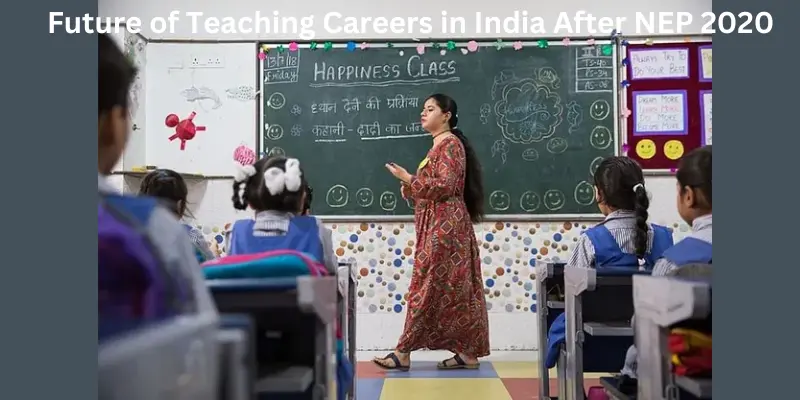
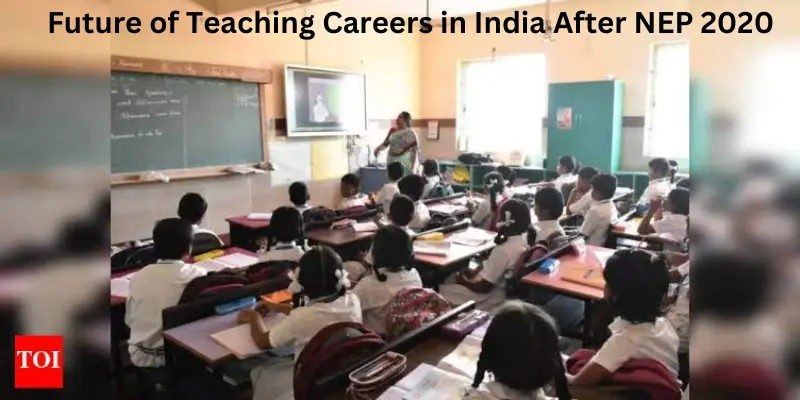
Teaching in India is no longer limited to delivering textbook content and preparing students for examinations. The changing education system expects teachers to facilitate learning, develop competencies, use technology, assess learning continuously, support diverse learners, encourage critical thinking, and help students connect classroom knowledge with practical situations.
The Future of Teaching Careers in India After NEP 2020 therefore involves both opportunities and new responsibilities. Teachers who develop digital skills, understand competency-based pedagogy, participate in continuous professional development, and adapt to multidisciplinary and student-centred education can become increasingly valuable in India’s evolving education system.
NEP 2020 is also changing the preparation of future teachers. The policy gives significant importance to teacher education and proposes the four-year integrated Bachelor of Education as an important pathway for preparing school teachers. It also proposes continuous professional development and stronger standards for teacher preparation and professional practice.
What Is The Future Of Teaching Careers In India After NEP 2020?
The Future of Teaching Careers in India After NEP 2020 is likely to involve a shift from traditional teacher-centred instruction toward facilitation, mentoring, competency development, personalized learning, digital education, and continuous assessment.
Teachers will remain essential because technology cannot replace the human dimensions of education. A teacher does more than communicate information. Teachers understand student behaviour, identify learning difficulties, provide encouragement, manage classroom interaction, develop social skills, communicate with parents, and help students make educational and career decisions.
The changing role of teachers is closely connected with the broader Future of Indian Education After NEP 2020. NEP 2020 introduces a 5+3+3+4 curricular and pedagogical structure covering ages 3 to 18. This requires teachers to understand the developmental characteristics and learning requirements associated with different educational stages.
The future teaching profession will therefore reward adaptability. Teachers who continue learning and develop expertise in modern pedagogy can remain relevant as curricula, assessment systems, technology, and student expectations change.
Why Teaching Careers Are Changing After NEP 2020
The traditional model of education was heavily influenced by textbooks, lectures, standardized examinations, and memorization. NEP 2020 places greater emphasis on conceptual understanding, critical thinking, creativity, experiential learning, competencies, vocational exposure, multilingualism, technology, and holistic development.
This directly affects the daily work of teachers.
A teacher working under the emerging education model may need to design activities instead of relying entirely on lectures, create competency-based questions instead of only recall questions, use digital resources, evaluate projects, provide individual feedback, and support students with different learning needs.
The Future of Teaching Careers in India After NEP 2020 is therefore not simply about an increase or decrease in the number of teaching jobs. It is about the transformation of what professional teaching requires.
Teachers who rely exclusively on traditional instructional methods may find adaptation increasingly necessary. Teachers who combine subject expertise with pedagogy, technology, assessment literacy, communication, and mentoring skills can have stronger professional opportunities.
The Shift From Rote Teaching To Competency-Based Education
One of the most important developments affecting the Future of Teaching Careers in India After NEP 2020 is competency-based education.
Competency-based education focuses on students’ ability to demonstrate knowledge, skills, and understanding rather than simply reproduce information from memory. The Ministry of Education describes competency-based education as an approach focused on developing and demonstrating specific skills, knowledge, and abilities.
This changes the teacher’s role.
Teachers need to identify the competencies students are expected to develop and design classroom experiences that allow students to demonstrate those competencies. A mathematics teacher may ask students to solve practical problems rather than simply memorize formulas. A science teacher may use experiments and investigations. A language teacher may assess communication and interpretation rather than only grammar rules.
How Competency-Based Education Changes Teaching Careers
Teachers increasingly need to understand learning outcomes, competency frameworks, activity-based learning, project work, practical application, and differentiated instruction.
The teacher becomes a learning facilitator who creates opportunities for students to think, investigate, communicate, collaborate, and solve problems.
This makes pedagogical knowledge increasingly important. Strong subject knowledge remains essential, but knowing a subject is different from knowing how to help different students learn that subject.
Competency-Based Assessment And The Changing Teacher Role
The recent emphasis on Competency-Based Assessment Under NEP 2020 also has direct implications for teachers.
Assessment is moving toward measuring application, reasoning, problem-solving, and other competencies rather than relying exclusively on memorization. PARAKH has been identified as a national-level body intended to support norms, standards, and guidelines for student assessment and encourage school boards to move toward competency-based assessment.
Teachers will need to understand how to create assessments that align with learning outcomes.
This can include projects, portfolios, presentations, practical activities, classroom observations, problem-solving tasks, quizzes, discussions, and other forms of formative assessment.
The teacher’s assessment responsibility may therefore become more complex.
Instead of simply assigning marks after an examination, teachers increasingly need to identify learning gaps, provide feedback, document progress, and use assessment information to improve instruction.
This creates demand for teachers who understand both pedagogy and assessment.
How NEP 2020 Is Changing The Role Of Teachers
The teacher’s role is expanding in several directions.
From Information Provider To Learning Facilitator
Teachers are increasingly expected to create learning environments in which students actively participate.
From One-Size-Fits-All Teaching To Differentiated Learning
Students have different abilities, learning speeds, interests, languages, and educational backgrounds. Teachers may need to adapt instructional approaches accordingly.
From Examination Preparation To Holistic Development
NEP 2020 places importance on academic knowledge as well as skills, values, creativity, communication, physical development, and social-emotional development.
From Traditional Resources To Digital Learning
Teachers are increasingly expected to use educational technology appropriately.
From Occasional Training To Continuous Professional Development
The Ministry of Education states that NEP 2020 recommends 50 hours of continuous professional development for every teacher annually and identifies NISHTHA as a major teacher capacity-building initiative.
These changes make professional development an increasingly important part of a teaching career.
Teacher Professional Development Under NEP 2020
Professional development will be one of the strongest factors influencing the Future of Teaching Careers in India After NEP 2020.
NEP 2020 recognizes that teachers need continuous opportunities to improve their professional knowledge and teaching practices. The Ministry of Education highlights continuous professional development as an important component of teacher development and identifies 50 hours of CPD annually as a policy recommendation.
Professional development can include training in:
Competency-Based Teaching
Teachers can learn how to design lessons around competencies and learning outcomes.
Competency-Based Assessment
Teachers can develop assessment strategies that measure application, reasoning, and practical skills.
Digital Teaching Tools
Teachers can learn to use learning management systems, digital classrooms, educational applications, multimedia resources, and online assessment platforms.
Artificial Intelligence In Education
Teachers increasingly need basic AI literacy to understand opportunities, limitations, responsible use, academic integrity, and student safety.
Inclusive Education
Teachers need strategies for supporting students with disabilities and different learning needs.
Multilingual Education
Teachers may need to work effectively with students who have different linguistic backgrounds.
Classroom-Based Research
Teachers can use evidence from classroom performance to identify problems and improve teaching methods.
Continuous professional development can therefore strengthen both teaching quality and career progression.
The Future Of Teacher Training In India
Teacher preparation itself is changing.
NEP 2020 proposes that the four-year integrated B.Ed. should become the minimum degree qualification for school teachers by 2030. The policy describes integrated teacher education as a multidisciplinary programme combining subject knowledge with education and pedagogy.
The four-year Integrated Teacher Education Programme is designed to prepare prospective teachers through a multidisciplinary environment. Government information on NEP implementation identifies ITEP as a four-year programme and states the policy target of making it the minimum degree qualification for schoolteachers by 2030.
This can influence the Future of Teaching Careers in India After NEP 2020 by making teacher preparation more structured and professionally oriented.
Future teachers are expected to develop both disciplinary knowledge and pedagogical expertise. Teacher education also needs exposure to areas such as psychology, sociology, foundational literacy and numeracy, early childhood education, Indian knowledge systems, technology, and modern pedagogy.
Four-Year Integrated B.Ed. And Career Opportunities
The four-year integrated B.Ed. can become an important route for students who decide early that teaching is their preferred profession.
The programme combines disciplinary learning and teacher education rather than treating them as completely separate stages.
For students considering teaching as a career after school, this can create a more direct professional pathway.
For the teaching profession, stronger teacher preparation can potentially improve classroom quality by ensuring that new teachers enter schools with broader exposure to pedagogy and subject-specific teaching.
The Future of Teaching Careers in India After NEP 2020 will therefore be influenced not only by the number of teachers entering the profession but also by the quality of teacher preparation.
Digital Teaching And The Future Of Teaching Careers
Technology is becoming an increasingly important component of teaching.
The Ministry of Education lists NEP-linked initiatives including the National Digital Education Architecture, National Education Technology Forum, and Virtual Open School.
Teachers can use digital technology to provide multimedia explanations, online resources, interactive exercises, digital assignments, virtual demonstrations, and additional learning material.
Digital technology can also help teachers reach students outside conventional classroom hours.
However, technology does not automatically improve education.
A teacher who uses a digital presentation without meaningful student interaction may simply reproduce traditional lecture-based teaching on a screen. Effective technology integration requires teachers to understand when technology adds educational value.
Digital Skills Teachers Need
Teachers should increasingly understand:
- Digital classroom platforms
- Online assessment
- Educational applications
- Multimedia learning resources
- Digital collaboration
- Cyber safety
- Information literacy
- Data privacy
- Responsible AI use
- Digital accessibility
These skills can become valuable professional competencies.
Artificial Intelligence And Teaching Careers In India
Artificial intelligence is likely to become one of the most important emerging factors in the Future of Teaching Careers in India After NEP 2020.
AI can help teachers generate practice questions, organize educational resources, provide language assistance, analyze learning patterns, and personalize some learning experiences.
Teachers may also use AI to support lesson planning and administrative work.
However, AI-generated information can contain errors, biases, or inappropriate recommendations. Teachers therefore need the professional judgment to verify information and determine whether AI-generated material is suitable for students.
The teacher’s role may increasingly shift toward evaluating information and designing meaningful learning experiences.
AI literacy can become an important professional advantage, but human teaching skills remain fundamental.
Personalized Learning And Teachers
Personalized learning is another area influencing the Future of Teaching Careers in India After NEP 2020.
Students do not learn at exactly the same pace. Some students need additional explanation, some require advanced challenges, and others may benefit from different learning materials.
Technology can help provide different resources to students, but teachers remain responsible for understanding individual learning needs.
Teachers can use formative assessments, classroom observations, student work, and feedback to identify where learners require support.
Personalized education therefore increases rather than eliminates the importance of skilled teachers.
Multilingual Education And Teaching Opportunities
NEP 2020 places significant emphasis on multilingualism and Indian languages.
The National Curriculum Framework reflects the policy’s emphasis on the developmental stages of schooling and language learning within the 5+3+3+4 structure.
The policy also supports education in the home language, mother tongue, local language, or regional language wherever possible, particularly during the early years.
This creates a continuing need for teachers who can teach effectively in different linguistic contexts.
Teachers may increasingly need to develop bilingual or multilingual teaching strategies, especially where students speak a home language that differs from the dominant language used in educational materials.
The development of high-quality learning resources in Indian languages can also create opportunities for curriculum writers, translators, educational content developers, language specialists, and teacher trainers.
Experiential Learning And Teaching Careers
Experiential learning changes classroom practice.
Teachers may increasingly use:
Project-Based Learning
Students investigate a topic and produce a practical outcome.
Activity-Based Learning
Students learn concepts through structured activities rather than passive listening.
Field-Based Learning
Students connect classroom concepts with real environments.
Case Studies
Students analyze realistic situations and develop solutions.
Experiments
Students test concepts through observation and investigation.
Collaborative Learning
Students work together and develop communication and teamwork skills.
These approaches require teachers to become lesson designers rather than simply content deliverers.
Vocational Education And New Roles For Teachers
Vocational education is another important component of the Future of Teaching Careers in India After NEP 2020.
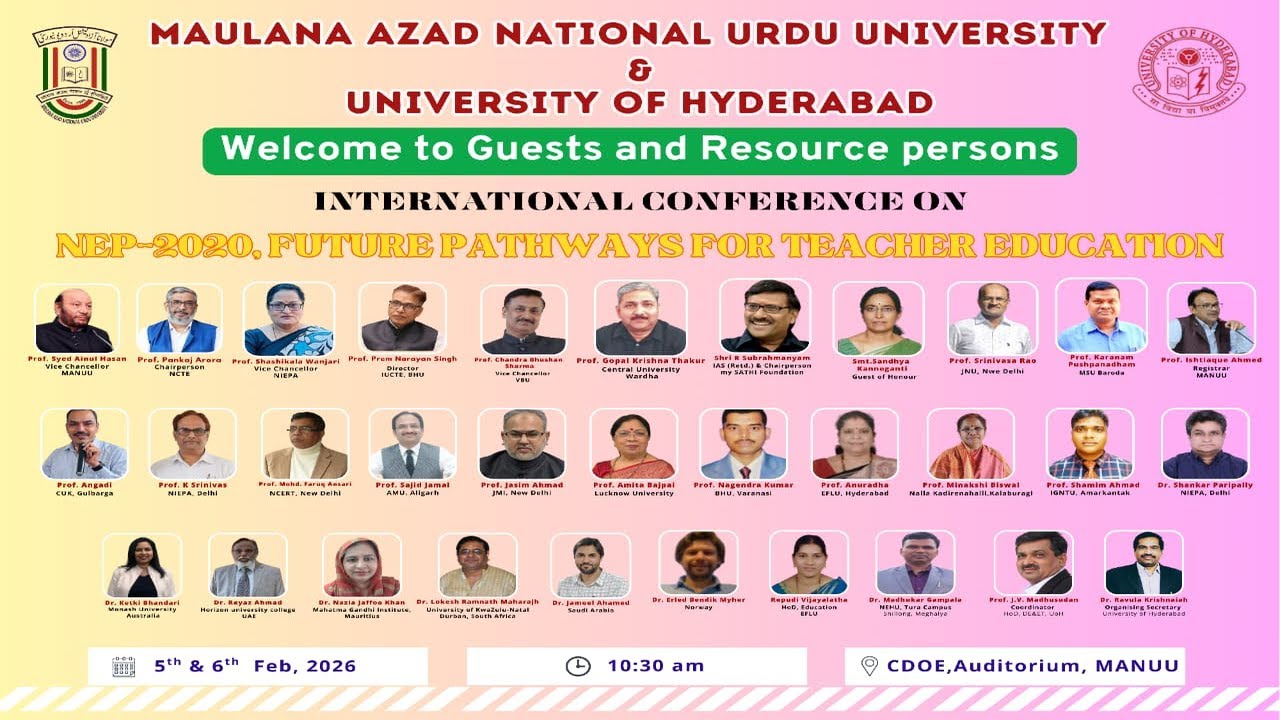
NEP 2020 seeks to integrate vocational education into mainstream education and reduce the separation between academic and vocational pathways. The Ministry of Education identifies vocational integration and employability as important elements of the policy direction.
This can create demand for teachers and trainers with practical expertise.
Schools may require educators capable of teaching areas connected with technology, entrepreneurship, agriculture, healthcare, design, crafts, financial literacy, tourism, manufacturing, coding, and other vocational domains.
The future teaching workforce may therefore include a wider variety of professional backgrounds.
Future Teaching Careers In School Education
School teaching will remain one of the most important teaching career pathways in India.
The 5+3+3+4 structure creates different pedagogical requirements for the Foundational, Preparatory, Middle, and Secondary stages.
Foundational Stage Teachers
Teachers working with younger learners need strong knowledge of early childhood development, play-based learning, foundational literacy, numeracy, and classroom engagement.
Preparatory Stage Teachers
Teachers need to develop stronger subject foundations while continuing activity-based and experiential approaches.
Middle Stage Teachers
Teachers increasingly handle subject-specific learning and need to help students develop deeper conceptual understanding.
Secondary Stage Teachers
Teachers work with more specialized subject knowledge, career preparation, examination requirements, multidisciplinary opportunities, and advanced competencies.
The skills required therefore vary across educational stages.
Future Teaching Careers In Higher Education
The Future of Teaching Careers in India After NEP 2020 also includes colleges and universities.
NEP 2020 promotes multidisciplinary higher education, research, innovation, flexible academic pathways, and stronger connections between disciplines.
University and college teachers may increasingly work across disciplinary boundaries.
A faculty member may combine teaching with research, entrepreneurship, industry collaboration, digital education, student mentoring, and curriculum development.
The expansion of online and blended learning can also create new forms of academic work.
Higher education teachers may contribute to online courses, digital content, virtual laboratories, open educational resources, research projects, and interdisciplinary programmes.
Career Opportunities Beyond Traditional Classroom Teaching
The Future of Teaching Careers in India After NEP 2020 is broader than conventional school or college teaching.
Teachers and education professionals can potentially move into roles such as:
Instructional Designer
Instructional designers develop learning experiences, courses, assessments, and educational materials.
Curriculum Developer
Curriculum specialists help design programmes aligned with educational standards and learning outcomes.
Educational Content Developer
Teachers with strong writing and subject expertise can create textbooks, digital lessons, question banks, educational videos, and learning resources.
Academic Coordinator
Academic coordinators help schools implement curricula, assessments, teacher development, and academic planning.
Teacher Trainer
Experienced educators can train other teachers in pedagogy, assessment, technology, and classroom practices.
Educational Technology Specialist
Teachers with technology expertise can work with education technology organizations to design or implement learning solutions.
Education Consultant
Experienced professionals can advise schools, institutions, training organizations, and education projects.
Assessment Specialist
Teachers with assessment expertise can contribute to question design, competency-based assessment, evaluation systems, and learning analytics.
These roles show why the future of teaching is increasingly connected to the wider education ecosystem.
Skills Teachers Need For Future Teaching Jobs In India
Teachers preparing for future opportunities should develop a combination of professional, technical, and interpersonal skills.
Subject Expertise
Strong knowledge of the subject remains the foundation of effective teaching.
Pedagogical Skills
Teachers need to know how students learn and how to design effective instruction.
Digital Literacy
Technology skills are increasingly important in classrooms and education organizations.
Assessment Literacy
Teachers need to understand formative assessment, competency-based assessment, feedback, and learning outcomes.
Communication
Clear communication remains essential for classroom teaching, parent interaction, mentoring, and collaboration.
Critical Thinking
Teachers must evaluate information and help students distinguish reliable information from misinformation.
Creativity
Creative teaching methods can support engagement and problem-solving.
Collaboration
Modern education involves collaboration among teachers, administrators, parents, specialists, and community stakeholders.
Adaptability
The ability to learn new tools, curricula, and educational methods can become one of the most valuable long-term teaching skills.
Teacher Workload And Professional Challenges
The Future of Teaching Careers in India After NEP 2020 also has challenges.
Teachers may face additional responsibilities as education becomes more comprehensive.
Lesson planning, formative assessment, digital resource development, professional development, student mentoring, documentation, parent communication, and extracurricular responsibilities can increase professional demands.
Professional development must therefore be meaningful rather than simply adding training requirements.
Teachers need access to high-quality resources, appropriate infrastructure, supportive school leadership, adequate planning time, and realistic workloads.
The success of educational reform depends partly on whether teachers are given the conditions required to implement it effectively.
Teacher Recruitment And Demand In India
The demand for teachers will depend on population trends, enrolment, school expansion, teacher-student ratios, retirement, government recruitment, private education, and emerging educational programmes.
NEP 2020’s focus on foundational learning, early childhood education, vocational education, digital learning, inclusive education, and multidisciplinary education can influence the types of teaching expertise required.
Demand may not be uniform across subjects or locations.
Teachers with expertise in mathematics, science, languages, special education, technology, vocational education, early childhood education, and emerging interdisciplinary areas may find different opportunities depending on regional and institutional requirements.
Prospective teachers should therefore research local recruitment trends rather than assuming that a general teaching qualification guarantees employment.
Government Teaching Jobs After NEP 2020
Government teaching remains an attractive career pathway because of structured recruitment, professional stability, defined qualifications, and public-sector benefits.
However, candidates need to meet the relevant eligibility criteria and recruitment requirements applicable to the position and state or central institution.
The Future of Teaching Careers in India After NEP 2020 may involve greater emphasis on professional competence, technology, continuous development, and modern pedagogy even within government schools.
NEP implementation initiatives already include teacher training and school-quality mechanisms. For example, the PM SHRI programme’s School Quality Assessment Framework includes curriculum, pedagogy, assessment, infrastructure, human resources, and inclusive practices.
Private School Teaching Careers After NEP 2020
Private schools can also provide opportunities for teachers who possess strong subject knowledge and modern teaching skills.
Schools adopting competency-based education, blended learning, project-based learning, international curricula, or technology-enabled instruction may seek teachers with specialized skills.
Private schools can vary substantially in salary, workload, professional development, and career progression.
Teachers should evaluate the complete employment package rather than choosing a position solely on the basis of salary.
Professional development opportunities, classroom resources, leadership support, student-teacher ratios, workload, promotion pathways, and job stability are important factors.
Teacher Career Growth And Leadership Opportunities
Teaching does not have to remain a classroom-only career throughout a professional lifetime.
Experienced teachers can progress into positions such as:
Senior Teacher
Subject Coordinator
Academic Coordinator
Head Of Department
Vice Principal
Principal
Teacher Trainer
Curriculum Specialist
Education Consultant
Leadership positions require additional capabilities in communication, administration, mentoring, curriculum planning, staff development, and institutional management.
NEP 2020’s emphasis on school leadership and professional development makes leadership preparation another relevant component of the future education workforce.
How Recent NEP 2020 Reforms Affect Teaching Careers
The broader NEP content cluster already includes Competency-Based Education Under NEP 2020 and Competency-Based Assessment Under NEP 2020. These topics are directly connected to teaching careers because teachers are responsible for translating educational policy into classroom practice.
Competency-based education changes lesson planning.
Competency-based assessment changes evaluation.
Digital education changes resource use.
Multilingual education changes communication strategies.
Vocational education changes practical learning.
The 5+3+3+4 structure changes stage-specific pedagogy.
Teacher professional development changes career expectations.
The Future of Teaching Careers in India After NEP 2020 is therefore connected to nearly every major area of education reform.
How Teachers Can Prepare For The Future
Teachers can prepare by developing a professional learning plan.
Strengthen Subject Knowledge
Keep current with developments in the subject being taught.
Learn Competency-Based Pedagogy
Understand how to translate learning outcomes into classroom activities.
Improve Assessment Skills
Learn how to design formative and competency-based assessments.
Develop Digital Skills
Become comfortable with digital teaching platforms and educational technology.
Build AI Literacy
Understand responsible and practical uses of AI in education.
Participate In Professional Development
Use CPD opportunities to update pedagogical and technological skills.
Develop Inclusive Teaching Skills
Learn strategies for supporting students with different learning needs.
Improve Communication
Develop stronger classroom, parent, mentoring, and professional communication.
Build A Professional Portfolio
Maintain evidence of lesson plans, projects, student outcomes, professional development, educational resources, and innovations.
A strong professional portfolio can help demonstrate teaching competence beyond a formal qualification.
Is Teaching Still A Good Career In India After NEP 2020?
Teaching can remain a strong career choice for people who genuinely enjoy education, communication, mentoring, and continuous learning.
NEP 2020 does not eliminate the need for teachers. It increases the importance of capable teachers who can work within a changing education environment.
The profession may become more demanding because teachers are expected to develop broader competencies. At the same time, teachers can gain new opportunities in curriculum development, educational technology, teacher training, assessment, academic leadership, and digital education.
The best prospects are likely to be available to educators who combine subject expertise with modern teaching capabilities.
The Biggest Challenges For The Future Of Teaching Careers
Unequal Infrastructure
Teachers cannot implement technology-rich education effectively without appropriate infrastructure.
Digital Divide
Students and teachers may have unequal access to devices and internet connectivity.
Training Quality
Professional development must be practical, relevant, and continuous.
Workload
Additional assessment, documentation, technology, and professional development responsibilities can increase workload.
Uneven Implementation
NEP 2020 implementation can vary across states, institutions, and educational stages.
Assessment Pressure
Teachers may struggle if policy encourages competency-based learning while external examinations continue to emphasize traditional preparation.
Resource Availability
Multilingual education, inclusive education, vocational learning, and experiential teaching require appropriate resources.
The Ministry of Education itself identifies access, inclusion, digital divide, teacher development, learning materials, and innovative teaching practices among the areas associated with education reform.
Future Of Teaching Careers In India After NEP 2020: Key Trends
Several trends are particularly important for anyone planning a teaching career.
Competency-Based Teaching
Teachers will increasingly focus on what students can understand and apply.
Competency-Based Assessment
Assessment will increasingly examine skills, knowledge application, reasoning, and learning progress.
Digital Teaching
Teachers will increasingly use digital resources alongside physical classrooms.
Artificial Intelligence
AI literacy will become increasingly relevant to teaching and learning.
Continuous Professional Development
Regular professional learning will remain important throughout a teacher’s career.
Multilingual Education
Teachers may increasingly work across multiple languages and linguistic contexts.
Vocational Integration
Teachers and trainers with practical skills may gain new opportunities.
Multidisciplinary Education
Teachers may collaborate across traditional subject boundaries.
Personalized Learning
Teachers will increasingly address individual learning needs.
Inclusive Education
Greater attention to accessibility and diverse learners will influence teaching practice.
Teacher Leadership
Experienced teachers can move into academic coordination, training, school leadership, and curriculum roles.
Education Technology Careers
Teaching expertise combined with technology skills can open pathways beyond conventional classrooms.
FAQs About The Future Of Teaching Careers In India After NEP 2020
What Is The Future Of Teaching Careers In India After NEP 2020?
The Future of Teaching Careers in India After NEP 2020 is expected to involve greater use of competency-based pedagogy, digital tools, continuous assessment, professional development, multidisciplinary learning, vocational education, and personalized teaching.
Will NEP 2020 Increase The Importance Of Teacher Training?
Yes. NEP 2020 places strong emphasis on teacher education and continuous professional development. The Ministry of Education identifies 50 hours of annual CPD as a policy recommendation for teachers.
What Skills Will Teachers Need After NEP 2020?
Teachers will increasingly need subject expertise, modern pedagogy, competency-based assessment skills, digital literacy, communication, inclusive teaching skills, critical thinking, adaptability, and basic AI literacy.
Is The Four-Year Integrated B.Ed. Important For Future Teachers?
Yes. NEP 2020 proposes the four-year integrated B.Ed. as an important teacher education pathway and states that it is intended to become the minimum degree qualification for schoolteachers by 2030.
Will AI Replace Teachers In India?
AI is more likely to change teachers’ responsibilities than eliminate the teaching profession. AI can support content creation, assessment, personalization, and administration, while teachers remain important for mentoring, judgment, classroom relationships, motivation, ethics, and social development.
Can Teachers Work Outside Traditional Schools After NEP 2020?
Yes. Teaching expertise can support careers in curriculum development, instructional design, educational content creation, assessment, teacher training, educational technology, academic coordination, consulting, and education management.
Will Competency-Based Assessment Change Teachers’ Work?
Yes. Teachers may need to design more application-based tasks, projects, practical activities, formative assessments, and feedback mechanisms. PARAKH’s stated role includes supporting competency-based assessment and helping school boards shift assessment patterns toward 21st-century skills.
Will Digital Skills Be Necessary For Future Teachers?
Digital skills are increasingly important because NEP-linked initiatives include digital education architecture, education technology, and virtual schooling. Teachers who can integrate technology meaningfully into pedagogy may have an advantage.
Conclusion
The Future of Teaching Careers in India After NEP 2020 is likely to be more skill-oriented, technology-enabled, multidisciplinary, and professionally demanding than traditional teaching models.
Teachers will remain at the centre of India’s education system, but their role is changing. The future teacher will not simply deliver information. The teacher will facilitate learning, develop competencies, design activities, assess progress, use technology, support diverse learners, mentor students, and continuously update professional knowledge.
The four-year integrated teacher education pathway, continuous professional development, competency-based education, competency-based assessment, digital learning, multilingual education, vocational integration, and multidisciplinary learning all contribute to this changing professional landscape.
The strongest teaching careers in the coming years may belong to educators who combine deep subject knowledge with pedagogy, assessment literacy, digital competence, communication, adaptability, and a commitment to lifelong professional learning.
The Future of Teaching Careers in India After NEP 2020 therefore offers a mixture of responsibility and opportunity. Teachers who adapt to the changing education environment can contribute directly to the development of students while building new professional pathways within India’s expanding education ecosystem.





- Be Respectful
- Stay Relevant
- Stay Positive
- True Feedback
- Encourage Discussion
- Avoid Spamming
- No Fake News
- Don't Copy-Paste
- No Personal Attacks
- Be Respectful
- Stay Relevant
- Stay Positive
- True Feedback
- Encourage Discussion
- Avoid Spamming
- No Fake News
- Don't Copy-Paste
- No Personal Attacks
