NEP 2020 for Teachers: Complete Guide to New Education Policy, Roles, Changes, Benefits & Implementation (2026)
Published: 15 Jul 2026
The National Education Policy (NEP) 2020 is one of the most significant reforms in India’s education system in decades. It replaces the National Policy on Education 1986 and introduces a modern framework that prepares students for the future while empowering teachers to become facilitators, mentors, innovators, and lifelong learners. To know about meaning of teacher faculty read out the article Teaching Faculty Meaning.
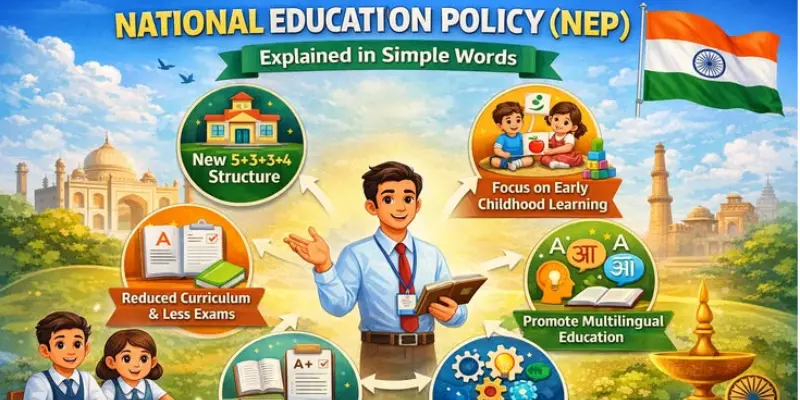
For educators across India, NEP 2020 for Teachers is much more than a policy document. It reshapes classroom practices, assessment methods, teacher training, curriculum planning, digital education, and professional development. The policy aims to create an education system that develops critical thinking, creativity, communication, collaboration, and practical knowledge instead of relying only on rote memorization.
Teachers faculty is at the center of every educational reform. Their knowledge, teaching methods, classroom management, and ability to inspire students determine how successfully the policy is implemented. Whether you are a primary school teacher, secondary educator, college faculty member, B.Ed. student, school administrator, or education professional, understanding the objectives and expectations of the National Education Policy is essential.
This comprehensive guide explains NEP 2020 for Teachers, its objectives, teacher responsibilities, classroom changes, competency-based education, digital learning, professional development opportunities, implementation strategies, benefits, and challenges. It also provides practical insights that teachers can apply in everyday classrooms. For transforming of education read the article How NEP 2020 Is Transforming School Education in India.
What Is NEP 2020 for Teachers?
The National Education Policy 2020 is India’s latest education framework approved by the Government of India to transform school and higher education. It focuses on holistic learning, skill development, flexibility, inclusion, technology integration, multilingual education, and competency-based teaching.
For teachers, the policy introduces a learner-centered approach that encourages active participation instead of passive instruction. Teachers are expected to create engaging classrooms where students explore, question, analyze, collaborate, and solve real-life problems.
Unlike traditional teaching methods that emphasized completing textbooks and preparing students for examinations, the new policy encourages educators to develop practical understanding, conceptual clarity, creativity, ethical values, and life skills.
Teachers now play multiple roles throughout the learning process.
Facilitator of learning
Teachers guide students toward discovering knowledge instead of simply delivering information.
Mentor and counselor
Educators help students develop confidence, emotional intelligence, and decision-making abilities.
Curriculum designer
Teachers adapt lesson plans according to learners’ needs while maintaining curriculum objectives.
Technology-enabled educator
Digital platforms, online resources, educational applications, and virtual learning environments become regular teaching tools.
Continuous learner
Professional development becomes an ongoing responsibility through training programs, workshops, certifications, and research.
The policy recognizes that high-quality teachers are the foundation of an excellent education system.
Why NEP 2020 Matters for Teachers
The education landscape is changing rapidly. Students require skills that prepare them for higher education, employment, entrepreneurship, and lifelong learning. Traditional classroom practices alone cannot meet these expectations.
NEP 2020 for Teachers creates opportunities to improve classroom instruction while enhancing professional growth.
The policy encourages educators to move beyond lecture-based teaching. Interactive discussions, project-based activities, group learning, experiments, case studies, fieldwork, and technology-assisted instruction become essential components of classroom practice.
Teachers gain greater flexibility in selecting instructional strategies that suit different learning styles. Every student learns differently, and the policy recognizes the importance of personalized learning experiences.
Professional autonomy also improves. Schools are encouraged to support innovative teaching methods instead of limiting educators to rigid classroom routines.
The policy also enhances teacher recognition by emphasizing continuous professional development, improved teacher education, transparent recruitment, and better career progression.
Objectives of NEP 2020 for Teachers
The National Education Policy establishes several objectives that directly influence teaching practices across India.
Improve teaching quality
Teachers receive better professional preparation through updated teacher education programs, regular training, and practical classroom experience.
Develop competency-based education
Students learn concepts deeply instead of memorizing facts. Teachers design lessons that measure understanding, application, and analytical thinking.
Encourage experiential learning
Learning through activities, projects, laboratory work, simulations, storytelling, discussions, and field visits helps students connect theory with real-life experiences.
Promote critical thinking
Teachers create opportunities for questioning, reasoning, creativity, and independent thinking instead of encouraging one-way communication.
Integrate technology into education
Digital classrooms, smart learning platforms, educational software, artificial intelligence tools, and online assessments become valuable teaching resources.
Strengthen inclusive education
Teachers ensure equal learning opportunities for children from diverse backgrounds, including students with disabilities and different learning abilities.
Support multilingual education
The policy promotes learning in the mother tongue during early education while strengthening multilingual communication skills.
Encourage lifelong learning
Teachers continuously upgrade their knowledge through professional development, research, certifications, workshops, and peer collaboration.
Major Changes Introduced by NEP 2020 for Teachers
The policy introduces several reforms that directly affect classroom teaching and school management.
Shift from teacher-centered to student-centered learning
Teachers become learning facilitators instead of information providers. Students actively participate in classroom discussions and collaborative learning.
Competency-based assessment
Assessment methods evaluate practical understanding, creativity, communication, and problem-solving rather than memorization alone.
Flexible curriculum
Teachers receive greater flexibility to adapt instructional methods according to students’ learning needs.
Interdisciplinary learning
Subjects are connected to help students understand real-world applications rather than studying isolated concepts.
Technology-enabled education
Teachers increasingly use digital resources, multimedia presentations, educational applications, online assignments, and virtual classrooms.
Reduced emphasis on rote learning
Conceptual understanding replaces repetitive memorization.
Focus on skills
Communication, collaboration, innovation, leadership, entrepreneurship, environmental awareness, financial literacy, and digital literacy become classroom priorities.
The New Role of Teachers Under NEP 2020
The expectations from teachers have expanded considerably.
Educators are no longer evaluated only by syllabus completion. Their ability to inspire curiosity, encourage participation, and create meaningful learning experiences becomes equally important.
Learning facilitator
Teachers guide students through inquiry-based learning where students ask questions, investigate topics, and develop independent understanding.
Classroom innovator
Creative lesson planning, educational games, practical demonstrations, role-playing, and collaborative activities improve student engagement.
Assessment expert
Teachers use formative assessments, classroom observations, portfolios, presentations, quizzes, peer reviews, and projects to evaluate student progress continuously.
Digital educator
Technology integration becomes an essential professional skill. Teachers utilize digital learning platforms, educational videos, online collaboration tools, and virtual assessments.
Career mentor
Students receive guidance about higher education, vocational pathways, entrepreneurship, and emerging career opportunities.
The policy recognizes that effective teachers contribute not only to academic success but also to character development, emotional well-being, ethical values, and responsible citizenship.
Teacher Education Reforms Under NEP 2020
Teacher preparation receives significant attention in the National Education Policy.
Future educators require stronger academic foundations and practical classroom experience before entering the profession.
One of the most important reforms is the introduction of the four-year integrated Bachelor of Education (B.Ed.) degree as the preferred qualification for teachers. This program combines subject knowledge, pedagogy, classroom practice, educational psychology, child development, assessment techniques, and professional ethics into a comprehensive curriculum.
The policy also encourages institutions to improve teacher education standards through better faculty development, research, internships, mentoring, and quality assurance.
Continuous professional development becomes an essential responsibility throughout a teacher’s career. Schools and educational institutions are expected to provide regular training programs that help teachers stay updated with modern teaching practices, educational technologies, curriculum reforms, and assessment innovations.
Professional learning communities, peer collaboration, action research, and reflective teaching practices further strengthen teaching quality while supporting long-term career growth.
Competency-Based Education in NEP 2020 for Teachers
Competency-based education is one of the most transformative aspects of NEP 2020 for Teachers. Instead of measuring success by how much information students can memorize, this approach evaluates what learners actually understand and how effectively they can apply their knowledge in real-life situations.
Teachers are expected to design classroom activities that help students develop critical thinking, creativity, communication, collaboration, and problem-solving skills. Lessons should encourage students to analyze concepts, ask meaningful questions, conduct research, and present their findings with confidence.
Focus on learning outcomes
Every lesson should have clearly defined learning outcomes. Teachers plan classroom activities around these outcomes and regularly assess whether students have achieved them.
Application of knowledge
Students should be able to connect classroom learning with everyday experiences. Teachers use practical examples, experiments, projects, and discussions to make concepts meaningful.
Continuous assessment
Rather than relying only on annual examinations, teachers assess students throughout the academic year using assignments, presentations, observations, quizzes, and classroom participation.
Personalized learning
Teachers recognize that every student learns differently. Competency-based education encourages differentiated instruction to support learners with different abilities, interests, and learning speeds.
By adopting competency-based teaching practices, educators help students become independent learners who can confidently face academic and professional challenges.
Experiential Learning Under NEP 2020
Experiential learning under NEP 2020 focuses on helping students understand concepts through meaningful experiences rather than relying only on traditional classroom instruction. Instead of simply receiving information from teachers, students are encouraged to connect what they learn with practical situations, real-life observations, and activities that require active participation.
This approach supports NEP 2020’s broader goal of making education more engaging, learner-centered, and connected to real-world needs. When students experience a concept directly, they can develop a deeper understanding of how theoretical knowledge applies beyond the classroom.
Connecting Learning With Real-Life Experiences
A major strength of experiential learning is its ability to connect academic concepts with everyday situations. Students can understand ideas more effectively when they see how those ideas relate to their surroundings, communities, and future responsibilities.
For example, a lesson may encourage students to examine a real-world problem, collect relevant information, discuss possible solutions, and reflect on what they have learned. Such experiences can make learning more meaningful than memorizing information for an examination.
Developing Active Learners
Experiential learning changes the role of students from passive recipients of information to active participants in the learning process. Students are encouraged to ask questions, explore ideas, make observations, solve problems, and evaluate their own understanding.
This active participation can also help develop skills such as critical thinking, creativity, communication, collaboration, and problem-solving. These skills are increasingly important in an education system that aims to prepare students for further education, employment, and responsible participation in society.
Role of Reflection in Experiential Learning
Experience alone does not necessarily produce meaningful learning. Students also need opportunities to think about what they experienced and understand what those experiences taught them. Reflection allows learners to identify what worked, what was difficult, and how they can improve their understanding.
Teachers can support this process by asking students to explain their observations, discuss their conclusions, write short reflections, or connect their experiences with concepts taught in class.
Why Experiential Learning Matters Under NEP 2020
Experiential learning can make education more practical, engaging, and student-centered. It gives learners opportunities to apply knowledge instead of treating academic concepts as information that exists only within textbooks.
For teachers, the approach also creates opportunities to assess how well students understand and apply concepts in practical situations. For students, it can make learning more memorable while encouraging curiosity, independent thinking, and confidence in solving unfamiliar problems.
Overall, experiential learning under NEP 2020 represents a shift from learning that is primarily based on information retention toward learning that involves experience, application, reflection, and deeper understanding. Its effectiveness depends on thoughtful planning, suitable learning activities, teacher support, and opportunities for students to reflect on their experiences.
Digital Learning and Technology Integration
Technology plays a vital role in NEP 2020 for Teachers. Digital education expands learning opportunities beyond traditional classrooms while improving accessibility and flexibility.
Teachers are encouraged to integrate educational technology into lesson planning without replacing meaningful classroom interaction.
Digital tools support personalized instruction, collaborative learning, and continuous assessment.
Learning Management Systems
Teachers use online platforms to distribute learning materials, assignments, quizzes, and feedback efficiently.
Interactive presentations
Videos, animations, simulations, and multimedia presentations make complex topics easier to understand.
Virtual classrooms
Online teaching platforms enable learning beyond physical classrooms and support blended learning models.
Educational applications
Subject-specific apps provide interactive exercises, assessments, and practice activities that reinforce classroom instruction.
Artificial Intelligence tools
AI-powered educational resources help teachers create quizzes, lesson plans, personalized assignments, and learning materials while saving valuable preparation time.
Technology also improves communication between teachers, students, and parents through digital portals, messaging platforms, and online progress reports.
Assessment Reforms in NEP 2020 for Teachers
Assessment is no longer limited to testing memory. The National Education Policy introduces a more comprehensive evaluation system that measures conceptual understanding, practical skills, creativity, and problem-solving abilities.
Teachers play a central role in implementing these reforms.
Formative assessment
Teachers evaluate learning continuously throughout the academic year instead of waiting for final examinations.
Competency-based questions
Assessments focus on reasoning, analysis, application, and understanding rather than recalling facts.
Project evaluation
Students demonstrate learning through research projects, presentations, portfolios, and collaborative assignments.
Peer assessment
Students evaluate each other’s work using structured guidelines. This improves communication, critical thinking, and collaborative learning.
Self-assessment
Teachers encourage students to reflect on their progress and identify areas for improvement.
Assessment becomes a tool for learning rather than simply measuring academic performance.

Professional Development Opportunities for Teachers
Continuous learning is an essential expectation under NEP 2020 for Teachers. Professional development helps educators stay updated with changing educational practices and technological advancements.
Teachers are encouraged to participate regularly in structured learning opportunities.
Workshops and seminars
Educational institutions organize training sessions on innovative teaching strategies, assessment methods, classroom management, and technology integration.
Online certification courses
Teachers can improve their expertise through recognized online professional development programs.
Peer collaboration
Sharing experiences with colleagues promotes innovation and improves classroom practices.
Educational research
Teachers are encouraged to conduct classroom research that identifies effective instructional methods and improves student learning.
Professional learning communities
Collaborative groups allow educators to discuss challenges, exchange ideas, and develop practical teaching solutions.
Continuous professional development improves teaching quality while enhancing career growth.
Inclusive Education Under NEP 2020
Inclusive education ensures that every child receives equal opportunities regardless of background, disability, language, gender, or socioeconomic status.
Teachers are responsible for creating classrooms where every learner feels respected, valued, and supported.
Equal participation
Teachers encourage all students to participate actively in classroom discussions and learning activities.
Differentiated instruction
Teaching methods are adapted to accommodate different learning abilities and educational needs.
Support for children with disabilities
Accessible learning materials, assistive technologies, and individualized teaching strategies improve educational outcomes.
Gender-sensitive classrooms
Teachers promote equality, respect, and equal opportunities for every student.
Culturally responsive teaching
Classroom instruction reflects India’s diverse cultural, linguistic, and social backgrounds.
Inclusive education strengthens academic achievement while promoting social harmony and emotional well-being.
Multilingual Education and Language Policy
Language plays a critical role in learning. NEP 2020 for Teachers encourages multilingual education to improve understanding, communication, and cognitive development.
Teachers support language learning through flexible instructional practices.
Students are encouraged to learn foundational concepts in their mother tongue or regional language during the early years whenever possible. This improves comprehension and builds stronger academic foundations.
Teachers also help students develop proficiency in additional languages, preparing them for higher education and global opportunities.
Multilingual classrooms encourage respect for linguistic diversity while strengthening communication skills.
Classroom Management in the NEP 2020 Era
Modern classrooms require effective management strategies that encourage active participation and collaborative learning.
Teachers move away from rigid discipline toward positive classroom engagement.
Student participation
Every learner receives opportunities to contribute during discussions and activities.
Collaborative learning
Group work encourages teamwork, leadership, and communication skills.
Positive learning environment
Teachers create classrooms where students feel safe to ask questions and express ideas.
Flexible seating and activities
Interactive learning spaces support discussions, projects, and creative thinking.
Behavior management
Teachers encourage responsibility, mutual respect, and self-discipline through positive reinforcement instead of punishment.
Effective classroom management improves both academic achievement and student confidence.
Importance of Continuous Teacher Training
Educational reforms require teachers to update their knowledge regularly.
Continuous training enables educators to understand curriculum changes, adopt innovative teaching methods, integrate educational technology, and improve assessment practices.
Training programs also strengthen leadership skills, communication abilities, classroom management techniques, and subject expertise.
Schools that invest in regular teacher development often experience higher student engagement, improved learning outcomes, and stronger academic performance.
The National Education Policy recognizes teacher training as an ongoing professional responsibility rather than a one-time qualification.
Benefits of NEP 2020 for Teachers
The implementation of NEP 2020 for Teachers creates long-term advantages for educators, educational institutions, and students. By emphasizing professional excellence, innovation, and lifelong learning, the policy strengthens the teaching profession while improving classroom outcomes.
Greater Professional Autonomy
Teachers receive more flexibility in selecting teaching strategies, learning resources, classroom activities, and assessment methods based on students’ needs.
Enhanced Career Development
Continuous professional development, advanced teacher education programs, and certification opportunities help educators improve their qualifications and career prospects.
Improved Teaching Skills
Regular training enables teachers to adopt competency-based education, experiential learning, digital instruction, and innovative classroom practices.
Technology Integration
Teachers develop digital literacy skills that improve lesson delivery, classroom communication, online learning, and assessment.
Higher Student Engagement
Interactive teaching methods encourage students to participate actively, resulting in better attendance, motivation, and academic achievement.
Recognition of the Teaching Profession
The policy reinforces the importance of teachers as nation builders and emphasizes quality teacher preparation, ethical standards, and professional excellence.
Challenges in Implementing NEP 2020 for Teachers
While the National Education Policy presents numerous opportunities, successful implementation also involves several practical challenges.
Infrastructure Limitations
Many schools still lack adequate digital infrastructure, internet connectivity, smart classrooms, and modern teaching resources.
Teacher Training Requirements
Educators need continuous training to understand competency-based teaching, technology integration, and revised assessment methods.
Large Class Sizes
Managing personalized instruction and continuous assessment becomes more difficult when classrooms have a high student-to-teacher ratio.
Digital Divide
Students in rural and economically disadvantaged areas may have limited access to devices and reliable internet services.
Resistance to Change
Some institutions and educators may initially find it difficult to shift from traditional teaching practices to learner-centered education.
Workload Management
Planning innovative lessons, conducting continuous assessments, and participating in professional development require additional time and effort.
Despite these challenges, gradual implementation, institutional support, and ongoing training can significantly improve outcomes.
Practical Tips for Teachers to Implement NEP 2020 Successfully
Teachers can begin applying the principles of NEP 2020 for Teachers through practical classroom strategies.
Create Interactive Lesson Plans
Design lessons that encourage questioning, collaboration, discussion, experimentation, and problem-solving.
Use Technology Wisely
Integrate educational videos, presentations, online quizzes, digital whiteboards, and learning management systems where appropriate.
Encourage Student Participation
Provide opportunities for every learner to express ideas, participate in group work, and present projects.
Adopt Continuous Assessment
Use classroom observations, assignments, presentations, portfolios, and short quizzes to monitor progress throughout the year.
Promote Critical Thinking
Ask open-ended questions that require reasoning, analysis, creativity, and evidence-based responses.
Support Inclusive Learning
Adapt teaching methods to accommodate students with different abilities, backgrounds, and learning styles.
Invest in Professional Development
Attend workshops, webinars, certification courses, and peer-learning sessions to remain updated with evolving educational practices.
Future of Teaching Under NEP 2020
The future envisioned by the National Education Policy places teachers at the center of educational transformation.
Teachers will increasingly function as facilitators, mentors, innovators, researchers, and lifelong learners. Their responsibilities will extend beyond classroom instruction to include student guidance, technology integration, curriculum innovation, and community engagement.
Artificial intelligence, adaptive learning platforms, virtual classrooms, and digital assessment tools will continue to influence education. Teachers who embrace these technologies while maintaining meaningful human interaction will be well-positioned for success.
Future classrooms are expected to become more collaborative, skill-oriented, and learner-centered. As educational expectations evolve, teachers who continuously update their knowledge and teaching practices will play a vital role in preparing students for higher education, employment, entrepreneurship, and responsible citizenship.
Common Mistakes Teachers Should Avoid During NEP 2020 Implementation
Successful implementation of NEP 2020 for Teachers also depends on avoiding practices that conflict with the policy’s objectives.
Relying only on textbook teaching
Textbooks remain important, but they should be supported by discussions, projects, activities, and practical learning experiences.
Focusing only on examination scores
Academic success should include conceptual understanding, creativity, communication, and practical application.
Ignoring technology
Digital tools should complement classroom instruction and improve learning experiences whenever appropriate.
Using identical teaching methods for every student
Different learners require different instructional approaches to maximize their potential.
Neglecting professional development
Educational practices continue to evolve, making continuous learning essential for every teacher.

Frequently Asked Questions About NEP 2020 for Teachers
What is NEP 2020 for Teachers?
It refers to the teacher-related reforms introduced under India’s National Education Policy 2020, including competency-based teaching, continuous professional development, technology integration, experiential learning, and improved assessment methods.
How does NEP 2020 change the role of teachers?
Teachers become facilitators, mentors, guides, and innovators who encourage active learning, creativity, critical thinking, and skill development rather than focusing solely on lectures and memorization.
Does NEP 2020 require continuous teacher training?
Yes. Continuous Professional Development (CPD) is a key component of the policy, encouraging teachers to regularly update their knowledge, teaching strategies, and digital skills.
How does NEP 2020 improve classroom teaching?
The policy promotes student-centered learning, competency-based education, project-based activities, technology integration, and continuous assessment, making learning more engaging and meaningful.
Why is competency-based education important?
It ensures that students understand concepts, apply knowledge, solve problems, and develop essential life skills instead of relying primarily on memorization.
How does NEP 2020 support inclusive education?
Teachers are encouraged to provide equitable learning opportunities for students from diverse linguistic, cultural, economic, and educational backgrounds, including learners with disabilities.
Conclusion
NEP 2020 for Teachers represents a major shift in India’s educational landscape. It recognizes that meaningful reform begins with well-prepared, motivated, and professionally empowered educators. By emphasizing competency-based education, experiential learning, digital literacy, continuous assessment, inclusive classrooms, and lifelong professional development, the policy creates a strong foundation for high-quality teaching and improved student outcomes.
Although implementation requires commitment, training, and institutional support, the long-term benefits extend to teachers, learners, schools, and society. Educators who embrace innovation, adapt to changing classroom needs, and invest in continuous learning will be better equipped to deliver engaging, relevant, and future-ready education.
As schools continue adopting the principles of the National Education Policy, teachers will remain the driving force behind educational excellence. Their ability to inspire curiosity, encourage independent thinking, and nurture responsible citizens will determine the success of this transformative reform for generations to come.





- Be Respectful
- Stay Relevant
- Stay Positive
- True Feedback
- Encourage Discussion
- Avoid Spamming
- No Fake News
- Don't Copy-Paste
- No Personal Attacks
- Be Respectful
- Stay Relevant
- Stay Positive
- True Feedback
- Encourage Discussion
- Avoid Spamming
- No Fake News
- Don't Copy-Paste
- No Personal Attacks
