NEP 2020 vs National Education Policy 1986: Key Differences, Features & Impact
Published: 13 Sep 2026
NEP 2020 vs National Education Policy 1986 is an important comparison for students, teachers, parents, education professionals, researchers, and anyone trying to understand how India’s education system has changed over more than three decades. The National Policy on Education 1986, modified in 1992, guided Indian education for many years before the National Education Policy 2020 was approved. The Government of India officially identifies the 1986 policy, as modified in 1992, as the previous major national education policy framework. <a href=”https://www.education.gov.in/sites/upload_files/mhrd/files/document-reports/NPE86-mod92.pdf“>National Policy on Education 1986</a>
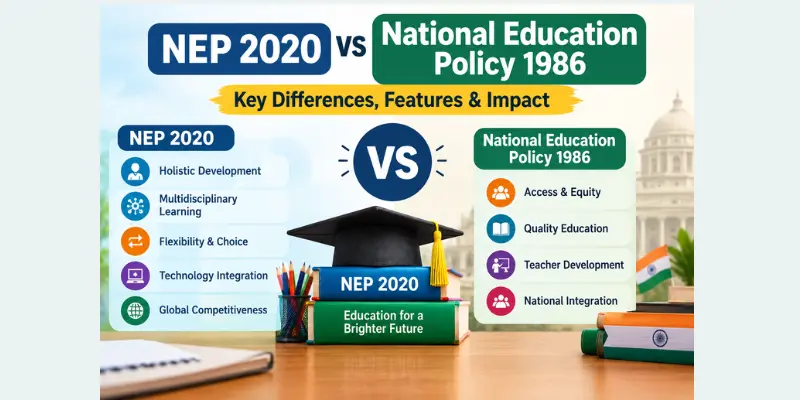
The two policies share some broad goals, including improving access, equity, educational quality, teacher development, and learning outcomes. Their approaches are significantly different. NPE 1986 was designed around the educational priorities of its period, while NEP 2020 responds to contemporary requirements such as competency-based learning, digital education, multidisciplinary study, vocational exposure, foundational literacy, critical thinking, and 21st-century skills. The official <a href=”https://www.education.gov.in/sites/upload_files/mhrd/files/NEP_Final_English.pdf“>NEP 2020 policy document</a> places strong emphasis on developing cognitive, social, ethical, and emotional capacities.
The comparison is particularly useful for understanding <a href=”https://educationbeacon.com/key-features-of-the-national-education-policy-2020-explained/“>the key features of the National Education Policy 2020</a>, including its approach to school education, teachers, assessment, technology, skills, and higher education. NEP 2020 was approved by the Union Cabinet on July 29, 2020, after an extensive consultation process involving stakeholders across India. The Ministry of Education records the policy as the first education policy of the 21st century. <a href=”https://www.education.gov.in/national-education-policy-2020-nep-2020“>Ministry of Education: National Education Policy 2020</a>
NPE 1986 should also be understood within its historical context. It addressed major educational priorities such as access, equity, literacy, teacher education, women’s education, education for disadvantaged groups, vocational education, curriculum development, and educational administration. The official Government of India document contains the policy as modified in 1992 and provides the original framework against which the later reforms can be compared. <a href=”https://www.education.gov.in/sites/upload_files/mhrd/files/document-reports/NPE86-mod92.pdf“>Official NPE 1986 document</a>
The transition from NPE 1986 to NEP 2020 was not simply a change of terminology. India experienced major changes in technology, economic development, demographics, employment, higher education, and access to information during the intervening decades. The Government of India’s consultation material explains that the 1986 policy, modified in 1992, required revision because significant changes had taken place since the previous policy. <a href=”https://www.education.gov.in/new-education-policy“>Government of India: New Education Policy consultation</a>
For teachers, the comparison becomes especially relevant because NEP 2020 changes expectations around classroom teaching, professional development, assessment, technology, and student-centred learning. Education Beacon’s <a href=”https://educationbeacon.com/nep-2020-for-teachers-complete-guide/“>NEP 2020 for Teachers guide</a> provides additional context about the changing role of educators under the new policy. The official NEP document also states that teachers should be at the centre of fundamental reforms in the education system. <a href=”https://www.education.gov.in/sites/upload_files/mhrd/files/NEP_Final_English.pdf“>Official NEP 2020 policy document</a>
Another major difference concerns the structure of school education. The earlier system was generally associated with the 10+2 structure, whereas NEP 2020 proposes the 5+3+3+4 curricular and pedagogical structure covering ages 3 to 18. This change is explained in greater detail in <a href=”https://educationbeacon.com/how-nep-2020-is-transforming-school-education-in-india/“>How NEP 2020 Is Transforming School Education in India</a>. The Ministry of Education’s NEP framework places early childhood care and education within the new foundational stage. <a href=”https://www.education.gov.in/sites/upload_files/mhrd/files/NEP_Final_English.pdf“>Government of India NEP 2020 framework</a>
Assessment is another important part of the NEP 2020 vs National Education Policy 1986 comparison. Earlier reforms under NPE 1986 included efforts to improve assessment and reduce excessive subjectivity, while NEP 2020 expands the focus toward competency-based and formative assessment. The Government of India provides official background material on assessment reforms associated with the earlier policy. <a href=”https://www.education.gov.in/shikshakparv/docs/background_note_Assessment_Reforms.pdf“>Government of India assessment reforms</a>
NEP 2020 also gives greater importance to experiential learning, practical application, critical thinking, creativity, and problem-solving. Education Beacon’s <a href=”https://educationbeacon.com/experiential-learning-under-nep-2020/“>Experiential Learning Under NEP 2020</a> article explains how learning through practical activities and real-world experiences fits within the broader policy framework. The official NEP document similarly emphasizes moving beyond narrow rote-learning approaches. <a href=”https://www.education.gov.in/sites/upload_files/mhrd/files/NEP_Final_English.pdf“>NEP 2020 official document</a>
Technology represents another major difference. The educational environment of 1986 could not anticipate today’s widespread internet access, smartphones, digital learning platforms, artificial intelligence, and online educational resources. NEP 2020 therefore incorporates technology into its broader education strategy, including digital resources and technology-supported learning. The Ministry of Education maintains an official <a href=”https://www.education.gov.in/nep-2020“>NEP 2020 information portal</a> covering the policy and its implementation areas.
The comparison also matters for understanding India’s future education system. NEP 2020 aims to make education more holistic, flexible, multidisciplinary, inclusive, skill-oriented, and aligned with 21st-century requirements. The Government of India describes NEP 2020 as being built around the five pillars of Access, Equity, Quality, Affordability, and Accountability. <a href=”https://www.education.gov.in/sites/upload_files/mhrd/files/document-reports/AR-MoE-Eng.pdf“>Ministry of Education Annual Report on NEP 2020</a>
This comparison explains NEP 2020 vs National Education Policy 1986, including their objectives, school structure, teaching methods, assessment, teacher roles, technology, vocational education, higher education, language policy, and long-term educational vision.
What Is the National Education Policy 1986?
The National Policy on Education 1986 was a major framework for Indian education introduced during a period when expanding access, reducing educational inequality, improving literacy, and strengthening national educational infrastructure were major priorities.
The policy was subsequently modified in 1992. The Government of India identifies the National Policy on Education 1986, modified in 1992, as the previous major national education policy framework before NEP 2020.
NPE 1986 addressed areas such as universal access to elementary education, adult education, teacher education, women’s education, education for disadvantaged groups, vocational education, curriculum development, and educational administration.
The policy also emphasized improving educational opportunities for groups that had historically faced barriers to education.
The assessment framework associated with NPE 1986 included efforts to reduce excessive subjectivity and memorization and introduced ideas such as Continuous and Comprehensive Evaluation.
The policy therefore should not be viewed simply as an examination-focused system. It contained several progressive ideas for its time. Its implementation took place over decades and was influenced by later programmes, curriculum frameworks, reforms, and changes in India’s social and economic environment.
What Is NEP 2020?
The National Education Policy 2020 is India’s current comprehensive education policy. It was approved by the Union Cabinet on July 29, 2020, following an extensive consultation process.
NEP 2020 aims to transform education from early childhood through higher education. It places strong emphasis on foundational literacy and numeracy, holistic development, competency-based learning, experiential education, critical thinking, creativity, technology integration, vocational exposure, multidisciplinary education, and flexible learning pathways.
The policy also gives significant importance to teachers. The official NEP document states that teachers should receive professional support, respect, dignity, autonomy, and opportunities for professional development.
NEP 2020 vs National Education Policy 1986 at a Glance
| Area | National Education Policy 1986 | NEP 2020 |
|---|---|---|
| Policy period | 1986, modified in 1992 | Approved in 2020 |
| School structure | Primarily associated with 10+2 structure | 5+3+3+4 curricular and pedagogical structure |
| Learning approach | Greater emphasis on curriculum and access | Competency, understanding, skills, and holistic development |
| Early childhood education | Less integrated into formal school structure | Strong focus on ECCE |
| Assessment | Reforms included CCE and reduced emphasis on memorization | Competency-based, formative, holistic assessment |
| Technology | Limited by the technology available at the time | Digital learning and technology integration |
| Vocational education | Important but comparatively separate | Greater integration from school level |
| Subject choices | More structured | Greater flexibility and multidisciplinary options |
| Teacher development | Teacher education and training emphasized | Continuous professional development receives strong emphasis |
| Higher education | Traditional degree structures dominated | Multidisciplinary and flexible pathways |
| Skills | Vocational and practical education promoted | 21st-century skills, vocational exposure, critical thinking, creativity |
| Language | Three-language approach remained important | Multilingualism and mother-tongue/regional-language learning receive renewed emphasis |
| Educational vision | Access, equity, modernization, national development | Holistic, flexible, inclusive, multidisciplinary, skill-oriented education |
Major Difference Between NEP 2020 and National Education Policy 1986
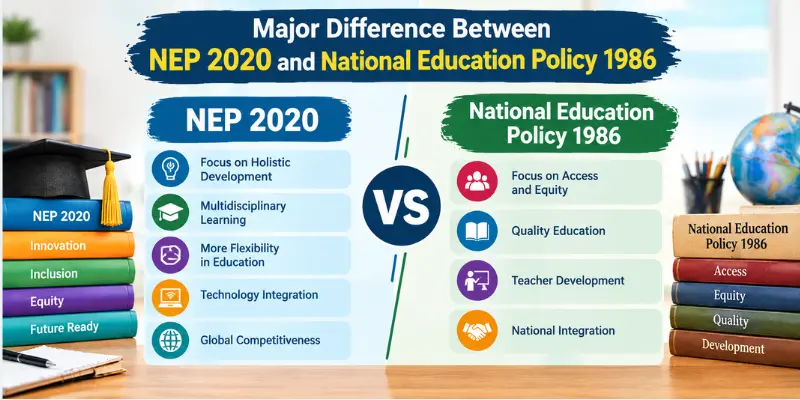
The most important difference between NEP 2020 vs National Education Policy 1986 is the educational environment and the learning model each policy attempts to support.
NPE 1986 was developed when India was dealing with major challenges involving access to schooling, literacy, educational inequality, teacher availability, and expansion of educational infrastructure.
NEP 2020 operates in an environment where students also need digital literacy, communication skills, creativity, problem-solving, multidisciplinary knowledge, employability skills, and the ability to learn throughout life.
The difference is therefore not simply that one policy is old and the other is new. The policies respond to different educational, technological, social, and economic conditions.
NEP 2020 attempts to create a more flexible education system where students can explore different disciplines and develop competencies instead of being limited primarily to rigid subject boundaries.
Difference in School Education Structure
One of the clearest differences concerns the structure of school education.
The traditional school structure associated with the earlier system was generally represented through the 10+2 model, covering ten years of school education followed by two years of senior secondary education.
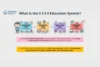
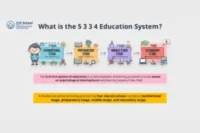
NEP 2020 proposes a 5+3+3+4 curricular and pedagogical structure covering ages 3 to 18.
The four stages are:
Foundational Stage: Five years, including three years of preschool or Anganwadi education followed by Grades 1 and 2.
Preparatory Stage: Grades 3 to 5.
Middle Stage: Grades 6 to 8.
Secondary Stage: Grades 9 to 12.
This structure attempts to align educational approaches with children’s developmental stages.
The shift is important because early childhood education receives a much stronger place in the formal education framework under NEP 2020.
Readers interested in the structural change can also read <a href=”https://educationbeacon.com/how-nep-2020-is-transforming-school-education-in-india/“>How NEP 2020 Is Transforming School Education in India</a>.
Difference in Early Childhood Education
Early childhood education is another major area where the policies differ.
NPE 1986 recognized the importance of early childhood care and education, but NEP 2020 places early childhood education much more centrally within the overall educational structure.
NEP 2020 aims to provide quality Early Childhood Care and Education before children enter the later stages of formal schooling. The Ministry of Education identifies ECCE as one of the major areas of reform under NEP 2020.
This reflects growing recognition that cognitive, social, emotional, language, and physical development during early childhood strongly influences later learning.
Difference in Teaching and Learning Methods
Teaching methods represent another major distinction in the NEP 2020 vs National Education Policy 1986 comparison.
Earlier educational reforms increasingly recognized the limitations of excessive rote learning, but NEP 2020 places competency-based, experiential, inquiry-oriented, and student-centred learning at the centre of its educational vision.
Students are encouraged to:
- Understand concepts
- Apply knowledge
- Ask questions
- Solve problems
- Conduct projects
- Participate in discussions
- Develop creativity
- Work collaboratively
- Connect learning with real-life situations
Teachers therefore become facilitators rather than functioning primarily as information providers.
The shift is particularly visible in <a href=”https://educationbeacon.com/experiential-learning-under-nep-2020/“>Experiential Learning Under NEP 2020</a>, where practical activities, projects, real-world experiences, and active participation are connected with the NEP framework.
Difference in Assessment System
Assessment is another important point of comparison.
The education system associated with NPE 1986 included efforts to improve assessment and reduce excessive dependence on memorization. The Government of India notes that NPE 1986 recommended measures including Continuous and Comprehensive Evaluation and reducing excessive elements of chance and subjectivity.
NEP 2020 takes assessment reform further by emphasizing competency-based evaluation.
The focus increasingly moves toward what students understand and can apply rather than simply how much information they can reproduce.
Assessment can include:
- Projects
- Presentations
- Practical activities
- Portfolios
- Classroom participation
- Formative assessment
- Competency-based questions
- Self-assessment
- Peer assessment
- Written examinations
This does not mean examinations disappear. It means examinations become one component of a broader assessment system.
Difference in Role of Teachers
The role of teachers has also expanded significantly.
NPE 1986 recognized teacher education and teacher development as important components of educational reform.
NEP 2020 gives teachers a central role in implementing competency-based education, experiential learning, technology-supported education, inclusive classrooms, and continuous assessment.
Teachers are expected to become:
- Learning facilitators
- Mentors
- Classroom innovators
- Assessment practitioners
- Digital educators
- Career guides
- Continuous learners
The policy also gives strong attention to professional development.
For a detailed explanation, readers can explore <a href=”https://educationbeacon.com/nep-2020-for-teachers-complete-guide/“>NEP 2020 for Teachers: Complete Guide</a>.
Difference in Teacher Education
NEP 2020 introduces major changes in teacher education.
One prominent proposal is the four-year integrated B.Ed. programme as an important pathway for teacher preparation. The policy also emphasizes continuous professional development and stronger preparation of teachers.
The broader objective is to improve subject knowledge, pedagogy, practical classroom experience, assessment skills, and professional competence.
This creates a stronger connection between teacher preparation and classroom realities.
Teachers are no longer expected simply to complete prescribed content. They are increasingly expected to understand how students learn, how competencies develop, and how different instructional approaches can support diverse learners.
Difference in Technology and Digital Education

Technology represents one of the biggest differences between the educational environments of 1986 and 2020.
When NPE 1986 was developed, today’s widespread internet access, smartphones, learning platforms, online educational resources, and artificial intelligence did not exist.
NEP 2020 therefore incorporates technology as a significant part of educational planning.
Technology can support:
- Online learning
- Digital content
- Teacher training
- Educational assessment
- Personalized learning
- Remote education
- Digital administration
- Academic resources
Technology is not intended to replace teachers. Its effective use depends on teacher capacity, appropriate content, infrastructure, accessibility, and student needs.
Difference in Vocational Education
Vocational education was also recognized under earlier education policy frameworks.
NEP 2020, however, aims to integrate vocational exposure more directly into mainstream education.
Students are encouraged to gain practical exposure to different skills and work-related activities rather than viewing vocational education as something completely separate from academic education.
This approach can help students understand the relationship between education, practical skills, employment, entrepreneurship, and real-world problem-solving.
The objective is to reduce the artificial divide between academic and vocational learning.
Difference in Multidisciplinary Education
Multidisciplinary education is one of the strongest features of NEP 2020.
Traditional educational pathways have often divided subjects into separate streams and disciplines.
NEP 2020 encourages students to develop broader combinations of knowledge.
For example, a student may have opportunities to connect science with arts, technology with humanities, or entrepreneurship with social sciences.
This approach is intended to develop students who can understand complex problems from more than one perspective.
Multidisciplinary education is particularly significant in higher education, where NEP 2020 proposes greater flexibility in undergraduate programmes and academic pathways.
Difference in Language Policy
Language has always been an important part of Indian education policy.
NPE 1986 supported the three-language formula and recognized the importance of Indian languages.
NEP 2020 places renewed emphasis on multilingual education and recommends, wherever possible, using the home language, mother tongue, local language, or regional language as the medium of instruction at least until Grade 5 and preferably beyond, subject to the policy’s provisions.
The policy also emphasizes Indian languages and cultural knowledge.
The objective is to improve conceptual understanding while recognizing India’s linguistic diversity.
Language implementation remains complex because India has many languages, regional preferences, educational resources, and parental expectations.
Difference in Skills and Holistic Development
The educational vision of NEP 2020 extends beyond academic knowledge.
Students are expected to develop:
- Critical thinking
- Creativity
- Communication
- Collaboration
- Problem-solving
- Digital literacy
- Financial literacy
- Environmental awareness
- Life skills
- Ethical and social understanding
This represents a broader concept of educational success.
The purpose of education is not simply examination performance. Students should be prepared for higher education, employment, entrepreneurship, citizenship, and lifelong learning.
The Ministry of Education’s official NEP document describes the development of cognitive, social, ethical, and emotional capacities as important elements of the education system.
Difference in Higher Education
The comparison becomes even more significant at the higher education level.
NPE 1986 operated within a higher education environment dominated by more traditional degree structures, specialized disciplines, affiliated colleges, and conventional academic pathways.
NEP 2020 proposes a more flexible and multidisciplinary higher education system.
Major ideas include:
- Multidisciplinary institutions
- Flexible undergraduate programmes
- Multiple entry and exit options
- Academic credit mobility
- Greater institutional autonomy
- Research promotion
- Stronger industry connections
- Internationalization
- Interdisciplinary education
The Ministry of Education lists Academic Bank of Credits and multiple entry-exit among NEP 2020 initiatives.
The purpose is to make higher education more flexible and responsive to student interests and changing employment requirements.
Difference in Research and Innovation
Research receives stronger strategic attention under NEP 2020.
The policy emphasizes research, innovation, multidisciplinary collaboration, and the development of research capacity.
Higher education institutions are encouraged to create environments where students and faculty can participate in research and innovation.
This is particularly relevant to India’s ambitions in science, technology, entrepreneurship, social sciences, and interdisciplinary problem-solving.
Difference in Inclusion and Equity
Both policies recognize the importance of educational access and equity.
NPE 1986 focused strongly on expanding opportunities for disadvantaged groups and reducing educational inequalities.
NEP 2020 continues this objective but expands the discussion to include a wider range of barriers.
The policy emphasizes equitable access for students from disadvantaged and underrepresented groups and recognizes the importance of targeted support.
Inclusive education under NEP 2020 includes attention to disability, socioeconomic disadvantage, gender, language, geography, and other barriers that can affect educational participation.
Difference in Educational Goals
The goals of the two policies can be understood through their historical contexts.
NPE 1986 focused strongly on:
- Expanding access
- Universal elementary education
- Literacy
- Equity
- National development
- Teacher education
- Modernization
- Educational opportunity
NEP 2020 focuses strongly on:
- Foundational literacy and numeracy
- Holistic development
- Competency-based learning
- Critical thinking
- Creativity
- Digital education
- Vocational exposure
- Multidisciplinary education
- Flexible learning
- Research and innovation
- Global and 21st-century competencies
Neither policy should be judged only by its list of objectives. Implementation capacity, funding, teacher preparation, infrastructure, governance, and local conditions strongly influence outcomes.
Why Did India Need NEP 2020 After NPE 1986?
More than three decades passed between the 1986 policy and NEP 2020. During that period, India experienced major changes in technology, economic development, demographics, employment, globalization, higher education, and access to digital information.
The Government of India’s consultation documentation explains that several changes had taken place since the National Policy on Education was framed in 1986 and modified in 1992, creating a need for a revised policy framework.
The education system therefore required a framework capable of addressing contemporary challenges.
NEP 2020 attempts to respond to these changes by emphasizing flexibility, technology, skills, multidisciplinary education, foundational learning, and lifelong learning.
Challenges in Moving From the Earlier Policy to NEP 2020
A policy change does not automatically create a change in classrooms.
Schools may face infrastructure limitations, teacher shortages, training requirements, large classes, digital inequality, curriculum pressures, and differences between urban and rural institutions.
Higher education institutions may face challenges involving faculty capacity, credit systems, multidisciplinary programmes, academic advising, research infrastructure, and administrative reform.
These issues are discussed in greater detail in <a href=”https://educationbeacon.com/challenges-of-nep-2020-and-practical-solutions/“>Challenges of NEP 2020 and Practical Solutions</a>.
The practical success of NEP 2020 therefore depends on implementation rather than policy language alone.
NEP 2020 vs National Education Policy 1986: Which Is Better?
It is difficult to describe one policy as simply “better” without considering its historical context.
NPE 1986 was designed for the educational needs and challenges of its time. It addressed major issues such as access, equity, literacy, teacher development, and educational modernization.
NEP 2020 responds to a different environment. Students now need digital competence, communication, critical thinking, creativity, multidisciplinary knowledge, practical skills, and adaptability.
For today’s education environment, NEP 2020 provides a more contemporary framework.
Its success, however, depends on effective implementation, sufficient resources, teacher preparation, institutional capacity, and continuous evaluation.
Impact of NEP 2020 on Students
For students, the shift from the earlier framework toward NEP 2020 can create several important changes.
Students may receive greater opportunities for:
- Experiential learning
- Skill development
- Flexible subject choices
- Multidisciplinary learning
- Digital education
- Vocational exposure
- Competency-based assessment
- Creative activities
- Practical application of knowledge
Students can also become more active participants in their education.
The long-term objective is to prepare learners not only to pass examinations but also to understand concepts, solve problems, communicate effectively, collaborate with others, and continue learning throughout life.
Impact of NEP 2020 on Teachers
Teachers are among the most important stakeholders affected by the transition.
The policy increases the importance of:
- Continuous professional development
- Student-centred teaching
- Competency-based assessment
- Technology integration
- Experiential learning
- Inclusive teaching
- Mentoring
- Reflective teaching
Teachers therefore need opportunities to update their pedagogical and digital skills.
For additional context, <a href=”https://educationbeacon.com/teaching-skills-for-new-teachers/“>Teaching Skills for New Teachers</a> explains several professional skills that are increasingly relevant in the changing education environment.
Future of Education After NEP 2020
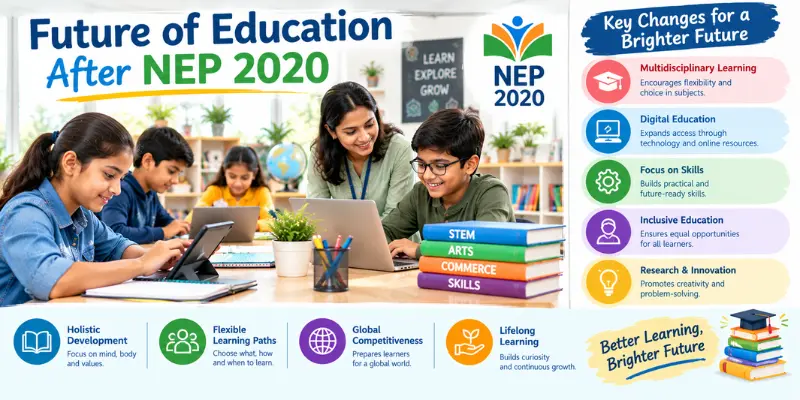
The long-term impact of NEP 2020 will depend on how consistently its principles are implemented.
Future classrooms are likely to place greater emphasis on competencies, technology, multidisciplinary learning, practical activities, personalized support, and continuous assessment.
The role of teachers will remain central even as technology becomes more sophisticated.
Artificial intelligence, digital platforms, adaptive learning systems, online resources, and data-supported assessment may influence education, but human teachers will continue to provide mentoring, emotional support, classroom leadership, ethical guidance, and social interaction.
The future of education will therefore depend on combining technology with strong teaching rather than replacing teachers with technology.
Frequently Asked Questions About NEP 2020 vs National Education Policy 1986
What is the main difference between NEP 2020 and National Education Policy 1986?
The main difference is their educational approach and historical context. NPE 1986 focused strongly on access, equity, literacy, modernization, and educational expansion, while NEP 2020 places greater emphasis on holistic development, competency-based learning, technology, flexibility, multidisciplinary education, skills, and lifelong learning.
Did NEP 2020 replace the National Education Policy 1986?
Yes. NEP 2020 replaced the National Policy on Education 1986, which had been modified in 1992. The Government of India describes NEP 2020 as the first education policy of the 21st century.
What was the education structure under the earlier policy?
The school education system was commonly organized around the 10+2 structure. NEP 2020 proposes the 5+3+3+4 curricular and pedagogical structure covering ages 3 to 18.
How does NEP 2020 change the role of teachers?
Teachers are increasingly expected to act as facilitators, mentors, innovators, assessors, and continuous learners. They are expected to support competency development, experiential learning, technology integration, and holistic student development.
Is NEP 2020 more focused on skills than NPE 1986?
NEP 2020 gives particularly strong emphasis to skills such as critical thinking, creativity, communication, collaboration, digital literacy, problem-solving, and vocational competencies. Earlier policy frameworks also recognized vocational and practical education, but the context and implementation approach are different.
Does NEP 2020 eliminate examinations?
No. NEP 2020 does not eliminate examinations. It promotes broader assessment approaches that measure competencies, understanding, application, and holistic development alongside appropriate examinations.
Why was a new education policy introduced in 2020?
More than three decades had passed since the previous policy, while India’s society, economy, technology, employment environment, and educational requirements had changed considerably. The government therefore developed a new framework for 21st-century education.
Is NEP 2020 applicable to both school and higher education?
Yes. NEP 2020 covers both school education and higher education and proposes reforms ranging from early childhood education and foundational learning to multidisciplinary universities, research, academic flexibility, and teacher education.
Conclusion
The comparison of NEP 2020 vs National Education Policy 1986 shows how India’s education priorities have evolved over more than three decades.
NPE 1986 played an important role in expanding educational access, promoting equity, strengthening teacher education, improving literacy, and modernizing India’s education system. It was an important policy framework for its time.
NEP 2020 builds on some of these continuing priorities while introducing a substantially different vision for 21st-century education. Its emphasis on the 5+3+3+4 structure, foundational literacy, competency-based learning, experiential education, digital technology, vocational exposure, multidisciplinary education, flexible higher education, research, and continuous teacher development reflects the changing requirements of students and society.
The two policies therefore represent different stages in India’s educational development rather than completely unrelated approaches.
The success of NEP 2020 will ultimately depend on implementation. Teachers need appropriate training and support. Schools need infrastructure and learning resources. Students need equitable access to educational opportunities. Higher education institutions need faculty capacity and effective academic systems.
The transition from the National Policy on Education 1986 to NEP 2020 represents a major shift toward a more flexible, skill-oriented, technology-enabled, multidisciplinary, and learner-centred education system.
For students, teachers, parents, and education professionals, understanding NEP 2020 vs National Education Policy 1986 provides useful context for understanding why India’s education system is changing and what these reforms mean for the future of learning.




- Be Respectful
- Stay Relevant
- Stay Positive
- True Feedback
- Encourage Discussion
- Avoid Spamming
- No Fake News
- Don't Copy-Paste
- No Personal Attacks
- Be Respectful
- Stay Relevant
- Stay Positive
- True Feedback
- Encourage Discussion
- Avoid Spamming
- No Fake News
- Don't Copy-Paste
- No Personal Attacks
